Home |
Data Base |
Technical |
Radio |
Search
S-400 TRIUMF
40R6 | NATO: SA-21 Growler
Almaz-Antey long-range surface-to-air missile system
Project Orlan Data Base // public encyclopedia
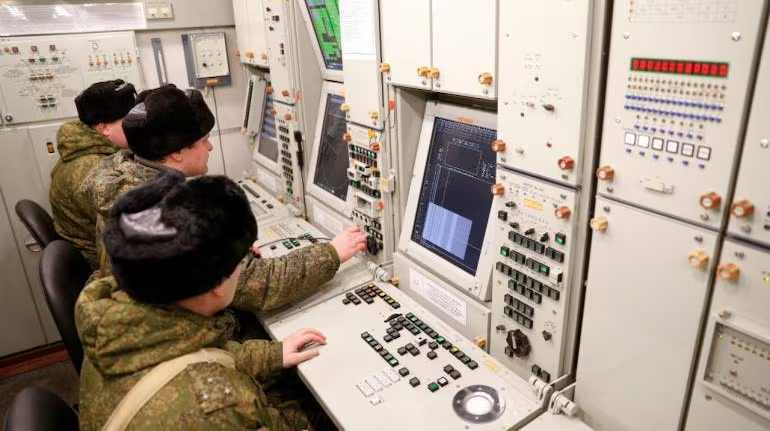
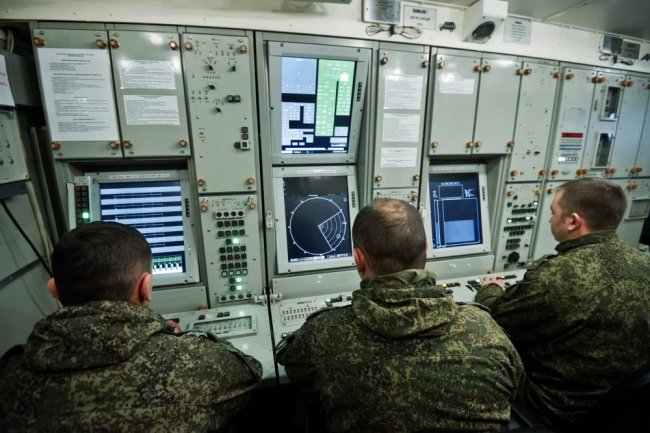
WHAT IT IS
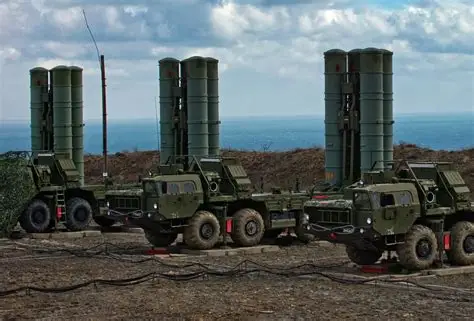
The S-400 Triumf (С-400 «Триумф»; GRAU index 40R6, 40Р6; NATO reporting name SA-21 Growler) is a Russian mobile long-range surface-to-air missile system (зенитная ракетная система, ЗРС), developed by NPO Almaz (now part of Almaz-Antey, Концерн ВКО «Алмаз-Антей») as the successor to the S-300P family. It is meant to engage aircraft, helicopters, cruise missiles and drones, and, in the terminal phase, tactical and some medium-range ballistic missiles. One battery can fire several kinds of missiles with overlapping envelopes, from the small 9M96 at tens of kilometres to the large 48N6 family at about 150-250 km and the 40N6 at a claimed 380-400 km. It is the most widely discussed Russian air defence system in the world, in part because Turkey, India and China bought it, and in part because it is at the centre of many arguments about what Russian air defence can actually do.
The name "Triumf" (Triumph) and the earlier project name S-300PMU-3 point to its origin: it is the P-line grown up (see S-300). It keeps the same battalion geometry (one engagement radar, up to a dozen launchers with four large missiles each), adds a new panoramic radar (see 91N6E Radar), new missiles, a newer command post and more channels, and it can still fire older 48N6 rounds from S-300PM stocks. It is not a hit-to-kill system: its missiles use blast-fragmentation warheads, and the hit-to-kill 77N6 missile belongs to the S-500 and is not a standard S-400 load (see the S-500 section below and S-500).
As with every system in this database, almost every performance number below is a manufacturer, ministry or reference-work figure. It is not a measured combat figure, and the combat claims on both sides of the war in Ukraine are marked as claims.
QUICK FACTS
- Designation: С-400 «Триумф», 40Р6; NATO SA-21 Growler. Fire unit 98Ж6 (98Zh6E), command system 30К6 (30K6E).
- Developer: NPO Almaz (Almaz-Antey), missiles by MKB Fakel (МКБ «Факел»), radars by NIIP / NIIIP (Tikhomirov). Production uses the Almaz-Antey cooperation and Belarusian and Russian wheeled chassis (MZKT, BAZ).
- Service: Approved for service April 28, 2007; the first regiment (606th, Elektrostal near Moscow) went on combat duty August 6, 2007.
- Range class (published): 9M96E about 40 km; 9M96E2 about 120 km; 48N6E2 about 200 km; 48N6E3 / 48N6DM about 240-250 km; 40N6E about 380-400 km. Altitude from about 10 m up to about 27-30 km. Almaz-Antey described the aerodynamic-target envelope as 2.5-380 km and 10 m-30 km in a September 2025 statement.
- Targets and channels (system-level brochure figures): up to 36 targets engaged and 72 missiles in flight; a battalion (divizion) is described as able to engage up to 10 targets with 20 missiles (Almaz-Antey, 2025).
- Ballistic targets: target speed up to 4,800 m/s in system tables; range against tactical ballistic missiles often given as about 5-60 km with an altitude up to about 25-27 km.
- Operators: Russia, China, Turkey, India, Belarus and (reported) Algeria.
- Not the S-500: The S-500 is a separate and more advanced programme; Russia has reported its first regiment on duty since December 2025.
HISTORY AND DEVELOPMENT
- 1980s and early 1990s: Work on a new long-range system began in the 1980s as a possible S-200 replacement. A first design was rejected for cost and for being unable to handle cruise missiles, and the programme was restarted in the late 1980s under the codename Triumf for aircraft, cruise missiles and stealth targets. The Soviet government approved the programme in August 1991, but the Soviet collapse left it in limbo.
- 1993-1999: The Russian Air Force announced it in January 1993. Tests at Kapustin Yar reported successes in February 1999, and the system was formally revived in July 1999, now as a deep modernisation of the S-300PM rather than an S-200 replacement. During this time it was marketed as the S-300PMU-3.
- 2000-2004: Reports in 2001 and 2003 said the system was not ready; senior officers said it was being tested with older S-300P missiles. A test using the 48N6DM missile to hit a ballistic missile target was reported in April 2004 and the project was declared complete in February 2004 (sources differ on exact dates).
- 2007: The system was accepted for service on April 28, 2007, and the first battalion (Elektrostal, Moscow region) went on duty on August 6, 2007 (606th Guards Anti-Aircraft Missile Regiment, per published accounts).
- 2007-2015: More regiments around Moscow (for example at Dmitrov, Zvenigorod, Podolsk, Zelenograd), then Kaliningrad (about 2012), Novorossiysk, Crimea, Nakhodka and other areas. A 2006 plan reported by Russian media called for 18 battalions by 2015; the actual build-up was considerably larger by 2020.
- 2014-2018: The 40N6 very-long-range missile was test-fired against an airborne target at a reported range of 400 km in April 2015 (Russian Ministry of Defence statement). The defence-industry source quoted by TASS said it was accepted for service in October 2018. Some Western sources said as late as 2019 that serial production and operational use were not confirmed.
- 2015-2018: Export deals: China (contract announced 2014-15, first deliveries 2018), Turkey (contract 2017), India (contract October 2018).
- 2015 onward: S-400 deployed to Syria (Khmeimim airbase) after the Turkish shootdown of a Russian Su-24 in November 2015.
- 2022-2026: Combat use and loss in the war in Ukraine, use in the 2025 India-Pakistan conflict by the Indian side, doubling of production in 2025 (Almaz-Antey), and new roles including the use of converted S-400 launchers as ground-attack ballistic launchers (see below).
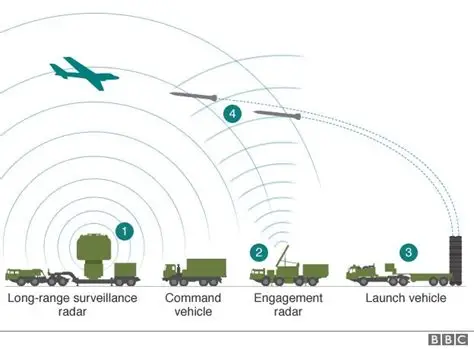
HOW AN S-400 ENGAGEMENT WORKS, STEP BY STEP
This describes the typical sequence from published material. Real engagements depend on the missile, the radars attached and the software, and the details of Russian crew procedure are not public.
- 1. Detect. The large 91N6E radar (and, when attached, VHF sets like Nebo-SVU, UHF Protivnik-GE or the 96L6E all-altitude radar) sweeps the area. A target such as a bomber at high altitude may be detected at several hundred kilometres. A cruise missile at 50-100 m is usually visible only to some tens of kilometres from a ground radar (a radio-horizon limit).
- 2. Fuse and classify. The 55K6E command post (on a Ural-5323 chassis) receives the tracks, merges them with data from other radars and from higher command (including A-50 / A-50U airborne radar when available), checks IFF, identifies friend or foe, and prioritises threats.
- 3. Assign. The command post assigns a target to a battalion (divizion) with a suitable missile load and distance. In a layered battery with 9M96, 48N6 and 40N6 missiles it can choose the right missile for the target: a small manoeuvring target close to the site gets a 9M96, a large aircraft at 200 km gets a 48N6, an AWACS at 300+ km gets a 40N6 (claimed).
- 4. Engagement radar. The 92N6E multifunction radar (X-band, phased array) acquires the target from the designation and begins tracking it. This is the radar that gives the system its published figures of 36 targets and 72 missiles in flight.
- 5. Launch. The launcher fires the missile by cold launch (see S-300 for the explanation): a gas generator pushes the missile out of the container and the motor ignites at a safe height. The launcher does not need to turn.
- 6. Mid-course. After launch the missile follows a preset trajectory with radio corrections from the 92N6E. In the 48N6 families the missile also carries a semi-active seeker and sends back what it sees (track-via-missile); the ground computer calculates guidance.
- 7. Terminal phase. For 48N6 missiles, the engagement radar illuminates the target and the missile homes on the reflection. For 9M96E and 9M96E2, an active radar seeker takes over and the missile guides itself in the last seconds, with gas-dynamic thrusters for sharp manoeuvres. The 40N6 is described as able to use an active or semi-active mode and to be launched toward a target beyond the radar horizon with a later seeker switch-on (published claim).
- 8. Kill assessment. The warhead (a blast-fragmentation warhead with a directed fragment pattern) detonates, and the radar and command post evaluate the result. Salvos of two missiles per target are standard for hard targets.
- Reaction and set-up: Brochures give about 35 seconds to be ready from stand-by, about 3 minutes ready to fire, and about 5 minutes to deploy from the march (10-15 minutes during development). System reaction time is given as about 9-10 seconds.
ORGANISATION: SYSTEM, BATTALION AND REGIMENT
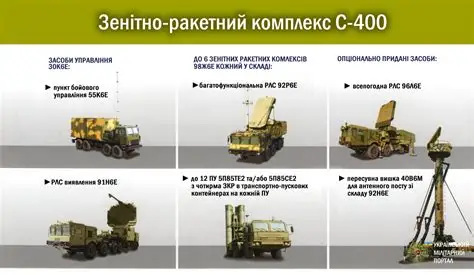
- System level (30K6E). Export literature describes an S-400 grouping as a 30K6E command element plus up to six (in some tables eight) 98Zh6E fire units and a technical-support set (30Ts6E). The command element is the 55K6E command post plus the 91N6E panoramic radar.
- Fire unit (98Zh6E / divizion). Each fire unit has a 92N6E engagement radar (often with a 96L6E all-altitude detector attached) and up to 12 launchers (often 8 in practice). A full system with eight fire units can control up to 72 launchers and a published maximum of 384 large missiles, or 1,536 of the small 9M96E2 round at the four-to-one packing density, but real batteries are much smaller than the paper maxima.
- Russian regiment (полк). Open sources describe a typical Russian regiment as two to three battalions (дивизионы) of roughly 8 launchers each, but the numbers differ by region and by period, and there is no official order of battle. Two battalions per regiment is the pattern most often listed for regiments around Moscow, Kaliningrad and the Far East, with three at a few sites (a reference-work list; not an official order of battle).
- Optional attachments. 96L6E / 96L6E2 all-altitude detectors, the 40V6M / 40V6MD masts that lift an antenna above trees, passive emitter-locating equipment (1RL220VE, 1L222, 86V6 Orion in manufacturer material), VHF sets (Nebo-SVU, Nebo-M), UHF Protivnik-GE, and Gamma-DE. Some later Russian units are associated with a Podlet-family low-altitude radar.
- Support equipment. 22T6 loaders, 5I57 diesel generators, 63T6 power converters, survey vehicles, and cable trucks. A battery is dozens of vehicles, not just launchers.
- Mobility. About 60 km/h on roads and about 25 km/h off-road (published). Set-up about 5 minutes from the march (brochure) but a real regiment's move takes much longer.
- Service life (brochure language). About 20 years for ground equipment and 10-15 years for missiles, with a major overhaul about every 10,000 hours.
COMMAND, CONTROL AND NETWORKING
- 55K6E command post. On a Ural-5323 chassis. It fuses radar data, assigns targets and manages the fire units; the maximum distance to a fire unit is quoted at about 100 km when relays are used.
- 30K6E. The system command element that can coordinate up to eight fire units.
- Integration with older systems. The 30K6E can control the S-400 fire units (98Zh6E) and also the S-300PMU2 (through the 83M6E2 control system) and the S-300PMU1 (through 83M6E), a design feature that lets older rounds and radars be reused. It can also integrate Tor-M1 batteries (through the Ranzhir-M battery command post) and the Pantsir-S1 (through the lead battery vehicle). See Pantsir and Tor.
- Higher command. Baikal-1E and similar senior command posts, Polyana-D4M1, and fighter-aircraft command posts can feed into the 30K6E; the Protivnik-GE and Gamma-DE radars connect with the 92N6E.
- Airborne radar. A-50 / A-50U AEW aircraft can provide early warning and target designation. Russian sources said in 2023 that S-400 and A-50 were used together against Ukrainian aircraft at long range, a Russian claim that is not independently verified.
- Computers. The system uses the Elbrus-90 family computer.
- Mixed fire. The command post can combine the 9M96, 48N6 and 40N6 missiles on different launchers of one battery, which is the point of the multi-missile design.
RADARS
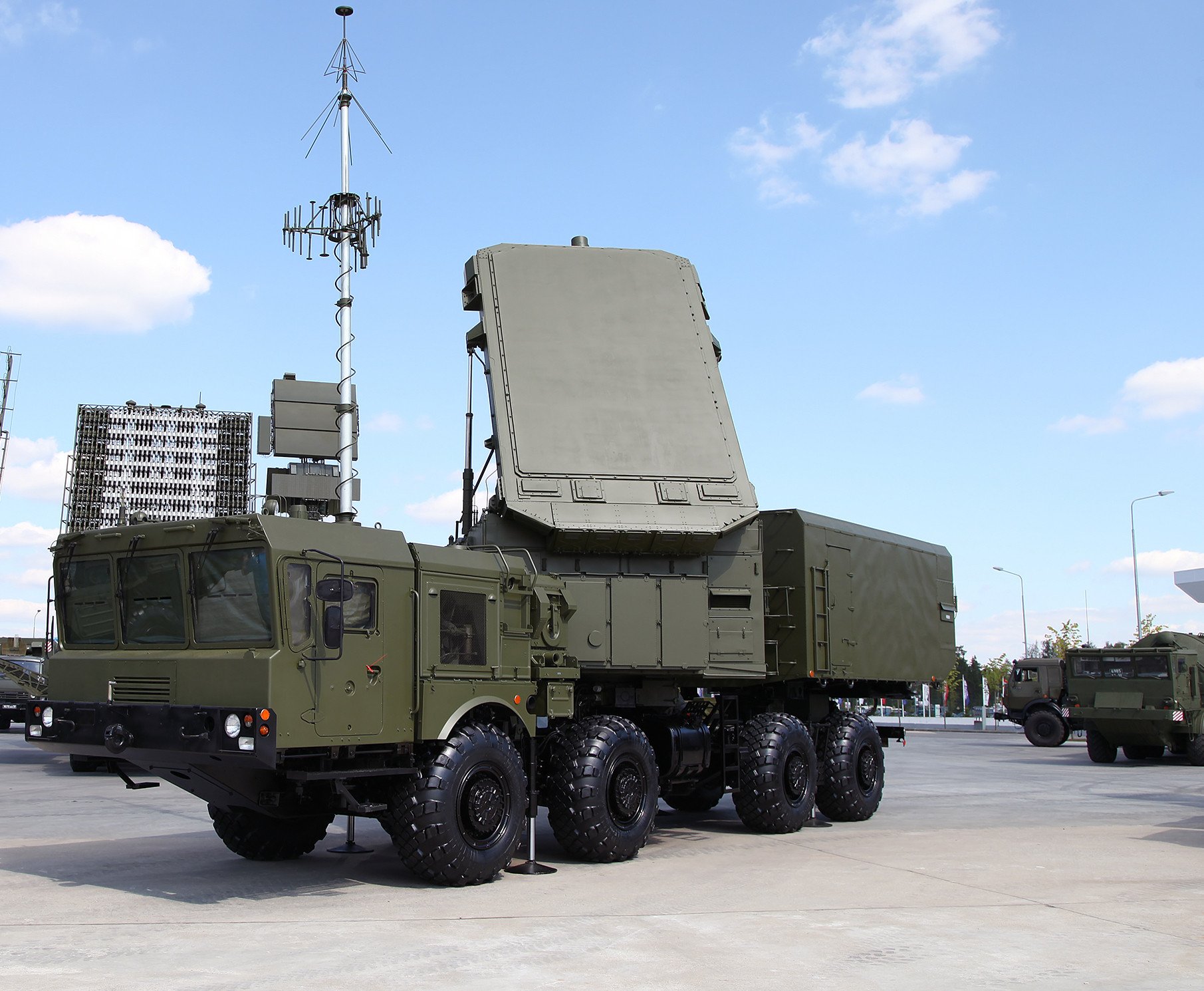
- 91N6E (Big Bird) panoramic radar. Three-dimensional acquisition and track radar derived from the 64N6 family, on an MZKT-7930 chassis. Published instrumented range is about 600 km, with about 300 simultaneous tracks. Catalogues list 2.9-3.3 GHz (S-band) while Russian sources call it a decimetre-wave radar; popular English accounts sometimes say L-band. A reference work puts detection at about 340 km for a 4 m2 target and about 200 km for a ballistic-class 0.4 m2 target. The detailed antenna and waveform description is in 91N6E Radar.
- 92N6E (Grave Stone) engagement radar. X-band phased array on an 8x8 chassis. The system-level figure is 36 targets engaged and 72 missiles in flight; one reference lists 20 tracked targets for the radar itself. A published detection range of about 340 km against large targets appears in an Almaz-Antey brochure. The radar is the fire-control link for most missiles, with the 40N6's seeker used for beyond-horizon geometry (published description).
- 96L6E (Cheese Board) all-altitude detector. A C-band (some sources S-band) all-altitude detector with a published range of about 300 km and a published track capacity of about 100 targets; it closes the low-altitude and terrain-masking gap left by high-mounted radars. Ukrainian sources describe it as costing about USD 50 million (Ukrainian estimate).
- Nebo-SVU / Nebo-M (VHF). Large VHF surveillance radars sometimes used with the system and with the S-300; they are better at seeing stealth-shaped aircraft at long range but poor at accuracy.
- Protivnik-GE (UHF) and Gamma-DE. An anti-stealth UHF radar with a published 400 km range (Protivnik-GE) and a mobile centimetre-band radar with about 300 km range (Gamma-DE / Gamma-C1E), respectively.
- Passive sets. Moskva-1 passive radar and other emitter-locators described in Russian sources.
- How the arrays work. The phased arrays in these radars are explained in How PESA Radar Works and How AESA Radar Works.
- Detection of low-observable aircraft. Whether the S-400 can reliably detect and engage modern stealth aircraft is a standing question: radar bands lower than X-band see stealth shapes better, but tracks from them are rarely good enough to guide a missile, which is why the multi-band approach exists. No verified combat evidence on this exists.
LAUNCHERS AND VEHICLES
- 5P85TE2 / 5P85TE3 (and earlier TE). Towed (trailer) launcher pulled by a BAZ-64022 tractor; the common 48N6 carrier. Also 5P85TM versions.
- 5P85SE2 / 5P85SE3 (and earlier SE). Self-propelled launcher on a wheeled chassis (MAZ-543M in earlier sets).
- 51P6E / 51P6A. Later launcher associated with the 40N6 and 9M96 loads, on BAZ or MZKT-7930 chassis. The 51P6A on the MZKT-7930 "Astrolog" chassis is the rarer version.
- Loads. A launcher holds four large missiles (48N6, 40N6 family), though the 40N6 is sometimes cited as two per launcher because of its size. In the same space it can hold up to 16 of the small 9M96 missiles (four per canister position).
- Radar and command vehicles. 55K6E (Ural-5323), 91N6E (MZKT-7930), 92N6E (8x8), 96L6E (MZKT-7930), and the 40V6M / 40V6MD mast carrier.
- Chassis supply. Belarusian MZKT chassis are used for many radars and some launchers; Russian BAZ vehicles are used on others.
MISSILES (PUBLISHED FIGURES)
- 48N6E (S-300PMU-1 heritage). Single-stage solid-fuel missile; range about 150 km. Length about 7.5 m, diameter about 519 mm, weight about 1,800-1,900 kg, warhead about 145 kg. Semi-active radar homing with radio correction (track-via-missile). Speed about 2,100 m/s.
- 48N6E2 (48N6M). Favorit-generation round; range about 200 km; warhead about 150 kg; same airframe class.
- 48N6E3 / 48N6DM. The main long-range interceptor of many batteries. Range about 240-250 km (sources differ); altitude 0.01-27 km against aerodynamic targets; maximum missile speed about 2,000-2,500 m/s; target speed up to about 4,800 m/s in system tables; warhead about 180 kg; semi-active homing with mid-course update. The domestic designation 48N6DM is commonly used interchangeably with E3 in English sources.
- 48N6DMK. A naval derivative for the Kirov-class refit plans (reported).
- 40N6 / 40N6E. Two-stage very-long-range missile for high-value airborne targets (AEW aircraft, jammers, tankers, bombers) and selected ballistic targets. Published range against aerodynamic targets: about 380 km in current Rosoboronexport-style material, and 400 km in older marketing or Russian Ministry of Defence statements. Altitude about 30 km against aerodynamic targets (some Russian tables list higher figures that are not accepted here). Weight about 1,900 kg (published 1,893 kg), speed about 1,190 m/s (Mach 3.5) in one reference, active or semi-active homing and, for the longest shots, possibly a passive mode. The warhead mass is not reliably published (figures from different websites differ widely, and none is accepted here). Serial availability lagged the rest of the family.
- 9M96E. Fakel active-radar missile, about 333 kg, warhead about 24 kg, range about 40 km, ceiling about 20 km, speed about 900-1,000 m/s, lateral acceleration about 20 g or more; it uses gas-dynamic control for endgame agility. Shared with the S-350 Vityaz and naval Poliment-Redut families. Optimised for manoeuvring aerodynamic targets and point defence.
- 9M96E2. Extended 9M96: about 420 kg, range about 120 km (some sheets 135-136 km), altitude up to about 30-35 km. Active radar seeker. Intended against fighters, cruise missiles and tactical ballistic missiles.
- 77N6-N / 77N6-N1. New hit-to-kill ballistic-missile interceptors linked with the S-500 (and described in Russian and Western reports as potentially usable with an S-400 command system). Their production status and exact role in S-400 batteries are unclear: Western reference works note they are too large for the older SA-20 launchers, and one US source lists them as still in testing. Treat any S-400 use of the 77N6 as unconfirmed.
- 9M100. A short-range active missile in the wider Fakel family and naval systems; not the standard S-400 load.
- Warheads. All the standard missiles use directed blast-fragmentation warheads, which suit aircraft better than ballistic missile warheads, a key difference from hit-to-kill missiles such as the PAC-3 (see MIM-104 Patriot).
PUBLISHED ENVELOPE
- Aerodynamic targets: minimum ranges of 1-5 km depending on missile (Almaz-Antey says 2.5 km); maximum about 250 km with 48N6E3 and 380-400 km with 40N6E. Altitude from about 10 m (9M96 lower still) to about 27-30 km.
- Ballistic targets: public data in recent years gives a 60 km-class intercept range and about 25 km altitude, distinct from the 400 km aerodynamic figure; older Russian tables list 5-60 km range and 2-27 km altitude. Target speed ceiling in system tables is 4,800 m/s. Russian-published single-shot kill probabilities for the 9M96 family are about 0.9 against aircraft, 0.8 against UAVs and 0.7 against cruise missiles (manufacturer claims).
- Cruise missiles: The practical limit is the radar horizon, with about 40 km a figure sometimes given for low-flying cruise missiles from a ground-mounted radar.
- Channels: Standard battery-level claim: 36 targets and 72 missiles in flight. Almaz-Antey described a battalion as able to engage 10 targets with 20 missiles in 2025.
- How to read these: The longest ranges apply to large high-altitude targets and favourable geometry. A fighter flying low and manoeuvring will not be engaged at 250 km; the practical envelope depends on the RCS, altitude and jamming.
THE 400 KM CLAIM AND THE 40N6
The "400 km" figure attached to the S-400 is the maximum range of the 40N6 missile against a large, high, slow target, with radar cueing from outside the battery. It is not the range of the system against fighters or cruise missiles, and it is not a measured combat number.
- What is claimed: The Russian Ministry of Defence announced a successful test firing of the 40N6 against an airborne target at 400 km in April 2015. Rosoboronexport-style material currently gives 380 km. In October 2018 a defence-industry source told TASS that the missile had been accepted into Russian service.
- Why it is hard: The ground radar horizon limits direct guidance, so a shot at 300+ km needs outside target data (AEW aircraft such as the A-50U, forward radars) and the missile's own seeker or inertial path for the last part. Targets that manoeuvre or use jamming complicate the shot. CSIS has said the 40N6's operational status was unclear for some years and that the S-400's radars may not let it use the full range. Western reference works noted in 2019 that the missile had repeatedly failed in tests and was not yet in series production at that time.
- Combat claims on both sides: In May 2025 Indian media reported an Indian S-400 shot down a Pakistani AWACS aircraft about 314 km inside Pakistani airspace. In August 2025 the Indian Air Chief said a "large aircraft" had been shot down at about 300 km and described it as the "largest-ever recorded surface-to-air kill"; most kills were attributed to the S-400. Pakistan rejected the claims and denied losing aircraft, and there is no independent verification. I treat these as claims, not data. India is reported to have fired about 11 long-range interceptors against Pakistan (Indian press).
- What a reasonable reading is: The 40N6 is a real, fielded missile of a very long reach, but its effective range against a given target depends heavily on cueing and geometry, and the claimed 400 km has not been independently demonstrated.
BALLISTIC-MISSILE DEFENCE, 77N6 AND THE S-500 LINK
- What S-400 does against ballistic missiles: It is designed to engage tactical and some medium-range ballistic missiles in the terminal phase, with a published intercept range of about 5-60 km and altitude up to about 25-27 km. The 48N6DM is the missile commonly associated with this role (a 2004 test of it against a ballistic target was reported). A reference-work note says the system stays near the limit of what the old ABM Treaty would have allowed.
- Limits: The blast-fragmentation warhead of the 48N6 and 9M96 families is less effective against a ballistic warhead than a hit-to-kill missile. Russian officials claimed in November 2025 that the system had shot down ATACMS for the first time (see the combat section).
- 77N6-N / 77N6-N1: These are the hit-to-kill missiles developed for the S-500. Open sources say they are too large for the older S-300 launchers. Whether any S-400 batteries can fire them is not confirmed in open sources I could find.
- Moscow: The strategic ballistic-missile defence of Moscow is the A-135 / A-235 Nudol system (see A-135 / A-235 Nudol), not the S-400.
- S-500 (see S-500): The S-500 Prometheus (55R6M) is claimed to extend the range to anti-ballistic and near-space targets. Russia said its first regiment took up duty in December 2025 (Defence Minister Belousov). Almaz-Antey was also reported to be discussing S-400 export updates using S-500 technology in April 2026 (a Russian news item; no confirmed customer).
WHAT CHANGED FROM THE S-300
- Command: The 55K6E and 30K6E command system replaces the 54K6 / 83M6 generation and can control up to eight fire units (versus up to 12 launchers in a P-line command).
- Radar: The 91N6E (instrumented range 600 km, about 300 tracks) replaces the 64N6 Big Bird. The 92N6E replaces the 30N6E2 Tomb Stone engagement radar.
- Missiles: The S-400 keeps the 48N6 family and adds the long-range 40N6, new longer-range 48N6E3 / DM and the small active-radar 9M96E and 9M96E2, which can be used for close, manoeuvring targets at a high density (four per container position).
- Channels and response: The system-level figure (36 targets, 72 missiles) is above the classic 6 targets of a single S-300P engagement radar, though fire units still work in sets.
- Backwards compatibility: An S-400 command post can control S-300PMU-1 and PMU-2 batteries and Pantsir, which means S-300s can be folded into an S-400 network (reference-work description).
- Same weakness: An engagement radar still has to illuminate the target, and a battery is still a large set of vehicles that emits, is easily seen and moves slowly in practice. See the vulnerabilities section.
S-400 COMPARED WITH PATRIOT
A neutral summary of what is published; see MIM-104 Patriot for the other side.
- Range and size: The S-400 uses much larger missiles (48N6 about 1,800 kg; 40N6 about 1,900 kg), giving it published ranges of 150-400 km against high-flying aircraft. Patriot's PAC-2 and PAC-3 MSE have shorter published ranges (the US Army does not publish PAC-3 MSE range) but are built for terminal ballistic-missile defence.
- Warheads: Patriot's PAC-3 / PAC-3 MSE kill by direct impact (hit-to-kill); S-400 missiles use blast-fragmentation warheads.
- Seekers: Both use track-via-missile style guidance for some missiles and active seekers for others (PAC-3 and S-400's 9M96 / 40N6).
- Radar: Patriot is built around one multifunction radar; the S-400 splits search (91N6E) and engagement (92N6E, 96L6E) across radars, which gives longer reach but more vehicles to protect.
- Combat: Both have a mixed combat record with disputed claims. Patriot's combat record is covered in its own article; S-400's is below. A direct head-to-head does not exist, and the two have never faced each other.
- Mix: CSIS says the S-400's mission set is roughly comparable to Patriot's, and that unlike the PAC-3 the S-400 does not use hit-to-kill ballistic missile defence.
ROLE IN RUSSIA'S LAYERED DEFENCE
The S-400 forms the long-range belt of the Russian integrated air defence network. Under it come the S-300V4 (army / anti-ballistic), the Buk-M3 (see Buk-M3), the S-350 Vityaz (50R6A, medium range, 9M96-family missiles), the Tor (see Tor), the Pantsir (see Pantsir) and the Kashtan (see Kashtan), plus the planned Morfey (42S6) short-range system intended to protect S-400 sites (its development has repeatedly slipped).
- Pantsir escort: The S-400 / Pantsir pairing, with Pantsir covering the last 20 km against low and small targets, is a deliberate design that Russian and foreign analysts have described as a two-layer defence. In practice Pantsir losses to Ukrainian drones and missiles have made this pairing less reliable (Ukrainian claims; see below).
- Radar network: The 91N6E, 96L6E and VHF radars feed the command post. Large early-warning radars feed the Moscow-area network (see Solnechnogorsk Missile Attack Warning System (SPRN) for the strategic warning side).
- A-135 / A-235 and S-500: Handle exo-atmospheric and strategic threats near Moscow; see the Nudol article.
DEPLOYMENTS
Open-source lists (Wikipedia and Russian media) are the basis here; exact current numbers are not public and several sites have been moved since 2022.
- Moscow region: First deployed at Elektrostal (606th regiment, August 2007), then Dmitrov (210th), Zvenigorod (93rd), Podolsk (549th), Zelenograd (584th).
- North-west: Gostilitsy and Zelenogorsk near St Petersburg, Luga, Kaliningrad (first battalion on duty about 2012; more in 2019), Murmansk region (Arctic, first regiment in 2015).
- South and Crimea: Novorossiysk, Feodosia and Sevastopol in Crimea, and the Dzhankoy area, all targeted by Ukraine in 2022-2026.
- Volga, Urals and Siberia: Engels, Saratov, Samara and Yekaterinburg regiments; Novosibirsk in 2016.
- Far East: Nakhodka, Vladivostok, Khabarovsk, Petropavlovsk-Kamchatsky and Yuzhno-Sakhalinsk.
- Syria: Khmeimim airbase (first unit activated after November 2015) and a second unit northwest of Masyaf (2017). Reports said the S-400 left Syria after the fall of the Assad government in December 2024 (analyst report).
- Belarus: Lukashenko said in December 2021 that a training centre already had S-400s; the contract was reported signed in May 2022, with systems on combat duty from December 2022. Russian S-400s were also reported in Belarus at the start of the war in February 2022.
- Ukraine war redeployment: A UK Ministry of Defence assessment in November 2023 said Russia might have to redeploy S-400 systems from distant parts of its borders to Ukraine after several were destroyed. Press reports in 2025-2026 describe some units being pulled from storage and ranges (see the ground-attack section).
OPERATORS AND EXPORTS
- Russia: The largest operator. Counts of several hundred launchers have been published and should be treated as approximate. A Russian plan of the 2000s called for dozens of battalions by 2020; the actual number is not public. The Navy has also been credited in some lists with a coastal holding.
- China (first foreign customer): Contract of September 2014, publicly confirmed by Rosoboronexport in April 2015; deliveries began in January 2018; the first Chinese test firing was reported in 2018 and a reported initial order of six battalions. An Indian press report in July 2020 said Russia had suspended deliveries to China after two units (reported, not confirmed). China also developed its own HQ-9 family and has a large S-300 fleet.
- Turkey: A contract of about USD 2.5 billion in December 2017; first parts delivered July 12, 2019. Turkey was suspended from the F-35 programme on July 17, 2019, and the US imposed CAATSA sanctions on December 14, 2020. As of October 2026 the S-400 remains in Turkish hands; six Turkish F-35s remain in US storage; the Kremlin said on September 30, 2026 that moving the system to a Moscow-friendly country "is on the agenda" (Lavrov: it would require Russian consent and guarantees); the Wall Street Journal reported in July that Turkey was exploring a transfer to the UAE, which Semafor said in August had not advanced. US Secretary of State Rubio said on October 14, 2026 that the F-35 sale cannot proceed until the S-400 conditions are met. In July 2026 President Trump signalled openness at the NATO summit in Ankara to lifting CAATSA, and Turkish officials say the political decision was "effectively made", but the legal steps remain (Turkish and US press reports).
- India: The October 2018 contract (USD 5.43 billion) covers five regiments; deliveries: first squadron December 2021 (Punjab sector), a training squadron in April 2022, second July 2022, third about February 2023, fourth in May 2026 (arrived by late May, Rajasthan-Punjab sector), and the fifth expected in November 2026 (Rosoboronexport's chief said in September 2026 that the contract would be completed on schedule in 2026, while The Hindu quoted officials in June 2026 as saying the last squadron would arrive in 2027; the date is unsettled). The Indian Defence Acquisition Council cleared five additional S-400 squadrons on March 27, 2026 (cost estimate about 63,000 crore rupees, about USD 6.1 billion, per the Tribune); Russia sent its bill of quantities in early September 2026, and negotiations on price and final approvals follow. India has also cleared the purchase of 288 more missiles (120 short-range, 168 long-range) in February 2026 to replace those used in the May 2025 conflict. In Indian service it is called "Sudarshan Chakra".
- Belarus: See above; systems reported on duty from December 2022.
- Algeria: First systems allegedly delivered in 2021; two regiments reportedly ordered officially in 2024; the first publicised live-fire exercise was in May 2025 (reports from African and Russian-language sources, not confirmed independently).
- Interest that did not become deliveries: Saudi Arabia (chose THAAD), Iraq and Egypt (discussed), Serbia (reported to have abandoned the plan and bought Chinese HQ-9BE), Iran (an Iranian lawmaker said in September 2025 that S-400s were being supplied "in significant numbers", while the IRGC aerospace deputy said in November 2024 that Iran never requested them; no confirmation of delivery). South Korea's KM-SAM (M-SAM) uses technology from the 9M96 family.
COMBAT AND OPERATIONAL RECORD: THE CLAIMS
Treat everything below as the claim of the party that made it unless noted.
- Syria: The S-400 was deployed at Khmeimim from late 2015. Israeli aircraft are reported to have flown past or over S-400 and Pantsir cover in Syria without an engagement (for example a December 2021 raid near Latakia, reported), widely explained by the Russian-Israeli deconfliction arrangement rather than a failure. The system did not publicly shoot at Israeli jets.
- Ukraine, Russian and Ukrainian claims of shootdowns: Ukrainian sources said a Ukrainian Su-27 was shot down near Kyiv on February 25, 2022 by an S-400 based in Belarus (unconfirmed and disputed); the Russian Ministry of Defence said an S-400 shot down a Ukrainian Mi-8 near Horodnia on April 14, 2022; in late October 2023 Russian sources said S-400 and A-50 were being used together against aircraft at long range. Russia claimed that S-400 and Pantsir intercepted all four ATACMS missiles aimed at Voronezh on November 18, 2025, but video and debris reported by Ukrainian and independent outlets indicated the missiles struck the city (Reuters reported the Russian claim; Ukrainian media reported hits). A Russian-aligned defence site (Military Watch) claimed that S-400s were used to blunt Ukrainian Patriot attacks on Su-34 and Su-35 units (not verified).
- India and Pakistan (May 2025): India says the S-400 downed aircraft including a large aircraft at 300+ km; Pakistan said it hit S-400 components at Adampur, and India's ministry rejected that; the Prime Minister posed before an apparently undamaged S-400 on May 13, 2025. Neither side's claims are verified independently.
- India exercises: In July 2024 Indian media said the S-400 "shot down" 80 percent of the aggressor aircraft in an air-defence exercise.
UKRAINIAN STRIKES ON S-400 SITES (ATTRIBUTED)
Ukraine has hit S-400 components repeatedly. These are Ukrainian claims or press accounts; Russian reaction and damage assessments are mostly absent.
- 2022: Ukraine said in August 2022 that a 92N6E radar was destroyed in the Kherson region.
- 2023: Ukraine said Neptune and drones destroyed S-400 elements at Olenivka in Crimea (August 23); a radar near Yevpatoria (September 14); strikes in Berdiansk and Luhansk (October 16-30, including ATACMS cluster-munition strikes on airbases); one radar and launcher in the Belgorod region (October 4). The UK MoD said in November 2023 that several had been destroyed.
- 2024: ATACMS and drone strikes in Crimea (April 19 and 28, with a Newsweek count of fifteen air-defence systems lost in Crimea by June); a HIMARS strike on a 92N6 and a 96L6 (April 23); a first S-400 hit in Belgorod (June 3); Dzhankoy (June 10); four S-400 systems damaged in Crimea on August 2 (CNN report); a Kursk-region battery (November 24).
- 2025: A 96L6E hit by HIMARS (January 27); a 91N6E hit by a drone in Crimea (August 29).
- 2026: Belbek airbase (May; an S-400 radar hangar and a Pantsir-S2 damaged, per press); Ukrainian intelligence (HUR / GUR) said it destroyed an S-400 launcher and a 96L6 radar in Crimea on the night of July 25-26, then two S-400 launchers and an Orion drone control antenna in early August with Magura naval drones carrying FPV drones; in September two S-400 launchers near Vygonichi in Bryansk region and a 92N6 radar at Sochi (Defence Ministry list); and on October 10 a 96L6 radar, put at about USD 50 million, was struck by drones from the 15th artillery reconnaissance brigade "Black Forest" (Ukrainian unit statement).
- Reading these: Such strikes show the system's radars and launchers are findable and vulnerable, but they do not give a count of what remains, and some "S-400" labels in news photos are for S-300 or decoy vehicles. Ukraine has also been reported to be hunting down launchers that Russia uses to fire ballistic missiles (see below).
S-400 LAUNCHERS AS GROUND-ATTACK MISSILE PLATFORMS
- Background: Russia has used S-300 missiles against ground targets since 2022 (see S-300), and reports from December 2023 said reprogrammed 48N6-family missiles were used against Kyiv. In the 2026 attacks the Ukrainian Air Force uses a combined category "Iskander-M/S-400" for ballistic launches.
- 2026 data (Ukrainian sources): July 2: 24 missiles in that combined category, 4 reported intercepted; July 6: 23, none; August 1: 27, one; August 5: 24, none. The proportion of S-400-origin missiles in each count is not public.
- PM-48U / RM-48U: Ukrainian intelligence says Russia has built a ground-attack missile from older 5V55 and 48N6 stock, called RM-48U (and PM-48U in some reports). Ukrainian estimates are over 200 made in 2025 and more than 480 planned for 2026, with production of up to about 50 a month; first use was reported in the January 19-20, 2026 attack.
- 51P6A launchers: Defense Express and UNITED24 reported in October 2026 that the S-400 launchers hit in September-October were rare 51P6A vehicles on the MZKT-7930 chassis, previously stored at Kapustin Yar and moving without radar vehicles, which suggests they were used as launch platforms for PM-48U ballistic missiles. An open-source analyst counted about 30 such launchers at Kapustin Yar in 2022 and 14 in 2025. Ukrainian Defence Intelligence put the number of S-400 launchers assigned to this role at up to 17 by late August 2026.
- Ukrainian Defence Minister Yevhenii Khmara (October 2026): Ukrainian forces hit eight launchers used for ballistic strikes in September and early October, destroying three and damaging five; he said they belonged to Iskander and S-400 systems.
- Accuracy: These missiles were not designed for ground attack and are less accurate than an Iskander. There is no public evidence that the 40N6 is used this way.
- Why it matters: An S-400 launcher used for ballistic attack is not guarding the air; it also means that a launcher hit by Ukrainian drones may be reducing a strike capability rather than an air-defence one.
LIMITS AND VULNERABILITIES
- Emitters get found. A battery that illuminates targets also radiates. The 92N6E, 96L6E and 91N6E are high-value, large, slow-moving vehicles, and Ukraine has hit all three types with drones, HIMARS and ATACMS (claims above). A radar that costs on the order of tens of millions of dollars (Ukrainian estimate for the 96L6) is far more valuable than the drone that hits it.
- Many vehicles, few in the open. A full battery needs radars, a command post, generators and launchers; hiding or dispersing them is hard, and Russian sites in Crimea and near the border are within reach of Ukrainian drones and missiles.
- Dependence on sensors and cueing. Long-range shots depend on outside targeting from AEW aircraft and radars. If the sensor network is damaged, the effective range collapses toward the radar horizon.
- Saturation and cost exchange. Large missiles are expensive; cheap drones and decoys can force a battery to waste them or leave a gap. Short-range systems (Pantsir) are needed for protection, and they have been attacked too.
- Low RCS and low altitude. The radio horizon limits the detection of low flyers. How well the system handles stealth aircraft is untested in public.
- Electronic and cyber threats. The system uses frequency agility and other ECCM features, but no neutral test exists.
- Production and supply. Missiles (especially the 40N6 and 48N6E3) and radars are costly and slow to make; Russia reports doubling production but loses systems and uses some for ballistic attack. Chassis and electronics supply are also sanctions-sensitive.
- Operator and doctrine limits. Russian doctrine places S-400 sites in fixed, long-lived positions, which makes them predictable.
- Export dependence on Russia. India and Turkey depend on Russia for spares, upgrades and software; sanctions and payment problems delayed deliveries to India. Turkey's S-400 cannot be integrated into NATO networks, which is the heart of the US objection.
COST (APPROXIMATE)
All figures are estimates drawn from press and reference works.
- Domestic: about USD 500 million per battery with reserve missiles (a reference-work estimate); an older Russian press figure was USD 200 million for one battalion (about 7-8 launchers).
- Export: about USD 1-1.25 billion per battery with reserve missiles (a 2021 estimate); India's 2018 contract was USD 5.43 billion for five regiments (about USD 1.1 billion per regiment); Turkey's 2017 contract was about USD 2.5 billion; India's five-regiment follow-on has been estimated at about 63,000 crore rupees (about USD 6.1 billion).
- Missiles: I could not find a reliable public per-missile price for the 48N6E3 or 40N6, and I have not made one up. India's February 2026 missile approval and the proposed 280-missile deal (about 10,000 crore rupees, about USD 1.1 billion) imply a large cost per round but are not a breakdown.
- Radars: A Ukrainian brigade put the 96L6 at about USD 50 million (a claim).
- Life cycle: Spares, training, maintenance contracts (India's Defence Acquisition Council approved a comprehensive annual maintenance contract in August 2025) and missile refills are a large part of the real cost.
PRODUCTION, MODERNISATION AND REPLACEMENT
- Production: Almaz-Antey said in a September 2025 statement that over the previous year production of S-350 Vityaz and S-400 equipment had more than doubled (a Russian outlet quoted 2.5 times), that new production facilities allowed it to deliver some equipment ahead of schedule, and that serial production of new types of missiles had been mastered. These are company statements. Rosoboronexport states that deliveries to India are on schedule while Russian Ministry of Defence needs are prioritised in production planning.
- Replacing losses: Russia does not publish losses of S-400 batteries. Reports in 2023-2026 say units were moved from other regions and from storage to cover gaps (UK MoD in 2023; press reports on the 51P6A launchers in 2026).
- Software and radar updates: Russian reporting in 2026 describes updates to the 91N6E software and improved radar recognition against drones and jamming (reported via an Indian defence site and Russian outlets; details unverified). A Russian news item in April 2026 said export S-400s could be improved with S-500 technology.
- New ground-attack conversions: RM-48U / PM-48U (see above).
- Successors: The S-500 Prometheus is Russia's next-generation system (see S-500), with the S-350 Vityaz as the medium-range partner. The S-400 will remain Russia's main long-range SAM for years because the S-500 is only entering service in limited numbers.
- Naval and other derivatives: The 48N6DMK for ships, and 9M96 missiles used on the S-350 and the Poliment-Redut naval system.
S-500 AND THE 77N6 INTERCEPTORS
- S-500 status: The S-500 Prometheus (С-500 «Прометей», 55R6M «Триумфатор-М») was declared on duty in a first regiment in December 2025 (Defence Minister Belousov); production is reported to be limited and behind schedule (reports through 2023-2026). See S-500 for the detail and caveats.
- 77N6-N / N1: Reported hit-to-kill missiles for ballistic and some space targets. Their exact production and operational maturity remain unclear in open sources.
- The link to the S-400: The S-500 uses a 91N6A(M)-type radar descended from the 91N6E and a command system based on the S-400, and some Russian and Western sources say 40N6 missiles can be used on both. That commonality is a reason the S-400 production lines matter for the S-500.
STATUS AND OUTLOOK (OCTOBER 2026)
All of the following is from public reporting up to mid-October 2026 and may change.
- Ukraine war: Ukraine continues to strike S-400 radars and launchers (claims for 2026 above, with Ukrainian HUR, brigade and ministry sources). Russia uses some S-400 launchers and converted missiles for ballistic strikes on Ukrainian cities, with Ukraine reporting that it is targeting those launchers in particular.
- Production: Russian company statements say output of S-400 equipment has more than doubled; no independent verification.
- India: Fourth squadron delivered in May 2026; fifth due about November 2026 (disputed timing); five more squadrons approved in principle (March 2026), with price negotiation under way.
- Turkey: S-400 stays in Turkey; transfer or neutralisation of the system is under discussion as a path to F-35 deliveries; no decision as of October 14, 2026.
- China, Belarus, Algeria: In service; little current public detail.
- S-500: First regiment declared on duty in December 2025; S-400 remains the backbone.
- Outlook: The system will stay in service for decades, with new missiles and radar updates, but the war has shown that a high-value, radiating, large battery is exposed to cheap drones and long-range strike, and that Russia is balancing the need to protect sites against using launchers for strike.
RUSSIAN TERMS USED IN THIS ARTICLE
- зенитная ракетная система (ЗРС) - surface-to-air missile system; зенитный ракетный полк - anti-aircraft missile regiment; дивизион - battalion-sized fire unit; батарея - battery.
- пусковая установка (ПУ) - launcher; транспортно-пусковой контейнер (ТПК) - transport-launch container; пункт боевого управления (ПБУ) - command post.
- радиолокационная станция (РЛС) - radar; радиолокационная станция обнаружения - search radar; станция наведения ракет - missile guidance radar.
- Воздушно-космические силы (ВКС) - the Aerospace Forces, which operate the S-400 for Russia; Войска ПВО - air defence troops; Концерн ВКО «Алмаз-Антей» - Almaz-Antey Air and Space Defence Concern; МКБ «Факел» - Fakel Machine-Building Design Bureau.
- ЗРС С-400 «Триумф» - the S-400 Triumf system; Панцирь-С1 - Pantsir-S1; С-500 «Прометей» - S-500 Prometheus.
IN ONE SENTENCE
The S-400 Triumf is Almaz-Antey's mobile, multi-missile successor to the S-300P, combining 91N6E, 92N6E and 96L6E radars with 9M96, 48N6 and 40N6 interceptors to cover everything from short-range manoeuvring targets out to claimed 250-400 km shots at large aircraft and a narrower terminal ballistic-missile belt, and in 2026 it is both Russia's main long-range air defence, increasingly hunted by Ukrainian drones and missiles, and a source of launchers and converted missiles for ballistic attacks.
Project Orlan // Underground Information Database