WHAT IT IS
A-135 «Амур» is the operational anti-ballistic missile belt around Moscow. It is a fixed, silo system built to the 1972 ABM Treaty’s one-site rule: defend the capital, not the whole country. Battle-management radar is Don-2N (5N20, NATO Pill Box) at Sofrino / Pushkino. Fire units are silo fields of short-range 53T6 Gazelle interceptors. The long-range 51T6 Gorgon layer has been taken off duty.
A-235 is the modernization of that belt, Soviet tasking from 7 June 1978 (decree 585-119) under the older cipher Samolet-M, later popularly «Нудоль». In Russian official language A-235 is the upgraded Amur: better computers, refurbished Don-2N, new 53T6M / PRS-1M interceptors, and a new long-range / anti-satellite echelon. In Western writing “Nudol” often means specifically the mobile 14Ts033 / 14A042 wheeled ASAT-ABM, not the whole Moscow silo farm. Both uses appear in the same articles. Keep them apart.
This is not S-300, S-400, or S-500. Those are air-defence / non-strategic BMD. A-135 is strategic object defence of Moscow, wired to the national early-warning net (Voronezh, Daryal leftovers, Oko/Tundra satellites) and to the 5K80 command-computing post.
LINEAGE
A-35 / A-35M with A-350 Galosh was the first Moscow ABM. A-135 replaced it. Design work on the short interceptor starts in the late 1960s at Novator (Lev Lyulyev, later Pavel Kamnev) for the unfielded S-225; the 5Ya26 / PRS-1 design is folded into A-135 in 1973. Closed-loop 53T6 shots from 1981. June 1982 Sary Shagan intercepts of an RSD-10 and an R-29 SLBM are the famous pair. 53T6 is in the A-135 set from 1984. Formal Russian service of the completed Amur: 1995. Don-2N civil works from 1978; radar bunker ~1980; electronics mid-1980s.
Test hardware lives at Sary Shagan: Don-2NP is one face of the Moscow pyramid, plus the 5K80P / Elbrus computing post and short-range silos. Software and 53T6M shots through the 2010s–2020s were run there so Moscow duty did not have to stop.
DON-2N AND THE BRAIN
Don-2N is a four-faced truncated pyramid, about 35 m high, ~144 m on a side at the base. Faces at 60° / 150° / 240° / 330° for 360° cover. Each face: circular ~18 m receive array (often cited ~4 GHz / 7.5 cm, huge peak power) and a smaller square transmit array (~10.4 m, higher band in some tables). Open estimates against a very small RCS run to a couple of thousand kilometres; Russian colour pieces say 5 cm class objects at ~1,500 km. Role: acquire, track, discriminate, and command-guide the interceptors. It also does space surveillance as a side job.
Command-computing post 5K80 originally sat on four Elbrus-2 complexes (period figures ~250 MIPS each, ~1,000 MIPS combined — 1980s supercomputer money). The post can run the engagement automatically, including launch and guidance. Cueing comes from the national BMEW net, not from Don-2N finding a Minuteman by surprise at booster burnout.
Modernization of Don-2N (detection and guidance software, computers) has been publicly acknowledged for years as the non-stop half of going from A-135 to A-135M / A-235.
THE MISSILES
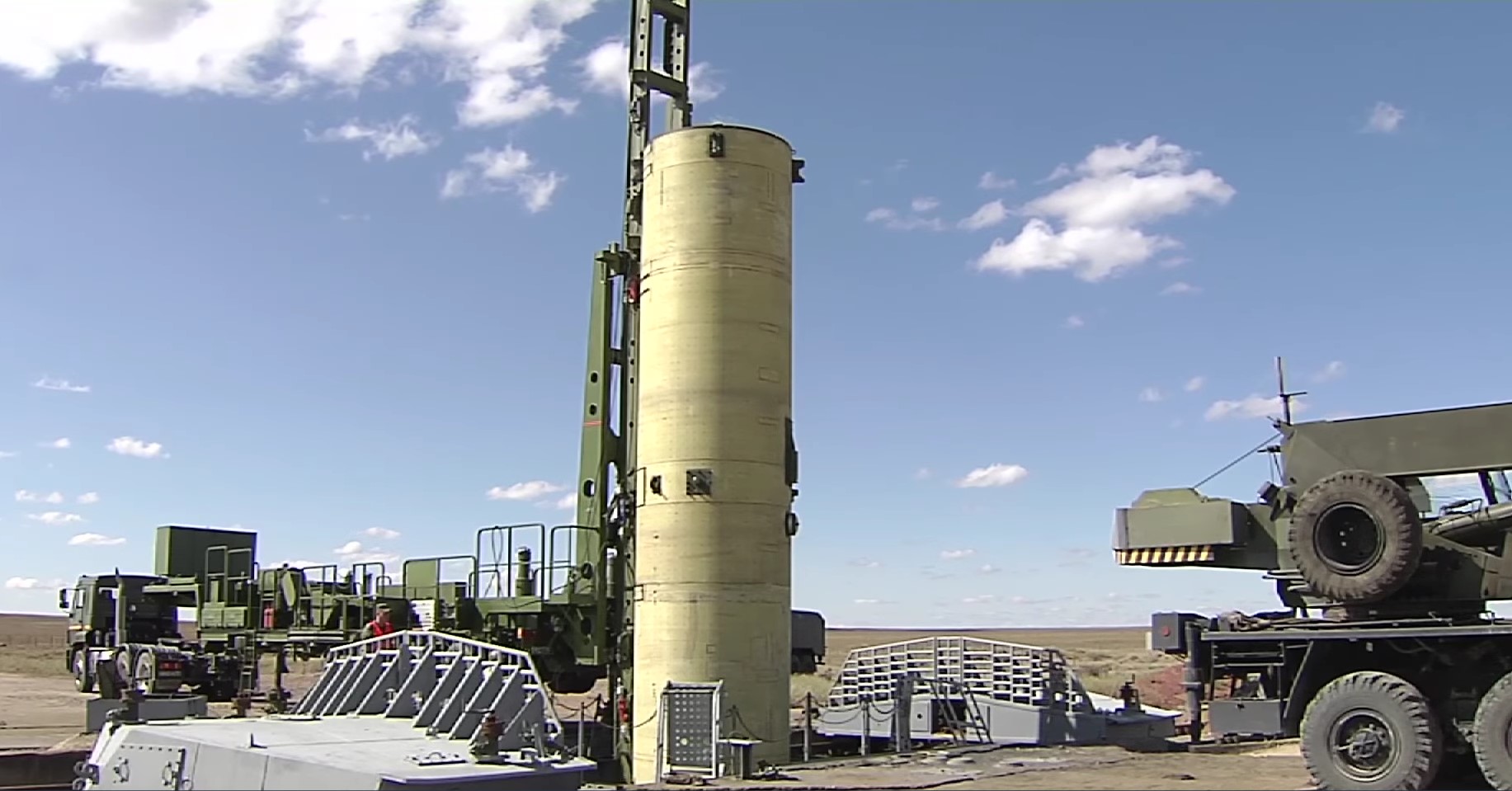
53T6 / PRS-1 — Gazelle, ABM-3, SH-08. Novator endo-atmospheric short intercept. Silo, canister. Length ~10–12 m, mass ~10 t, solid motor. Burn to ~5–6 km/s in a few seconds; 30 km altitude in ~6 s in one technical reconstruction. Load figures of 210 g axial / 90 g lateral are the ones Russian officers keep repeating. Command guided by Don-2N. Published kill envelope: range ~80–100 km, altitude ~10–45 km (20.8 km minimum range in one Russian table). Original warhead nuclear, commonly listed 10 kt (older colour writing also says 20 kt). Designed to throw a neutron/blast kill at a warhead already inside the atmosphere because a hit-to-kill against a decoy-rich cloud was not trusted in 1970s guidance.
Inventory: 68 operational 53T6s is the figure still used into the 2020s. Five firing complexes around Moscow:
- Razvilka / Aparinki — 16 silos (later reduced in some counts) - Skhodnya — 16 - Korolyov — 12 - Vnukovo — 12 - Sofrino (co-located with Don-2N) — 12
Treaty / duty language: “not more than 100 interceptors on combat duty.”
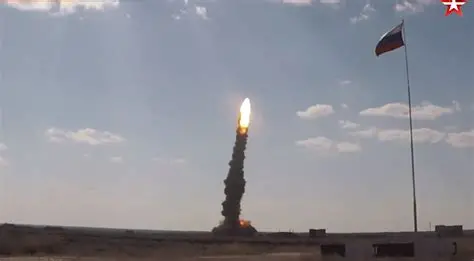
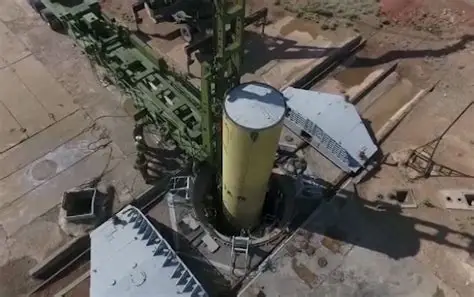
53T6M / PRS-1M. Life-extended / improved Gazelle for A-235. Tests at Sary Shagan across the 2010s, including a public 2021 transporter-loader photo. Claims: conventional (kinetic) option as well as nuclear; longer reach — Russian officers have talked about doubling to ~200 km / 60 km, other tables give 53T6M altitude to 100 km. Some 2021 remarks described a mobile 53T6M basing path; silo reload of existing holes is the conservative reading. Serial production has been announced more than once.
51T6 — Gorgon, ABM-4, SH-11. Fakel exo-atmospheric long intercept, modernized A-350R idea. ~20 m, 33–45 t in Western sheets. First stage solid (~5 s), second stage liquid. Envelope in Russian commentary: hundreds of km (350–600 km range class; altitude tables from ~70 km out toward 350–670 km depending on the writer). Nuclear warhead. Two former Galosh sites held them. Withdrawn from duty; empty outlines on maps. A-235’s new long missile is meant to cover this hole.
14Ts033 / 14A042 Nudol (mobile long / ASAT). Wheeled TEL, not a Sofrino silo. Open reporting treats it as a direct-ascent anti-satellite and long-range BMD round, LEO envelopes in the 500–800 km class in secondary tallies, with kinetic kill advertised. Test series from Plesetsk through the 2010s is the public trail. Whether this TEL is “the A-235” or only the new outer echelon bolted onto Amur is the naming fight. A 2026 document leak story argues the mobile 14A042 can even be fielded as a stand-alone ASAT. Treat inventory numbers (20–40 in some 2026 briefs) as unverified.
Paper A-235 also listed an airborne optical-electronic “Onega” for atmosphere discrimination of warheads vs decoys. Status of that aircraft piece is not a public inventory item.
HOW THE SHOT IS SUPPOSED TO WORK
Satellite or Voronezh sees the launch. Tracks flow to the ABM command post. Don-2N refines, discriminates, and assigns. Long layer (when it existed; Nudol if fielded) would take the cloud outside the atmosphere. 53T6 / 53T6M take whatever is still coming at Moscow inside ~100 km and below ~45–100 km. Guidance is radio command from the pyramid, not a seeker in the Gazelle’s nose in the classic design. Minimum range and insane acceleration exist because the intercept geometry is late and close.
Nuclear kill on the old stock means the defence of Moscow, if used as designed, lights its own sky. That is why every modernization brief mentions conventional / kinetic warheads. Whether every silo round has been converted is not a fact in open literature — only that conversion is the stated direction.
WHAT A-235 ADDS ON PAPER
Keep Amur on duty while swapping computers, radar code, and missiles. Replace Gorgon with a new long interceptor (mobile Nudol and/or a silo long round — sources disagree on the mix). Give short interceptors a non-nuclear option and more reach. Optionally add a third layer. 1st Air and Missile Defence Army officers in 2021 spoke of an A-135M with roughly doubled detect-and-engage figures without taking the belt offline. That is the official story. S-500 Prometey is a separate mobile national BMD/air-defence system, not a Don-2N silo swap.
SITES
Don-2N: 56°10'N 37°46'E class location, Sofrino-1 / Pushkino district. Five 53T6 groups on the Moscow ring as listed above. Former 51T6 holes at old A-35 pads. Prototype / test: Sary Shagan Don-2NP and short silos. Nudol flight tests: Plesetsk in Western reporting.
STATUS
A-135 is on combat duty. 53T6 remains the live short layer. 51T6 is not. Don-2N is up and has been modernized in place. 53T6M has been tested and is the declared replacement short round. A-235 / Nudol as a finished three-layer mobile-plus-silo army is still a program description more than a parade of new TELs around the MKAD. The honest public sentence: Moscow still has a nuclear-era silo ABM with a new-computer radar, and Russia has spent fifteen years testing the missiles that are supposed to make that belt non-nuclear, longer-ranged, and (in the Nudol TEL) able to reach low satellites.
IN ONE SENTENCE
A-135 Amur is the Don-2N–guided silo fence of 53T6 Gazelles around Moscow; A-235 Nudol is the long modernization that keeps that fence on duty while putting a conventional short missile in the holes and adding a mobile long / ASAT round whose exact place in the org chart is still argued in the open press.