WHAT IT IS
Kashtan is the export name of the Soviet and Russian shipboard combined gun-and-missile close-in weapon system whose domestic designation is 3M87 «Кортик» (Kortik, “dirk”). GRAU index of the complex is commonly given as 3M87 / 3K87 depending on source. NATO calls the mount CADS-N-1 and the missile SA-N-11 Grison.
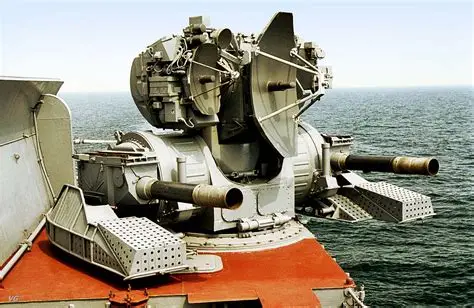
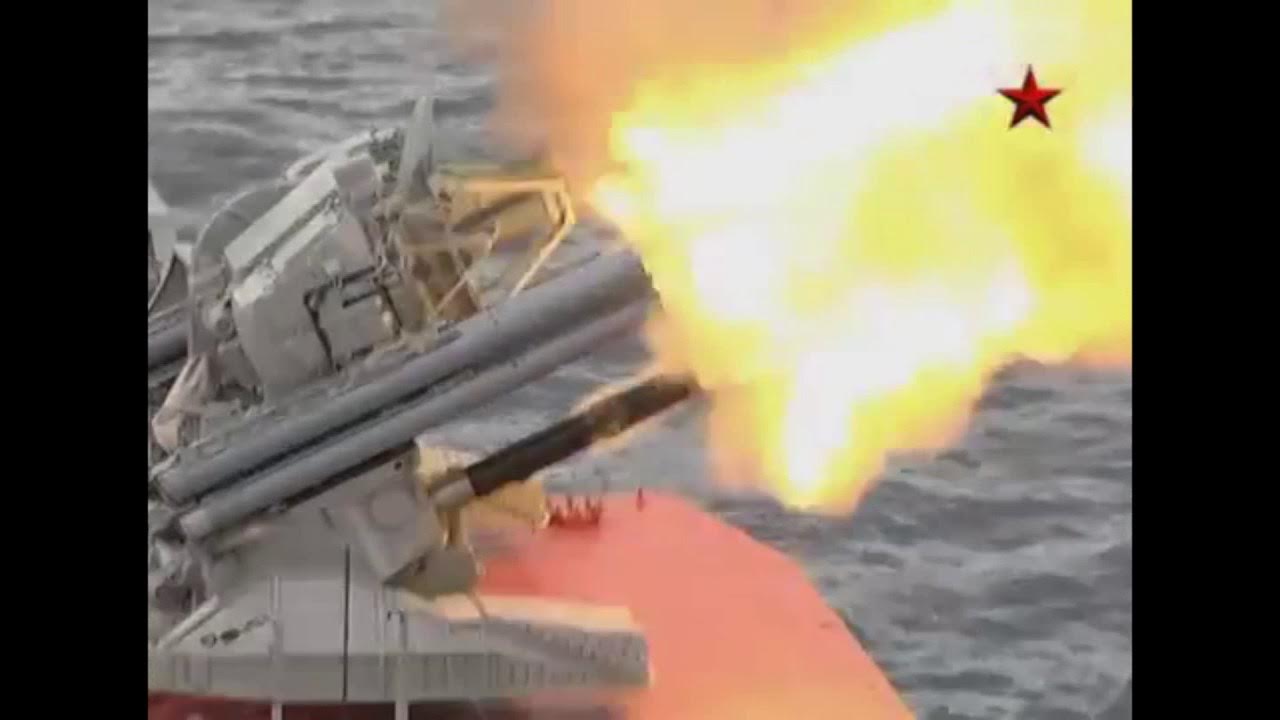
It is not a lone Gatling like the American Phalanx or the Russian AK-630. One combat module carries two six-barrel 30 mm rotary cannon and eight ready 9M311-family missiles (four in a box on each side of the turret). A separate command module finds and ranks targets and hands them to one or more combat modules. The design idea is a two-layer last-ditch fence: missiles kill at 1.5–8 km (10 km on Kashtan-M), guns finish whatever leaks into 0.5–4 km (out to about 5 km on the improved guns).
KBP Instrument Design Bureau in Tula, under Arkady Shipunov, led the weapon. RATEP handled fire control. Tulamashzavod built the guns and mounts. Altair is named in some industrial histories as a partner on the naval integration side. The same missile family flies from the land 2K22 Tunguska. Kortik is Tunguska put on a stabilized naval turret with a ship’s command loop.
NAMES
Kortik = Soviet/Russian service name. Kashtan (“chestnut”) = export brochure name. Western writing uses Kashtan for both. Kashtan-M / Kortik-M is the mid-life improvement shown publicly around IMDS 2003. Palma (export) / Palash (domestic) is a later, lighter cousin from TsNII Tochmash with Sosna-R missiles and more optics than radar — related in role, not the same system. Pantsir-M is the intended heavy successor on large new ships. Do not mix the three.
ROLE
Last-ditch defence of a warship against anti-ship cruise missiles, including sea-skimmers, plus aircraft, helicopters, and in secondary use small surface or shore targets. It is the inner ring after area SAMs (S-300F, Fort, Shtil, Kinzhal, etc.). A single command module can drive several combat modules — makers advertise up to six — so a large ship can face a small raid of incoming missiles at once. Fully automatic from acquisition to engagement is the advertised mode. Human override exists; the point of the machine is speed.
Minimum ship size in export literature is about 400 tonnes displacement, but the combat module stands 2.25 m above deck. That height is why some small-ship projects stayed with AK-630 (about 1.07 m) or went to Palash instead.
HOW A MOUNT IS BUILT
A typical installation is two kinds of box:
Command module (~4.5 t in older tables). Search, identification, threat ranking, target designation to the combat modules. On Kashtan-M a dedicated targeting station is part of the upgrade story.
Combat module (~12.5–15.5 t depending on mark). 360-degree turret. On each flank: one AO-18K / GSh-6-30K (or KD) six-barrel 30×165 mm cannon in a pivoting arm, and a four-round missile cassette above or beside that arm. On the stabilized pedestal: 3P87 “Hot Flash” Ku-band tracking radar plus television/optical channel. Accuracy figures published for the radar/TV pair are on the order of 2–3 m (radar) and about 1 m (optics). The mount tracks multiple targets; engagement is sequential per module, multi-module for simultaneous raids.
Below deck: automatic reload. Baseline Kashtan stores 32 extra missiles; a four-missile pack is said to load in about 1.5 minutes. Ready rounds on the mount: eight. Gun ammunition is linkless helical feed. Published ready loads vary by table: 2×500 on early mounts, 1,000 total in some Western sheets, 2×1,500 on Kashtan-M in others. Treat magazine size as configuration-dependent.
Kashtan-M sensor options are modular in KBP/RATEP material: radar plus optics, radar only, or optics only, with weight falling as sensors come off (brochure figures have run 9.5 / 7.5 / 5.5 t for stripped combat modules — those numbers conflict with the 12.5 t all-up figure used elsewhere; they describe option packages, not one official mass).
THE GUNS
Two water-cooled six-barrel gas-operated rotary cannon, same 30×165 mm family as the AK-630’s AO-18. Kortik/Kashtan uses AO-18K / GSh-6-30K. Kashtan-M uses longer-barrel AO-18KD / GSh-6-30KD.
Combined rate of fire: about 9,000 rds/min on the original (2×4,500) and 10,000 rds/min on Kashtan-M (2×5,000). That is the selling point against a missile already inside the gun belt: a short, dense stream.
Muzzle velocity: ~860 m/s HEI-Frag / Frag-T on the first guns; ~960 m/s HEI and ~1,100 m/s APDS-T on the KD guns. Projectile mass about 0.39 kg HEI/FT, 0.30 kg APDS-T. Gun envelope: 500–4,000 m range and 3,000 m altitude on Kortik; Kashtan-M gun tables often read 300–5,000 m. Effective kill zone against a sea-skimmer is much tighter than the maximum range — Western summaries put useful gun work against missiles inside about 1.5 km.
A 2016 Russian note on new 30 mm ammunition with plastic driving bands applies to the automatic-gun family generally, not uniquely to Kashtan.
THE MISSILES
9M311 / 9M311K / 9M311-1 and export 9M311-1E (sometimes 9M311-1ME). Two-stage solid bicaliber rocket with a jettisonable booster. First-stage diameter about 152 mm, second stage about 76 mm, length about 2.5 m. Missile mass around 42–44 kg out of the tube, ~60 kg in canister. Continuous-rod warhead with a fragmentation layer, about 9 kg, radio or laser proximity fuse. Speed on the order of 910 m/s. Guidance is command-to-line-of-sight (ACLOS): the mount tracks both missile and target and steers the missile. Optical visibility of the target is assumed in older Kortik descriptions of the engagement sector (on the order of ±350 m off the module axis at range).
Missile envelope, Kortik/Kashtan: 1,500–8,000 m range, 5–3,500 m altitude. Kashtan-M with 9M311-1E: 1,500–10,000 m range, about 2–6,000 m altitude. Minimum range is why the guns exist. Kashtan-M adds advertised salvo of two missiles against the hardest targets, 1–2 rounds every 3–4 seconds.
Maker kill-probability figures for an anti-ship missile are 0.94–0.99 for the combined system and 0.7–0.9 for a single missile. Those are brochure numbers against a defined target, not combat statistics.
Maximum target speed in one Russian table: 500 m/s. Reaction time: 6–8 s Kortik, 5–7 s Kashtan-M. Track-on range against a 0.1 m² RCS sea-skimmer at ≥5 m altitude: about 9 km Kortik, 11.4 km in one Kashtan-M citation.
COMBAT SEQUENCE
Ship sensors or the command module acquire. Command module assigns. Combat module tracks with Hot Flash and optics, launches missiles while the target is still in the outer belt, then if the target survives or appears inside the inner belt the two Gatlings fire. Reload from the magazine if the raid continues. Up to five targets per minute is an export claim for the automated cycle. Simultaneous engagements scale with how many combat modules share one command module (1–6 in tables).
VARIANTS AND RELATIVES
Kortik / Kashtan (3M87). Service from 1988–89. Combat module ~15,500 kg. 9M311K, AO-18K, 8+32 missiles in typical diagrams.
Kortik-M / Kashtan-M. Longer-range missile, hotter guns, faster slew/reaction, salvo, modular sensors, more ready gun rounds in some fits, combat module often listed at 12,500 kg. Russian sources said active navy Kashtans would be brought to this standard. Not every hull was.
Palash / Palma. TsNII Tochmash. Same two AO-18KD guns in spirit, but eight Sosna-R missiles and a 3V-89 electro-optical/laser fire-control set (TV, thermal, laser ranger, laser-beam missile guidance). Lighter and lower — intended for small combatants that cannot swallow a 2.25 m Kortik turret. Gun-only Palash trialled on missile boat R-60 at Sevastopol 2005–06. Palma/Palash exported (Vietnamese Gepard 3.9 among users). Not a Kashtan software drop.
Pantsir-M. Naval Pantsir. Missile reach advertised near 20 km. Meant to replace Kortik on cruisers, destroyers, and large frigates. Same 30 mm Gatling idea, different missile and radar generation.
SHIPS THAT CARRY IT
Open lists (not every hull, and fits change with refit):
- Admiral Kuznetsov (heavy aviation cruiser) — multiple modules
- Kirov-class / Project 1144 Orlan battlecruisers (those still in commission or refit)
- Neustrashimy-class / Project 11540 frigates
- Udaloy II / Project 1155.1 (Admiral Chabanenko) — two Kortik
- Some Project 956EM Sovremenny destroyers built for China — two Kashtan in place of four AK-630
- Indian Talwar-class (Project 11356) — Kashtan on early ships; later Indian/Russian 11356 batches mixed CIWS choices
- Test / one-off: Project 1241.7 Tarantul derivative used to trial Kortik; at least one Tarantul-III-type boat reported with CADS-N-1 instead of AK-630s
Operators named in secondary sources: Russia, India, China, Vietnam (Palma/Palash more than classic Kashtan on the Vietnamese Gepards). Production of Kortik-family mounts is “1989–present” in encyclopedic tables; actual new-build volume after the 1990s is modest compared with AK-630 and Pantsir-M plans. WeaponSystems.net-style counts put Kortik production in the “over 40” class — order-of-magnitude, not a navy inventory.
DEVELOPMENT
Late 1970s design start at KBP as naval inner-layer defence against the new generation of sea-skimming missiles that a single AK-630 belt was not trusted to stop. First seen on Soviet ships around 1988. Accepted 1989 in Russian tables. Export push as Kashtan through the 1990s–2000s, when the navy had little money and Tula needed foreign hulls. Kashtan-M pitched at IMDS 2003. Pantsir-M and Palash then split the future: heavy new ships versus small combatants.
Industrial note: the land Tunguska 9M311 and the naval 9M311K are the same missile idea. Training, warhead, and guidance knowledge transferred. The hard naval problems were stabilization, salt, automatic below-deck reload, and tying several turrets to one command module without shooting the ship’s own superstructure.
COMPARED WITH OTHER CIWS
Phalanx: one 20 mm Gatling, lighter, no missiles, shorter reach. Goalkeeper: one 30 mm GAU-8-derived gun, no missiles. AK-630: cheaper Russian gun-only inner belt, lower above-deck height. Kashtan is heavier and taller than all of those and tries to own two range rings at once. The cost is deck space, topweight, and a missile magazine that must stay dry and fed. That is why Palash and Pantsir-M exist — Kortik solved 1980s raid geometry and then became a large, high turret on ships that wanted something lower or longer-ranged.
STATUS
Still in service on surviving Kortik/Kashtan-fitted Russian and export hulls. Modernization path is Kashtan-M where paid for. New large-ship inner-layer money has shifted toward Pantsir-M. Small-ship money toward Palash/Palma or plain AK-630M2. Kashtan remains the classic Russian hybrid CIWS of the late Cold War and the 1990s export navy.
IN ONE SENTENCE
Kashtan is Kortik sold abroad: a Tula-built naval last-ditch system that pairs two 30 mm six-barrel cannon and eight 9M311 missiles on one turret so a ship can shoot a sea-skimmer first with a command-guided rocket and then with a 10,000-round-per-minute gun stream if the rocket misses.