Home |
Data Base |
Technical |
Radio |
Search
MIM-104 PATRIOT
MIM-104 Patriot | Phased Array Tracking Radar to Intercept on Target
US long-range SAM and terminal-phase missile defense system | Raytheon radar, PAC-2 and PAC-3 interceptors
Project Orlan Data Base // public encyclopedia
WHAT IT IS
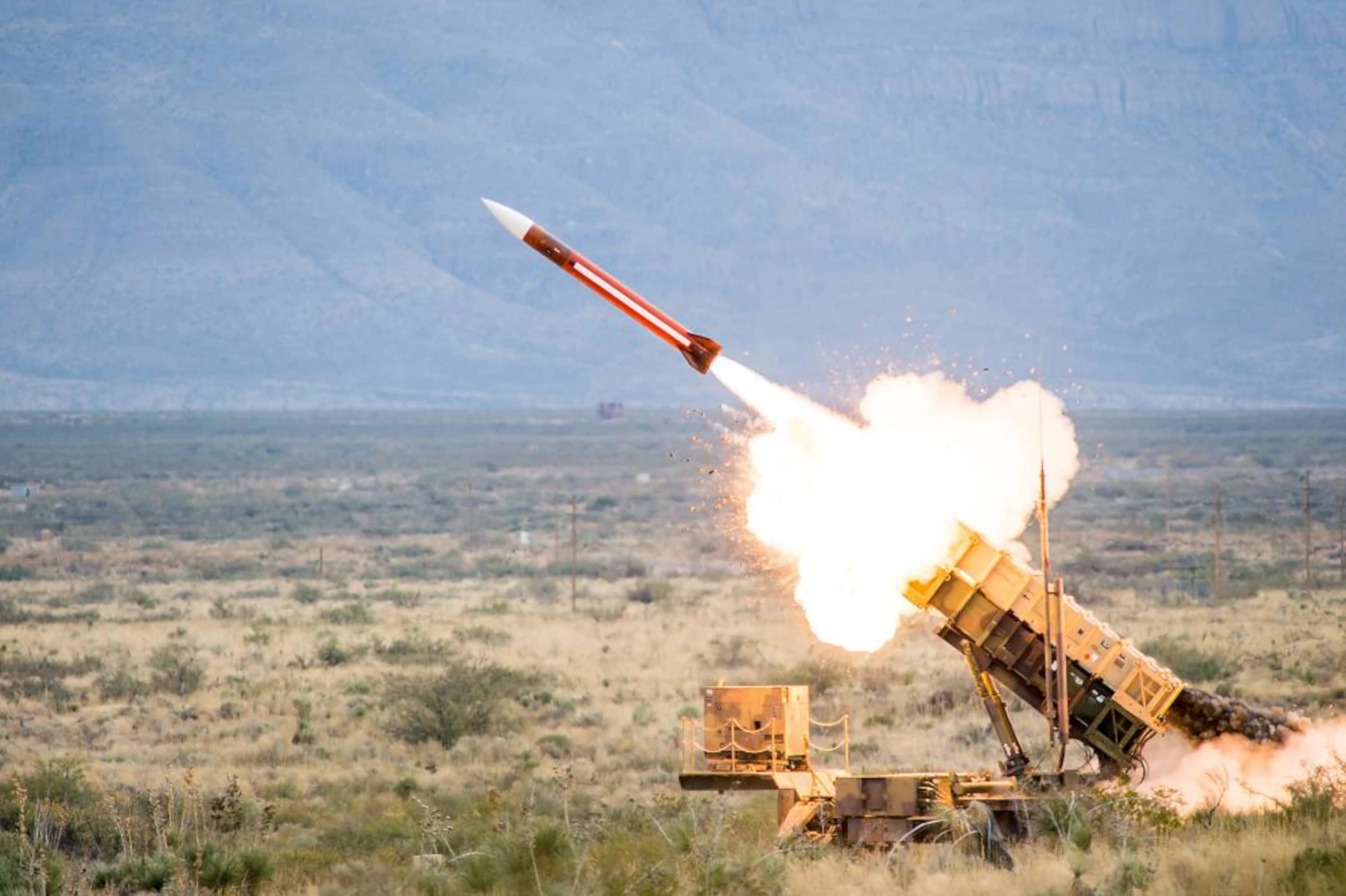
The MIM-104 Patriot is a US-designed, truck-mounted surface-to-air missile (SAM) system built to defend troops, airfields, cities and critical sites against aircraft, cruise missiles, drones and, above all, tactical ballistic missiles in their final (terminal) phase of flight. It is operated by the US Army and by roughly a dozen and a half other countries. The name comes from the radar: "PATRIOT" is a backronym for Phased Array Tracking Radar to Intercept on Target. "MIM" in MIM-104 is the US designation for a Mobile, Interceptor, Missile (ground-launched, air-intercept).
Patriot is a "detect-to-kill" system in the sense that one radar does search, identification, tracking, missile guidance and kill assessment, so a battery does not need a separate search radar and a separate engagement radar the way older systems did. It is the main lower-tier (low-to-medium altitude, last-minute) layer of US and allied air and missile defense; it is not a strategic anti-ICBM system and it is not a short-range point-defense gun or missile.
Patriot is a family, not one weapon. The same ground equipment can fire several quite different missiles: the older PAC-2 and GEM-T interceptors, which kill by exploding near the target, and the PAC-3 and PAC-3 MSE interceptors, which kill by direct collision (hit-to-kill). Most accounts of "what Patriot can do" depend entirely on which missile and which software and radar version is being discussed.
HISTORY
- 1960s, SAM-D: The US Army began studying a replacement for the Nike Hercules and Hawk missiles in the 1960s under the Surface-to-Air Missile Development (SAM-D) program. Raytheon was prime contractor, working at and around Redstone Arsenal, Huntsville, Alabama, where the Army's earlier missile-defense work (Safeguard and its Spartan and Sprint missiles) had been done.
- 1975-1976: A SAM-D missile engaged a drone target at White Sands Missile Range in 1975. The program was renamed Patriot in 1976 and full-scale development followed.
- 1981-1984: Fielding began in the early 1980s; initial operational capability is usually given as 1984. The first units in Europe replaced Nike Hercules and Hawk battalions. At this stage Patriot was an anti-aircraft system. Key technologies were the AN/MPQ-53 phased array radar and track-via-missile (TVM) guidance.
- Late 1980s, PAC-1: A mostly software upgrade, Patriot Advanced Capability 1 (PAC-1), raised the radar's top search angle from about 25 degrees toward the vertical and gave limited ability against tactical ballistic missiles (TBMs). It also changed Patriot from area defense to defense of smaller "point" footprints against ballistic missiles.
- 1990-1991, PAC-2: The MIM-104C PAC-2 missile, with a larger-fragment warhead and a fuze timed for high closing speeds, entered service in time for the 1991 Gulf War. The Army had doubts that the original missile could reliably kill Scud-class missiles.
- 1990s, GEM: Guidance Enhanced Missile (GEM) variants improved the seeker, fuze and warhead; GEM-T (tactical ballistic missile) and GEM-C (cruise missile) versions followed, with the GEM+ line entering service around 2002.
- 1990s-2000, PAC-3: The PAC-3 missile, a new hit-to-kill interceptor derived from the ERINT program of the Strategic Defense Initiative era, was fielded in stages from the late 1990s. The ground system was upgraded in "Configuration" steps and the radar was changed to the AN/MPQ-65 with an added traveling-wave tube.
- 2015-2016, PAC-3 MSE: The Missile Segment Enhancement (MSE) version, made by Lockheed Martin, was accepted by the Army from 2015, with initial operational capability reported in 2016. It has a more powerful dual-pulse motor, larger fins and more range and altitude.
- 2010s-2020s, modernization: Digital radar processing (PDB-7), new software builds (PDB-8 and later), a gallium-nitride (GaN) AESA test radar (AN/MPQ-65A), integration with the Integrated Battle Command System (IBCS), and the new LTAMDS 360-degree radar are the current modernization path. Open sources say the Army expects Patriot to stay fielded until at least 2040.
THE 1991 GULF WAR: PERFORMANCE AND CONTROVERSY
Patriot's first combat use was in January 1991 against Iraqi Scud and Al-Hussein ballistic missiles fired at Israel and Saudi Arabia. The first reported engagement on January 18, 1991 is now generally described as a false track (a computer glitch), not a real Scud.
During the war Patriot batteries fired several missiles at most incoming Scuds; a rough average of three to four per target is often quoted. On February 15, 1991 US President George H. W. Bush, visiting Raytheon's plant, quoted a record of "41 for 42" intercepts. That figure was later heavily challenged.
Theodore Postol (MIT) and Reuven Pedatzur (Tel Aviv University) argued from video analysis that the true success rate was very low and possibly close to zero. Others, including Peter Zimmerman, disputed the method and pointed to Scud wreckage with fragment damage. A House Government Operations subcommittee staff report concluded that there was "little evidence" that Patriot hit more than a few Scuds and that the public and Congress had been misled by definitive statements of success. Part of the problem was that a "success" could mean the warhead was destroyed, or the Scud merely deflected or broken up, or just that the Scud landed in an empty area. Iraqi Scud modifications that made the missiles unstable and prone to breaking up in descent also created confusing multiple debris targets.
On February 25, 1991 a Scud struck a US Army barracks at Dhahran, Saudi Arabia, killing 28 soldiers. A government investigation traced the failed engagement to a software timing error: after about 100 hours of continuous operation, accumulated rounding in the system clock shifted the radar's range-gate prediction by about a third of a second, enough that the radar looked in the wrong place and dropped the track. The Army had a software fix in the field the day after the attack. Rebooting the system regularly had been recommended earlier as a stopgap.
Bottom line: the exact Gulf War intercept rate remains disputed, the full Army study was not public, and both the early 97 percent claim and the near-zero claim are contested. The program's reputation then recovered through the PAC-3 hit-to-kill missile and later combat use.
HOW A PATRIOT ENGAGEMENT WORKS, STEP BY STEP
- 1. Search: The AN/MPQ-65 (or -53) radar sweeps a sector of roughly 120 degrees in azimuth with a narrow, agile electronically steered beam. The beam can be pointed very quickly, so the radar spends more time looking where a target is expected (for example a tailored ballistic-missile search toward the launch area) and less time elsewhere.
- 2. Detection and track: A return that behaves like a target is confirmed by additional radar dwells and becomes a track. The radar examines speed, altitude, heading and radar cross-section and rejects clutter and false tracks. Open sources say the radar can hold many tracks at once (well over 100 is frequently quoted; exact figures are not officially public).
- 3. Identification: An IFF (identification friend or foe) interrogator in the antenna queries the track. The computer and the crew also use speed, altitude, heading, safe-passage corridors and missile engagement zones. Battalion and higher command (and in coalition operations a regional or sector air defense authority) may have to confirm that a track is hostile.
- 4. Engagement planning: The weapons control computer decides which launcher and which missile type give the best chance of a kill and calculates a predicted intercept point. Against tactical ballistic missiles the system normally fires two interceptors in a short ripple (about 4 seconds apart is quoted for PAC-3 in open sources) so the second can attack debris or a surviving warhead. Doctrine against aircraft and cruise missiles may use one or two.
- 5. Launch: The launcher does not need to be aimed precisely at the target. It is turned and raised to a fixed elevated position and the missile is fired from its canister, then steers itself onto the right path. This keeps reaction time short.
- 6. Midcourse, command and TVM guidance: For PAC-2 and GEM missiles, a pre-launch uplink gives the initial course and the radar then tracks both target and missile. The missile's seeker listens to radar energy reflected from the target and sends that information back down to the ground (track-via-missile, TVM). The ground computer, which is far more powerful than anything in the missile, calculates the commands and sends them back up to the missile. This is the key Patriot trick.
- 7. Terminal guidance (PAC-3): The PAC-3 and MSE missile also receive updates from the radar through the midcourse, but in the last seconds a Ka-band active radar seeker in the nose takes over. It picks the radar return most likely to be the warhead of a ballistic missile and homes on it. About 180 tiny pulse rocket motors in the forebody (attitude control motors) fire to make the fine last-moment steering corrections.
- 8. Intercept: PAC-2/GEM missiles detonate a proximity-fuzed fragmentation warhead near the target and rely on the shrapnel to kill or disable it. PAC-3 aims for a direct collision (hit-to-kill) and has a small lethality enhancer charge that throws fragments to enlarge the effective kill area.
- 9. Kill assessment: The radar keeps watching. If the track is gone or broken into debris the system reports an assessed kill; if a track survives, the battery can fire again, subject to missile inventory.
ORGANIZATION: FIRE UNIT, BATTERY AND BATTALION
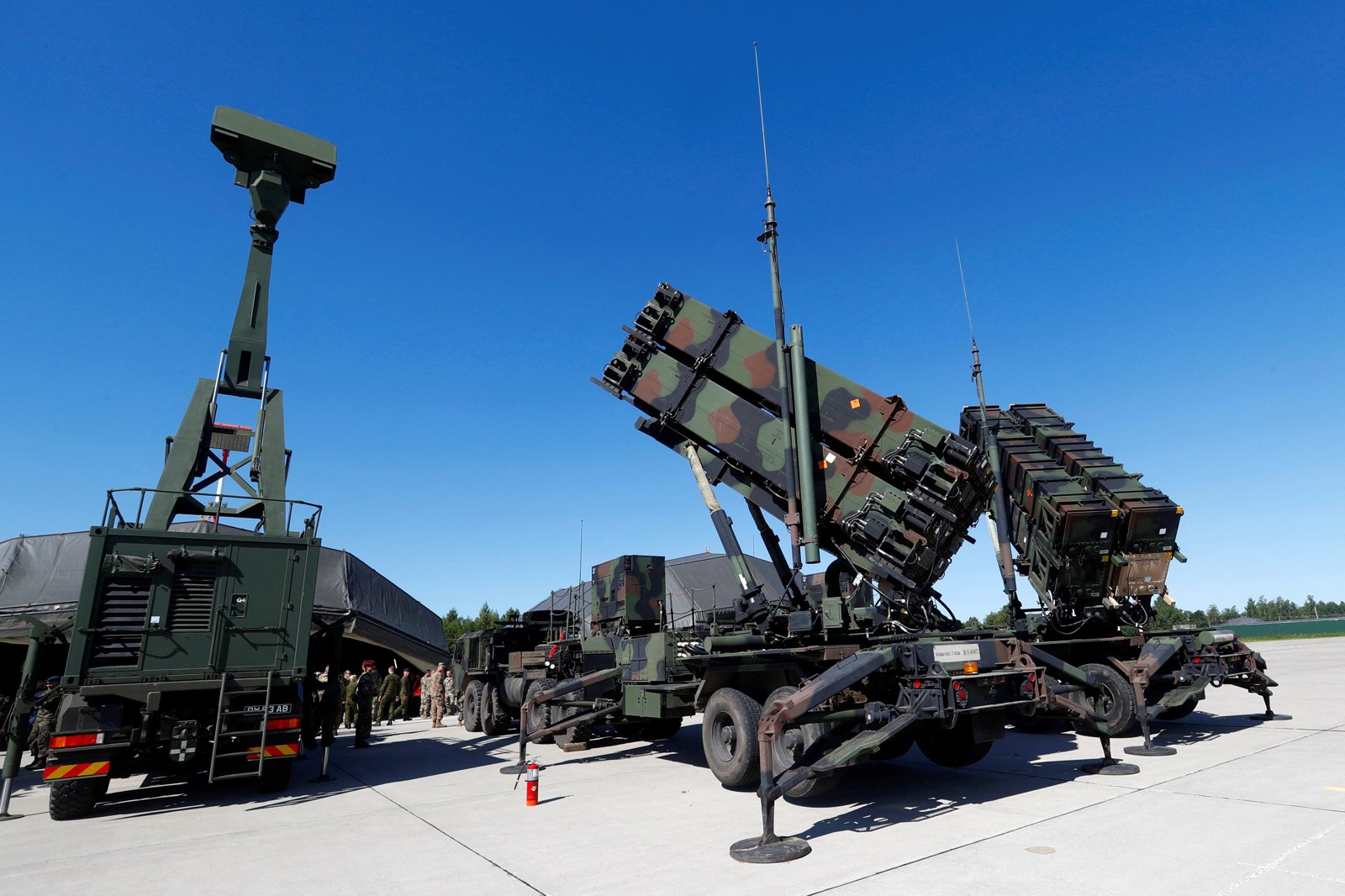
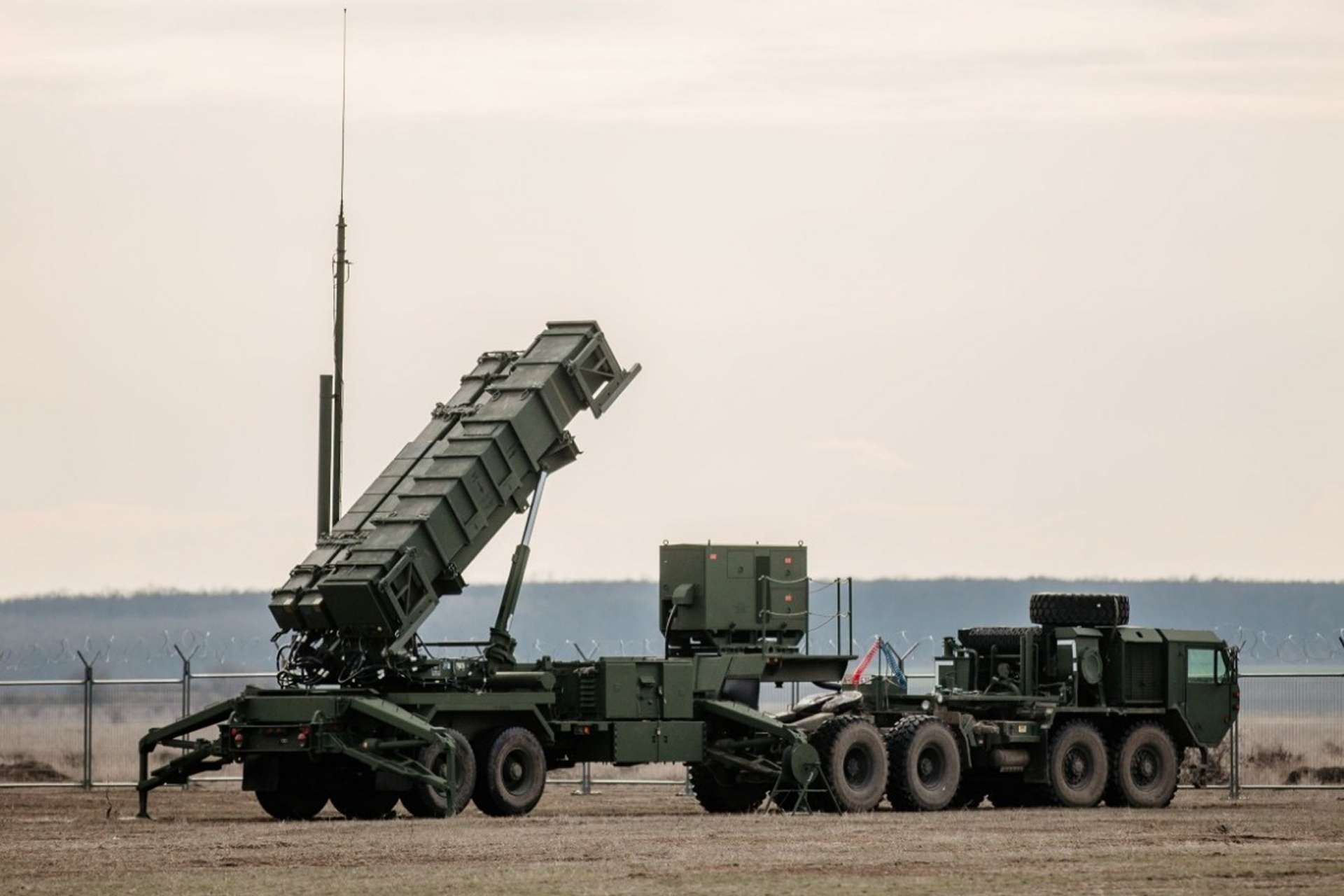
A Patriot fire unit (battery in US usage) normally has an engagement control station, a radar set, an antenna mast group, an electric power plant and up to eight remotely operated launchers. US Army doctrine documents describe three operators per ECS crew and three crews for 24-hour operations; the radar and launchers are unmanned in combat and are controlled from the ECS. A full battery can be emplaced in well under an hour; a 45-minute emplacement has been reported in a 2023 training exercise (Army source quoted by the Congressional Research Service).
A US Army Patriot battalion is built around a headquarters battery with an Information Coordination Central (ICC) and a maintenance company, plus four to six firing batteries. A firing battery is usually commanded by a captain and is commonly given as 70 to 90 soldiers; a battalion can reach 600 or more (approximate; the numbers vary by period and unit). The ICC links the battalion, using UHF links between the antenna mast groups (the Patriot data link, sometimes called PADIL), and can connect to Link 16 (JTIDS/MIDS) networks. The ICC was designed so that a battalion commander can allocate targets among batteries centrally. A dismounted version of the ICC and, more recently, IBCS let batteries disperse further.
GROUND EQUIPMENT
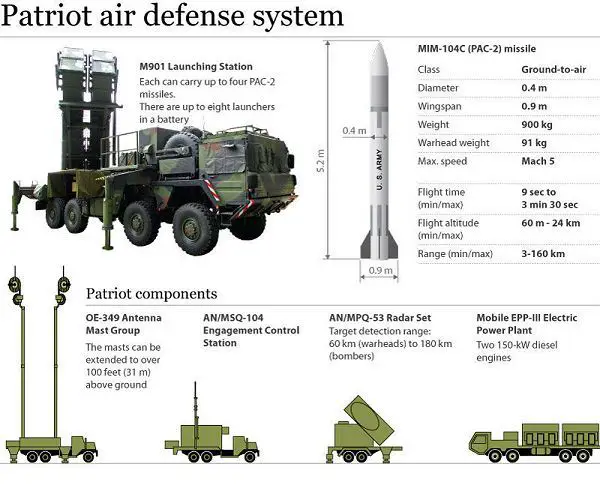
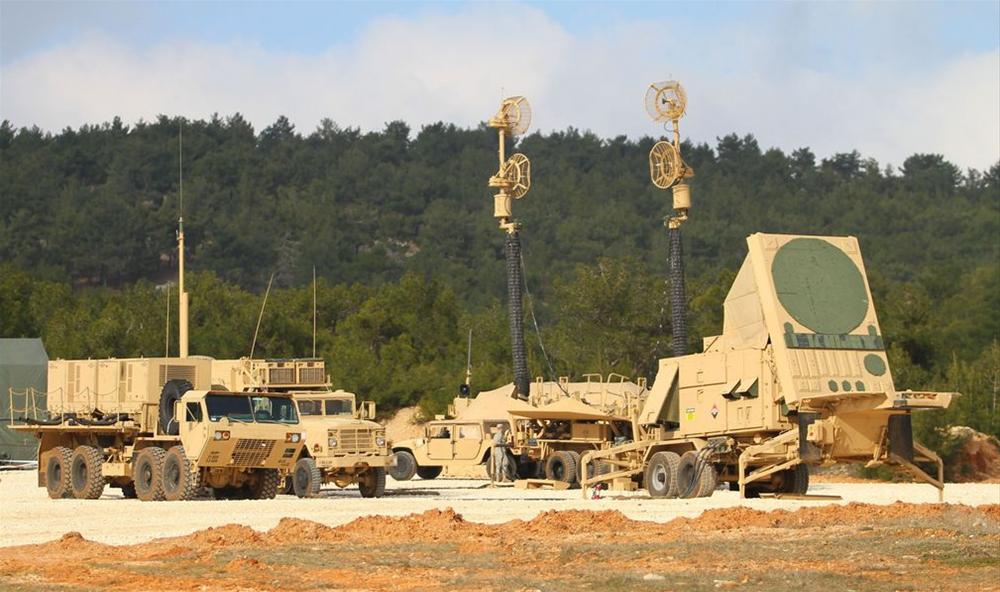
- AN/MPQ-53 radar: The original radar. A flat passive electronically scanned array (PESA) in C-band, with a transmitter, receiver and an array of roughly 5,000 elements. The antenna also includes an IFF interrogator, a track-via-missile array, and at least one sidelobe canceller to resist jamming. It is mounted on an M860 semi-trailer pulled by an M983 HEMTT truck tractor. The infographic on this page quotes about 60 km for detection of ballistic-missile warheads and about 180 km for bombers; figures in other open sources differ with target size and mode, and the exact instrumented range and tracking capacity are not officially published.
- AN/MPQ-65 and -65A radar: Introduced with PAC-3 Configuration 3. It adds a second traveling-wave tube transmitter, giving more search, detection, tracking and discrimination ability, and works with the full PAC-3 and MSE missiles. Commonly quoted open-source ranges are up to about 170 km maximum detection and roughly 100 km "instrumented" figures, with more than 100 tracks and several simultaneous missile engagements; these should be taken as approximate. The AN/MPQ-65A is an upgrade with a GaN AESA test array.
- 120 degree sector: A fixed Patriot radar covers only about 120 degrees of azimuth at a time. To cover 360 degrees a battery has to point radars in different directions or have several radars. This blind-side limitation is the main reason LTAMDS was developed.
- AN/MSQ-104 and AN/MSQ-132 Engagement Control Station (ECS): The air-conditioned, pressurized, EMP-hardened shelter on a truck, where the crew works. It holds the weapons control computer, data link terminal (to the launchers), UHF communications, and the operator consoles. Older monochrome screens have been replaced on updated systems by large color touchscreens. The MSQ-132 is a later version used by several export customers.
- OE-349 Antenna Mast Group: Four UHF antennas on masts that raise to roughly 30 m (about 100 feet) for line-of-sight radio links between the ECS, the ICC and other batteries. The infographic quotes "over 100 feet (31 m)".
- EPP-III Electric Power Plant: Two diesel generators of about 150 kW each (400 hertz, three-phase) powering the radar and ECS. A fuel load of 100 US gallons per tank is reported, and each diesel is reported to run for more than 8 hours on a full tank.
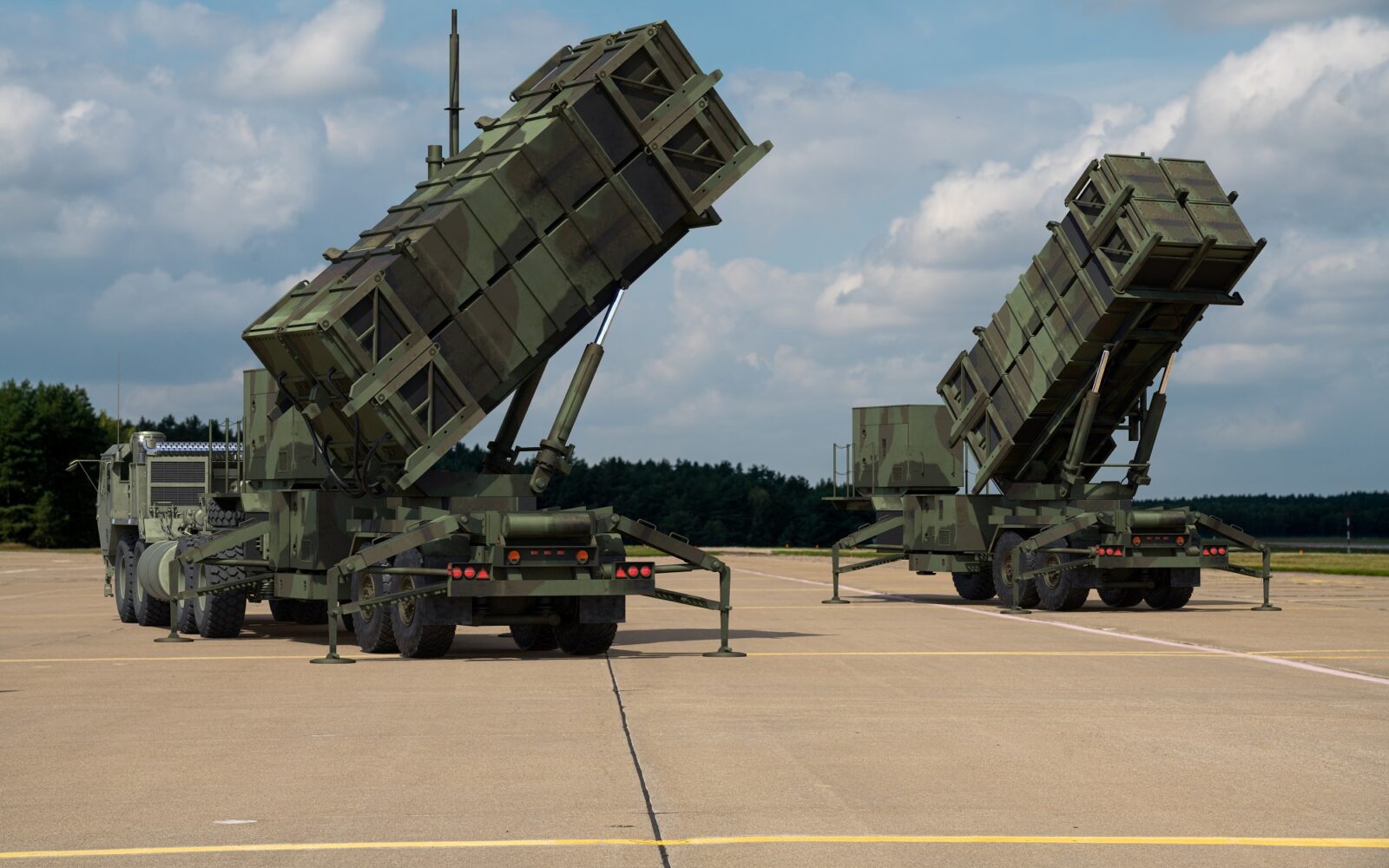
- M901, M902 and M903 launching stations: The M901 carries four PAC-2 / GEM canisters (one missile each). The M902 carries four PAC-3 canisters with four missiles each, so sixteen PAC-3 missiles in total. The M903 is a modular launcher that can be loaded with PAC-2, PAC-3 or PAC-3 MSE canisters in various mixes; reported configurations include up to 12 MSE canisters on one launcher. Launchers are usually set up on slopes of up to about 10 degrees, are fired by remote link (fiber-optic or SINCGARS radio) and carry their own 15 kW generator. A battery can have up to eight launchers. Launchers can be located some distance from the ECS because they do not need line of sight to the target.
- Guided Missile Transporter (GMT): A HEMTT with a large crane used to remove used canisters and load fresh ones. Crews call the stowed crane the scorpion tail.
- Information Coordination Central (ICC): The battalion command post shelter (see above).
- Weights: The ground elements are heavy trailers and trucks; no exact weight is given here because published figures differ widely between variants and countries.
MISSILES
Figures below are open-source and are mostly approximate or estimated. No official single source lists every figure for every missile. Where sources conflict the range is shown.
- MIM-104A "Standard" and MIM-104B ASOJ: The original SAM-D missile, designed for aircraft. Length about 5.3 m, diameter about 0.41 m, launch mass about 900 kg, warhead about 91 kg of blast-fragmentation explosive with radio-frequency proximity fuze. Semi-active radar seeker with TVM. Range often given as about 70 km in early service (some tables list up to about 105 km). The ASOJ (anti-standoff jammer) variant, MIM-104B, was an anti-radiation type for hunting jammers at long range.
- MIM-104C PAC-2: Optimized for ballistic missiles. About 5.2 to 5.8 m long (sources differ), about 0.41 m diameter, about 900 kg, warhead about 91 kg in the infographic (other tables list a somewhat lighter warhead). The fragment size was increased and the fuze timing changed for high-speed targets. The infographic gives: speed up to Mach 5, flight time of about 9 seconds to 3 minutes 30 seconds, altitude about 60 m to 24 km, range about 3 to 160 km. Treat these as ceiling values for the PAC-2 family, not typical engagement values against ballistic missiles.
- PAC-2 GEM (MIM-104D): New proximity fuze that detonates earlier and a lower-noise seeker head; used heavily in the 2003 Iraq War.
- GEM-C: Improved nose for low-flying cruise missiles and other low radar cross-section targets.
- GEM-T (MIM-104E): Tactical ballistic missile upgrade of the PAC-2 with improved fuze and a new low-noise oscillator in the seeker. Estimated range up to about 160 km against aircraft and altitude up to about 32 km in some tables; ballistic-missile engagement ranges are shorter. In 2018 Raytheon announced a GaN-based seeker transmitter upgrade. GEM-T is the standard "older" Patriot missile still bought by Germany, the Netherlands, Spain, Romania and others.
- MIM-104F PAC-3 (CRI): A different class of missile. About 5.2 m long, about 25.5 cm (about 10 in) diameter and about 312 kg at launch (Bundeswehr figures; some sources round to about 315 kg). Hit-to-kill with Ka-band active radar seeker, about 180 attitude control motors, and a small lethality enhancer (reported as 24 low-speed tungsten fragments). Four missiles per canister (the Bundeswehr calls the canister group a FourPack). Estimated ranges in open sources: up to about 80 km against aircraft, about 40 km against ballistic missiles, and altitudes of about 20 to 24 km; these are estimates. The Cost Reduction Initiative (CRI) version is the production standard that followed the first PAC-3 batches.
- PAC-3 MSE: Lockheed Martin's Missile Segment Enhancement. Dual-pulse solid rocket motor (the motor is made by what is now L3Harris, which acquired Aerojet Rocketdyne in 2023), larger control fins that fold to fit in existing canisters, upgraded actuators and an improved seeker and software. Hit-to-kill with a Ka-band seeker and attitude control motors, plus a modified lethality enhancer. Lockheed Martin does not publish range or altitude. Third-party estimates are about 120 km against aircraft, about 60 km against ballistic missiles and altitude up to about 36 km (estimates only). Dimensions and weight are not officially listed in the sources checked; the missile is about the size of the PAC-3 but heavier and slightly larger in diameter (estimated 0.29 m in one source). MSE is carried in single-missile canisters, so an M903 launcher holds fewer MSE missiles (reported as up to 12) than PAC-3 (16). Boeing has been reported as the seeker supplier.
- SkyCeptor / PAAC-4: A proposed variant that would have used a Rafael Stunner (David's Sling) interceptor with Patriot ground equipment. Poland ultimately did not buy it. Romania has announced plans for local SkyCeptor production but this article does not rely on that.
- Missile service life: In 2013 the Army approved extending the service life of Patriot missiles from 30 to 45 years, according to Raytheon.
WARHEAD TYPES: BLAST-FRAGMENTATION VERSUS HIT-TO-KILL
A blast-fragmentation warhead (PAC-2 and GEM) carries a few tens of kilograms of high explosive and a fragment sleeve. A radio proximity fuze detonates it near the target. It is good against aircraft and cruise missiles but against a fast ballistic missile the fuze can fire late and the fragments may hit the tail of the target rather than the warhead, which was a known issue in 1991.
Hit-to-kill (PAC-3 and MSE) relies on direct impact. Because the interceptor flies into the target at high speed, the kinetic energy in the collision is far greater than the energy delivered by fragments. PAC-3 is accurate enough to hit the warhead section of many ballistic missiles. It has a short, small lethality enhancer to increase the kill area. The trade-off is that PAC-3 has a smaller total warhead and a shorter range than PAC-2 against aircraft. For that reason many Patriot batteries mix PAC-3 and PAC-2/GEM-T canisters.
LTAMDS: THE NEW RADAR
The Lower Tier Air and Missile Defense Sensor (LTAMDS) is built by Raytheon (RTX). The Army chose Raytheon's design in 2019 as the successor to the Patriot radars. It is an active electronically scanned array using gallium nitride (GaN) transmit/receive modules. One large main array is flanked by two smaller arrays (each about half the size) so the radar sees 360 degrees, which lets a battery see drones, cruise missiles and ballistic missiles from any direction. Raytheon markets it for export as GhostEye (the Poland program uses LTAMDS/GhostEye terminology).
Status as reported in 2026: six pre-serial radars have been delivered for test; the program entered low-rate initial production in April 2025 after a Milestone C decision; production contract actions reported include a $1.03 billion two-year modification (January 2026) and a $904.6 million contract for five radars (April 2026), reported by defense news outlets from Army contract announcements. The director of operational test and evaluation reported in March 2026 that full-rate production is now expected in the fourth quarter of fiscal 2028, about a year later than previously planned. Poland has ordered 12 LTAMDS radars; the US State Department approved the potential sale of eight to Kuwait. A February 2025 live-fire test guided a PAC-2 GEM-T onto a cruise missile target using LTAMDS.
IBCS AND NETWORKING
The Integrated Battle Command System (IBCS) is a Northrop Grumman command-and-control system that links sensors and shooters from different programs into a single network so that any radar can cue any launcher. For Patriot this means that radars and launchers can be separated and engagements assigned by a central IBCS node instead of the older Patriot ICC. Poland ordered IBCS together with Patriot and uses it to join Patriot to its new short-range CAMM missile systems. The US Army has also funded Lockheed Martin's Remote Interceptor Guidance-360 (RIG-360), which is intended to let PAC-3 missiles be guided by IBCS from a radar other than the one that fired them (a $114.6 million development award was reported in May 2025, with completion scheduled for 2027).
PATRIOT AND THE S-300 / S-400: A BRIEF, NEUTRAL COMPARISON
The two are often compared but they are different designs. S-300 and S-400 batteries typically use larger launchers with long-range missiles in sealed canisters launched vertically, with separate search and engagement radars. Patriot uses one multi-function radar and inclined launchers. Publicly stated Russian claims put the longest-range S-400 missile at 400 km, far above any Patriot missile; Patriot's PAC-3 MSE is an agile hit-to-kill missile aimed at destroying ballistic missile warheads. Real-world performance of both has been argued with limited verified data, and both are only as good as the radar picture, the crew, the missile stock and the targets they face. See the S-300 article in this database for the Soviet and Russian side.
OPERATORS
Operators and orders as best verified from public reporting. Numbers change with new orders and are sometimes reported differently by different sources.
- United States: US Army battalions at home and in Europe, the Middle East, South Korea and Japan. The Army has about 1,100 Patriot launchers in total as built; the number in service is smaller.
- Germany: Luftwaffe air defense missile groups. Germany has transferred several fire units to Ukraine and is buying replacements (see Status).
- Netherlands: Royal Netherlands Army (PAC-2 and PAC-3 MSE).
- Japan: Air Self-Defense Force; PAC-2 and PAC-3, with Mitsubishi Heavy Industries producing under licence.
- Israel: Used since the Gulf War era as "Yahalom". Israel announced in 2024 that it was retiring its Patriot batteries. A transfer of interceptors to Ukraine was reported in January 2025; Israeli denials and later statements about batteries have been mixed in the reporting. Treat Israel as a former operator.
- Saudi Arabia, United Arab Emirates, Kuwait, Qatar, Bahrain: Gulf operators; all have been engaged in recent missile and drone defense. Bahrain is reported as a PAC-3 customer.
- South Korea and Taiwan: Both operate Patriot as part of ballistic missile defense, South Korea with US Army batteries on the peninsula as well.
- Spain, Greece: NATO members with PAC-2 systems; Spain has had a battery in Turkey as part of NATO missile defense.
- Poland: Two batteries delivered in the first Wisla phase (first one delivered December 2022), and six more batteries ordered in 2023 with IBCS, 12 LTAMDS radars, M903 launchers and PAC-3 MSE missiles (the 2023 US approval was about $15 billion in total, with numbers such as 48 launchers and 644 PAC-3 MSE; treat the totals as approximate).
- Sweden: Four fire units and 12 launchers (Luftvarnssystem 103), delivered 2021-2022.
- Romania: Seven Patriot batteries ordered in 2017; reported delivered by 2023. Romania has also announced a battery for Ukraine (see below).
- Switzerland: Five batteries contracted in 2023, with deliveries reported to be delayed because of competing demand, with reports of delays of several years.
- Ukraine: See below.
- Others reported: Reporting also lists orders from Morocco and others; this article does not rely on those.
COMBAT HISTORY
- 1991 Gulf War: See above. Disputed score, Dhahran failure.
- 2003 Iraq War: Patriot PAC-3, GEM and GEM+ engaged short-range Iraqi missiles in Operation Iraqi Freedom (Al-Samoud 2 and Ababil-100 are named in open sources); 9 of 9 TBM engagements is a figure from a US command briefing. There were three well-known fratricide incidents: a British Tornado shot down on March 23, 2003 (two crew killed), a USAF F-16 that fired a HARM at a Patriot radar on March 24, 2003 (no casualties), and a US Navy F/A-18 shot down on April 2, 2003 (pilot killed). They are cited as examples of IFF and classification problems with Patriot against fast aircraft.
- Israel 2014 and later: Israeli batteries shot down Hamas and Syrian drones and, in July 2018, a Syrian Su-22 that entered Israeli airspace.
- Saudi Arabia and the UAE vs Houthi missiles, 2015 to 2021: Repeated engagements of ballistic missiles. Results are mixed and hard to verify: a number of claimed successes, some videos showing failed or erratic interceptors, and the 2019 Abqaiq and Khurais attack, when Saudi Patriot batteries did not stop the low-flying drones and cruise missiles that hit the oil facilities (reports attribute this partly to the radar's limited sector and to low-altitude targets).
- Ukraine 2023 to 2026: First battery arrived in spring 2023. On May 4 2023 Ukraine claimed to have downed a Russian Kinzhal hypersonic ballistic missile with a Patriot; US officials later said so too. Russia disputed it and claimed a Patriot battery in Kyiv was destroyed on May 16 2023; US officials said it was damaged only slightly and repaired. Ukraine also claimed a shootdown of several Russian aircraft in May 2023 with Patriot; this has been contested in detail. A US DIA report cited in open sources says Russia upgraded Iskander-M and Kinzhal missiles with terminal-phase maneuvers in 2025 to evade Patriot; a Financial Times report in October 2025 said Ukrainian interception rates against ballistic missiles had dropped from about 37 percent in August to about 6 percent in September (reported from officials; treat as reported). Russian claims of destroying Patriot launchers and radars have been made many times; some losses have been confirmed through imagery and others not. Patriot radars have also been repaired by German technicians and returned to Ukraine in 2025 (press reports).
- 2026 Iran war: Public reporting says Patriot was used heavily by US and Gulf forces against Iranian ballistic missiles and drones after the war began on February 28, 2026. A CSIS estimate reported in the press said US forces used roughly 1,050 to 1,430 Patriot interceptors; Saudi Arabia reportedly used about 2,400 PAC-3 interceptors in the first 38 days (reported by Arab News and Bloomberg; not independently verified by this article). Congress was reported to have assessed the interception rate against Iranian ballistic missiles at about 90 percent. An analysis reported by Reuters said a US-operated Patriot interceptor was likely involved in an explosion in Manama, Bahrain after it hit a drone mid-air. These are recent and may be revised.
LIMITS AND VULNERABILITIES
- Limited sector: The older radars see only about 120 degrees at a time; a sudden attack from the unwatched side is a classic weakness. LTAMDS and IBCS are the fix.
- Radar emits: Active radar can be located by anti-radiation missiles, which is why the radar is often moved and why decoys and emission control are used. A US HARM missile did destroy a Patriot radar by mistake in 2003.
- Saturation: A battery has a fixed number of ready missiles (up to 8 launchers, 16 PAC-3 each or fewer MSE). Large salvos of cheap drones and missiles together can exhaust interceptors, and Patriot interceptors cost millions of dollars each.
- Maneuvering and fast targets: Missiles that maneuver in the last seconds or fly on depressed trajectories are harder to catch. Ukrainian reports in 2025 describe such problems.
- Fratricide and classification: See 2003. IFF Mode 5 and IBCS are being added to reduce these.
- Supply: The biggest limit in 2026 is not the radar but the stock of PAC-3 MSE interceptors.
- Crew and mobility: A fire unit can be emplaced in under an hour but is a large formation of heavy vehicles; moving out quickly after firing is a survival tactic.
COST (APPROXIMATE)
Figures are open-source and vary by year and country. A single PAC-3 MSE interceptor has been given as about US$4 million on the US domestic price list and about US$6 to 10 million in export price quotes; older GEM-T interceptors are cheaper (several million dollars is typical). A full Patriot battery has been given as about US$1.09 billion on US domestic cost (FY2022) and about US$2.4 to 2.5 billion for exports in some quotes. Poland's 2018 buy of two batteries was reported at about US$4.75 billion including IBCS and missiles. Treat all as approximate.
PRODUCTION AND LOGISTICS
- PAC-3 MSE: Lockheed Martin delivered 620 PAC-3 MSE interceptors in 2025 (company figure). On January 6, 2026 Lockheed Martin and the US Department of War signed a seven-year framework agreement aimed at raising annual production capacity from about 600 to about 2,000; Lockheed's CEO said the 2,000 a year target is for the end of 2030. The framework is subject to a future contract and Congressional appropriations. In April 2026 the Army announced a $4.7 billion undefinitized contract action to support accelerated production. A $9.8 billion Army contract was reported in September 2025. The Camden, Arkansas plant is a main final assembly site.
- GEM-T: A European consortium of Germany, the Netherlands, Spain and Romania ordered about 1,000 GEM-T missiles in 2024 for MBDA to build in a new plant in Schrobenhausen, Germany; construction was scheduled to finish in September 2026 (check current status). Raytheon builds GEM-T in the US.
- Replacement lead times: CSIS has been cited in the press for the figure that new PAC-3 orders take about 3.5 years on average to fulfill. A US Army assessment reported in the press said Patriot stocks could remain strategically low until about 2030.
- Maintenance: Missiles are delivered as certified rounds in sealed canisters that do not require routine maintenance before launch. The radar, ECS and power plants need regular scheduled maintenance by the fire control platoon and a maintenance company; the launchers have their own platoon. Germany's Bundestag budget committee approved about 90 million euros for 40 repair containers for Patriot in 2026 (press report), showing how large the support tail is. Old computers and radar parts need obsolescence replacement, and the IESP (International Engineering Services Program) is the cooperative upgrade program between the US and the Patriot partner nations.
STATUS AND OUTLOOK (OCTOBER 2026)
All the following is from public reporting up to mid-October 2026 and may change.
- Ukraine: Press accounts list about 10 batteries in total contributed by Germany, the United States, Israel and Romania (this count is reported and not confirmed by Ukraine). On October 15, 2026 CNN and other outlets reported, citing Ukrainian officials and sources, that Ukraine had virtually run out of Patriot interceptors, with a Washington Post source saying "only a couple" remained. Ukraine has been reported to have placed its first direct purchase order in mid-2026. Donald Trump was reported to have approved a license for Ukraine to produce Patriot missiles; reports differ on the date (July 2026 at the NATO summit versus announcements in September), and no production has been confirmed.
- Germany: The Bundestag budget committee approved about 650 million euros to buy two Patriot fire units through US Foreign Military Sales to replace units given to Ukraine, with Norway reported to cover more than half the cost; deliveries are reported to run to 2028.
- PAC-3 MSE: See production above. Demand from the US, Ukraine and Gulf states exceeds supply.
- LTAMDS: In low-rate production, full-rate production expected fiscal Q4 2028. First export customer Poland.
- Poland: Large Patriot and IBCS buildup including LTAMDS and PAC-3 MSE; a Polish plant has produced PAC-3 MSE launch containers (a delivery to Lockheed Martin was reported in April 2025).
- Outlook: Patriot is expected to stay in service until at least 2040 (open-source figure), with new radars, IBCS integration and the PAC-3 MSE as the main interceptor. The main open question is whether production can grow fast enough to meet global demand.
IN ONE SENTENCE
The Patriot is the US Army's truck-mounted, radar-guided air and missile defense system, combining a single multi-function phased array radar and engagement station with PAC-2 fragmentation missiles and PAC-3 hit-to-kill missiles, which went from a 1991 Gulf War reputation fight to the main terminal-phase ballistic-missile defense of the US and some 18 allied countries, and whose limit in 2026 is the number of interceptors that can be built.
Project Orlan // Underground Information Database