WHAT IT IS
TITANPOINTE is the NSA covername for a surveillance site inside AT&T’s windowless Long Lines tower at 33 Thomas Street, Tribeca, Manhattan. An internal SSO dictionary entry released from the Snowden archive states, without a street address: “TITANPOINTE — BLARNEY’S site in NYC.” The Intercept (Ryan Gallagher and Henrik Moltke, November 2016), with the short film Project X, matched that covername to this building by stacking the documents against public records, FCC satellite licenses, former-employee interviews, rooftop dishes, proximity to 26 Federal Plaza, and the presence of international gateway 4ESS switches the agency calls RIMROCK.
The identification is correlative, not a leaked floor plan that prints “33 Thomas.” It is the strongest public case for any single U.S. AT&T building as a named NSA room. The tower itself is older than the covername: a 1974 nuclear-hardened telephone fortress that still routes long-distance and international circuits under CLLI NYCMNYBW.
THE BUILDING
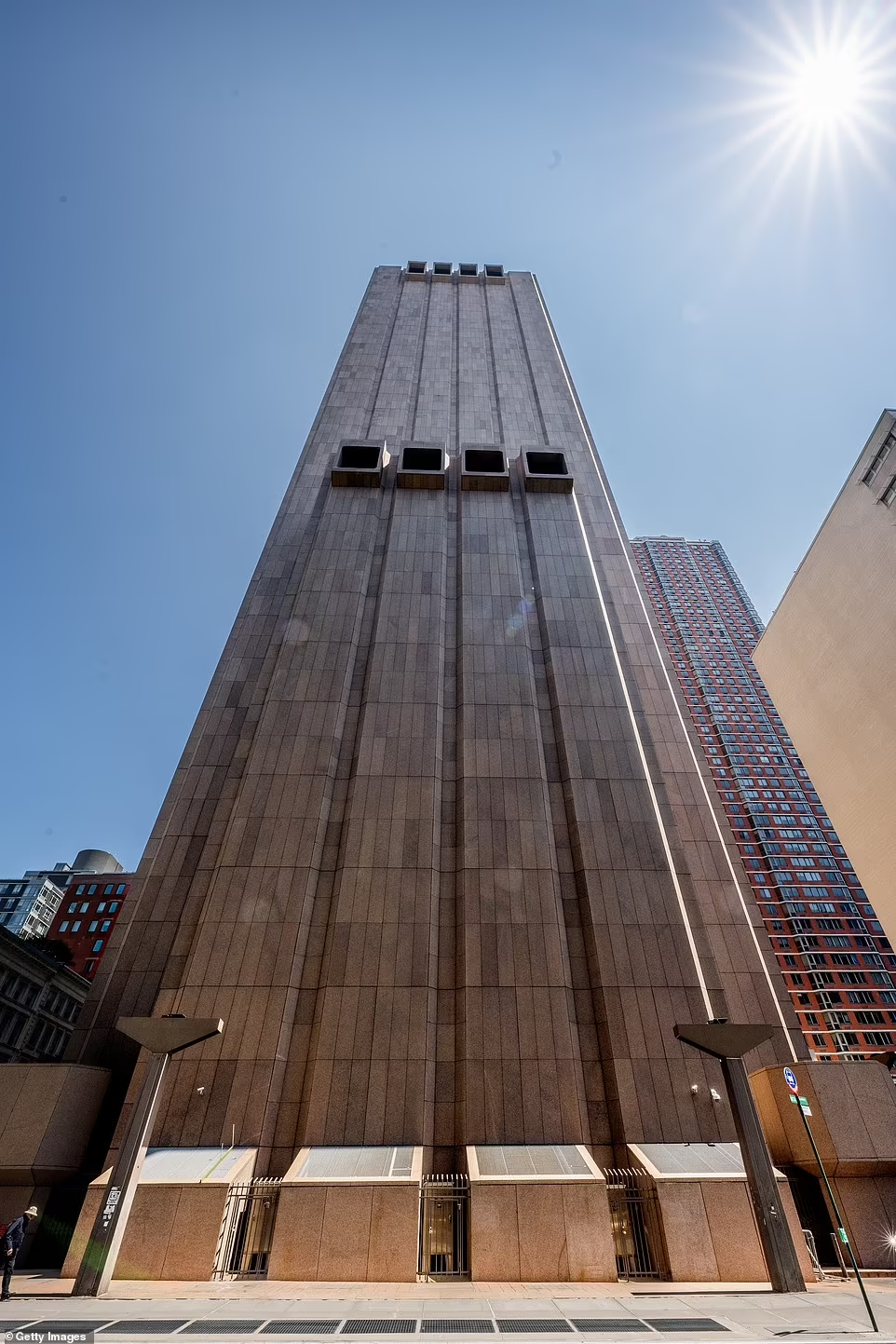
Address: 33 Thomas Street, east side of Church Street between Thomas and Worth, Tribeca. Coordinates about 40.7168° N, 74.0061° W. Owner: AT&T. Architect: John Carl Warnecke & Associates. Structural: Shmerykowsky. Construction 1969–1974. Warnecke’s own files called it “Project X” — “a skyscraper to be inhabited by machines… designed to house long lines telephone equipment and to protect it and its operating personnel in the event of atomic attack.”
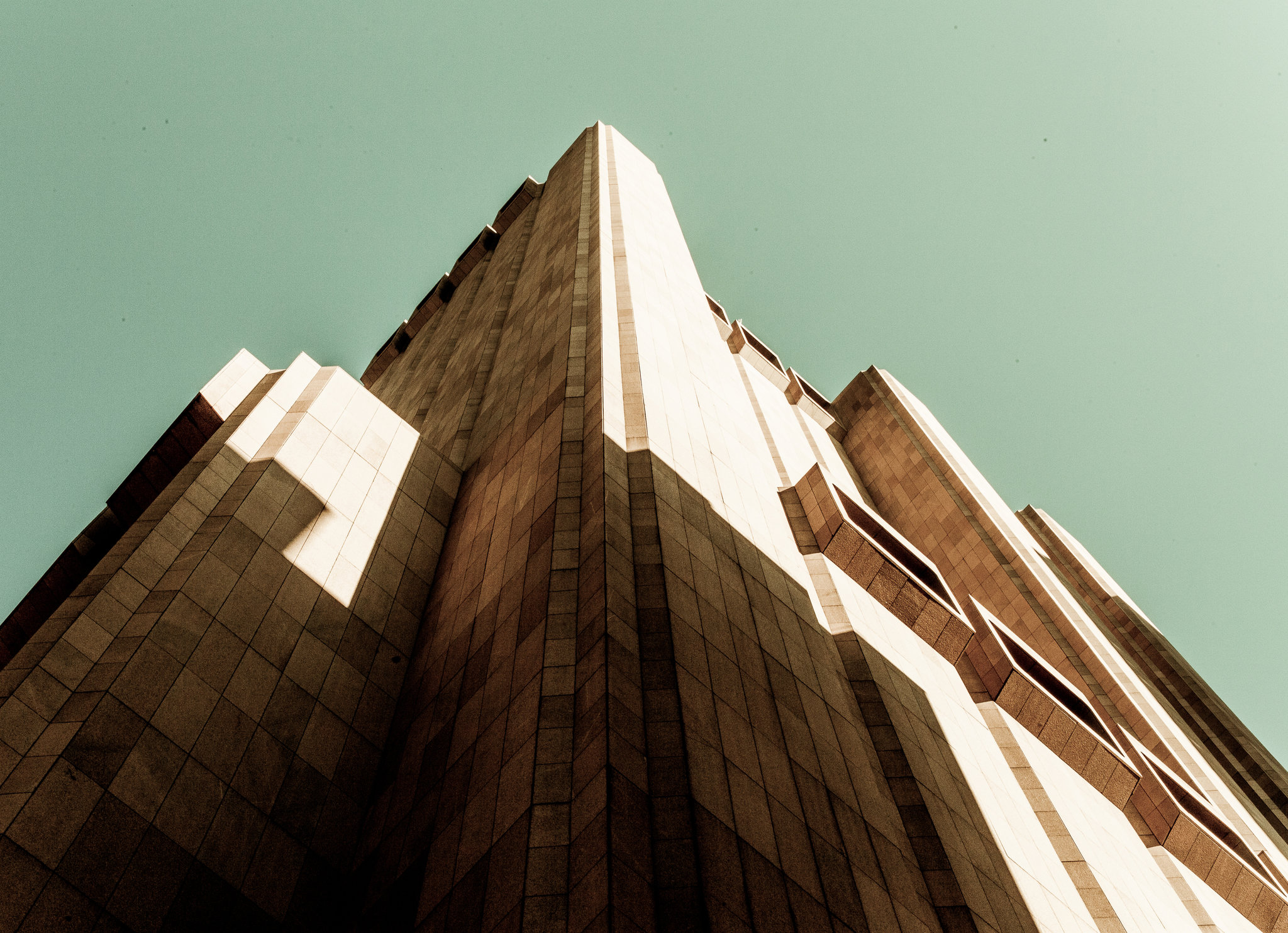
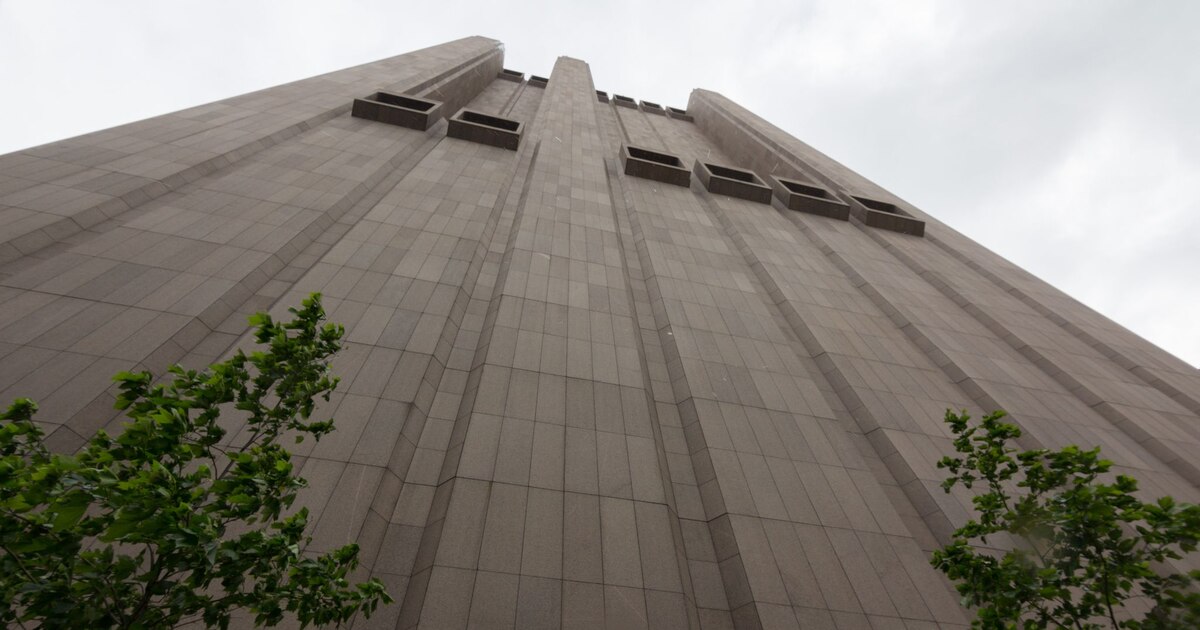
Height 550 ft / 168–170 m. Twenty-nine stories above grade plus three basement levels (cable vault among them). Typical floor-to-floor is 18 ft / 5.5 m — equipment height, not office height — so the silhouette equals a ~50-story tower with half the floors. Live load 200–300 psf (about 10–15 kPa / up to ~1.5 t/m²). No windows. Precast concrete panels faced with flame-treated Swedish granite. Six vertical protrusions carry stairs, elevators, and air shafts; large intake/exhaust openings punch the 10th and 29th floors. William H. Whyte called it the world’s tallest blank wall.
The outer wall is a sandwich: granite-faced precast, a honeycomb of concrete conduits for pulling cable up the façade, then fireproof tile. Floors were sized so a later generation of switch could be rolled in without rebuilding the box. Cast-iron loft façades on the old lot were razed; some fronts were kept as a street gesture.
HARDENING AND ENDURANCE
Cold War brief: survive blast and fallout long enough to keep the long-distance plant alive. Own gas and water. Generators. Planning figures in secondary writing: food, water, and shelter for about 1,500 people for two weeks; on the order of 250,000 gallons of generator fuel in one commonly repeated note. The building is not illuminated as an office tower; at night it is a dark slab.
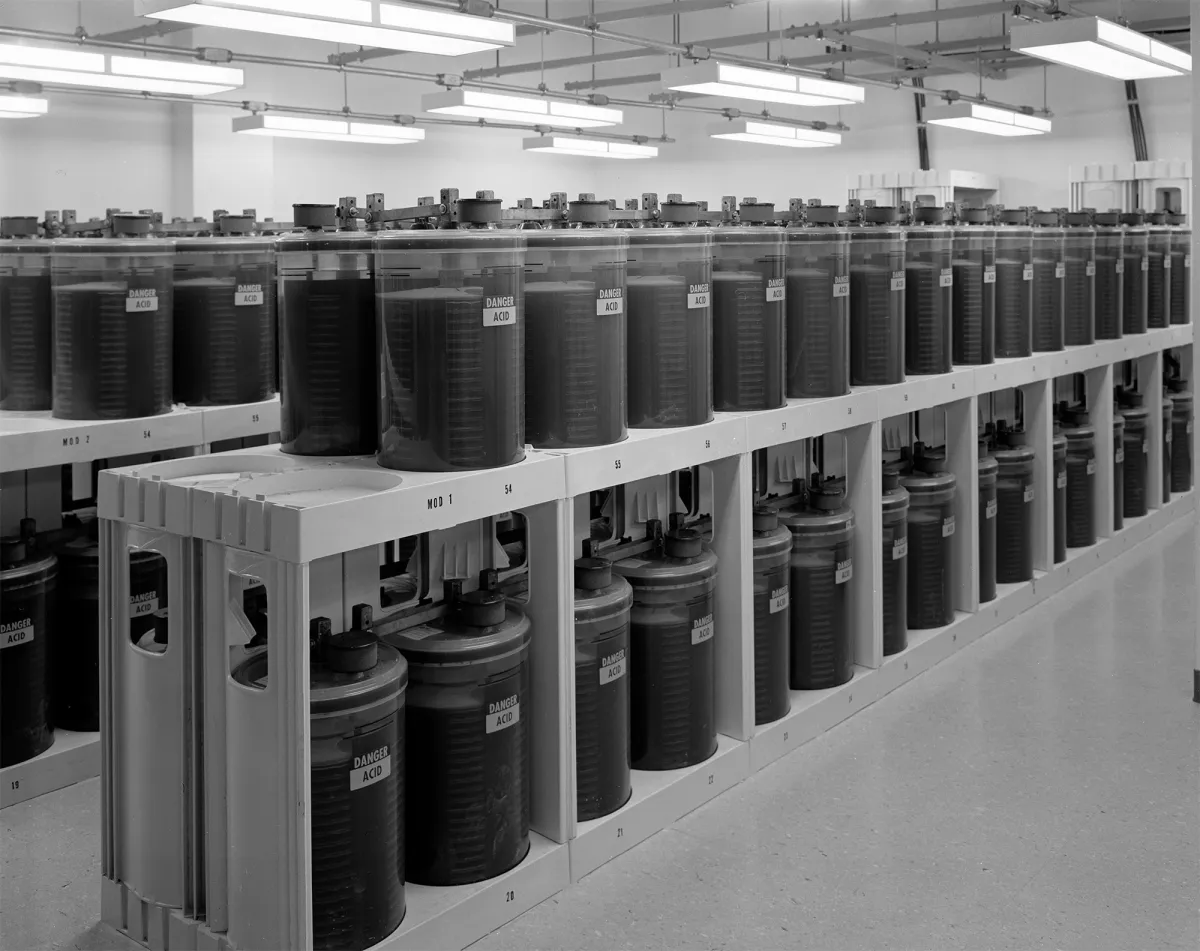
DC reserve is a flooded lead-acid battery plant — the tall transparent jars marked DANGER ACID in steel racks, module and cell numbers (MOD 1, 54, 55…), watering and vent hardware on the lids. Stanley Greenberg photographed those rooms in 1992; Mark Klein photographed similar black wet-cell strings in the 1980s. That is not tape storage. It is the 48-volt-class string that holds the switches when Con Edison drops. Diesels take the long watch; the jars take the first seconds and minutes.
WHAT AT&T PUT IN IT
Long Lines Department plant, then AT&T Communications after the 1984 divestiture. Three major 4ESS long-distance switches have lived here (two AT&T, one Verizon-owned unit decommissioned 2009). A former engineer described an international gateway switch routing U.S.–overseas calls. By the late 1990s AT&T had finished moving remaining Long Lines functions over from 32 Sixth Avenue. Peak popular figure for traffic through the house: on the order of 175 million calls a day in the analog/early-digital era — treat as period color, not a current CDR count.
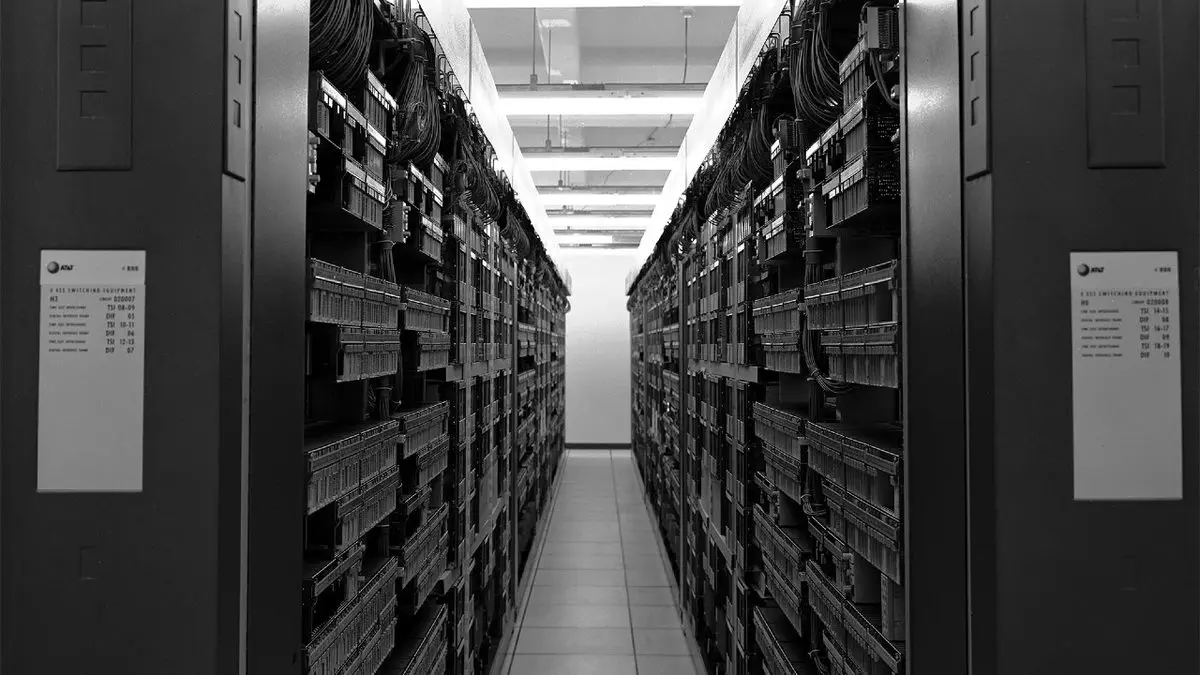
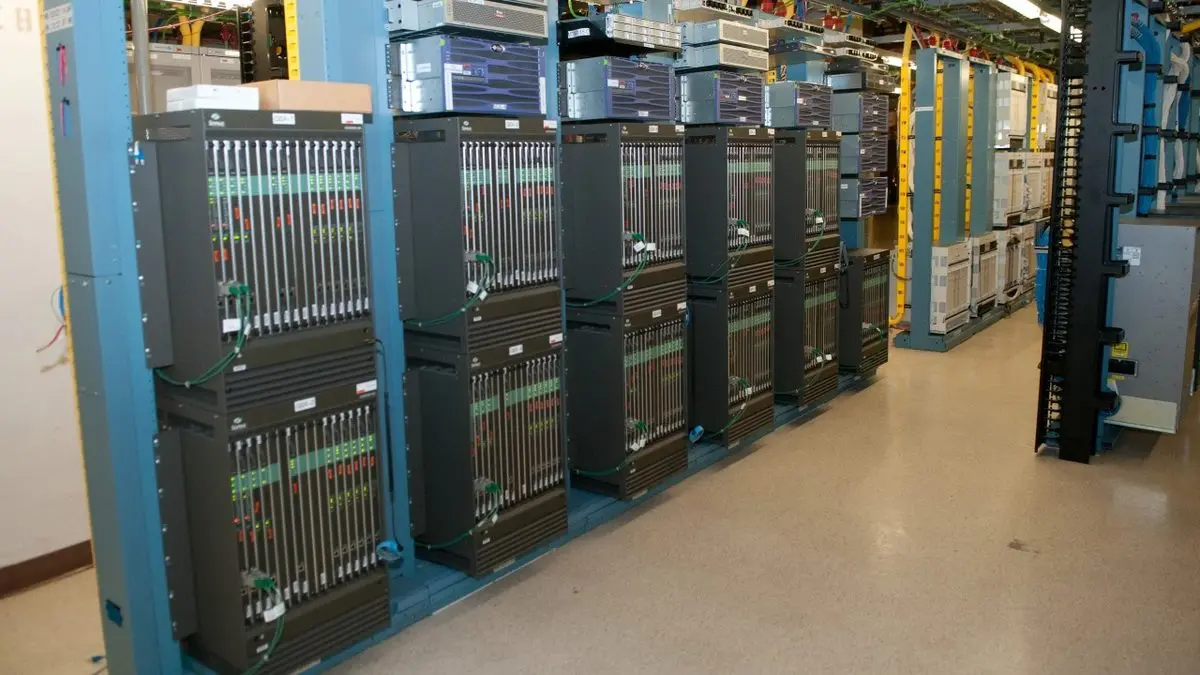
Racks of 4ESS frames, analog then digital carrier, later colocation and data-center floors. Cable vault in the basements. Rooftop satellite earth stations: public reporting holds this as the only AT&T New York site with an FCC license for those dishes, which is one of the pins The Intercept used for SKIDROWE.
NSA documents describe TITANPOINTE as having “foreign gateway switches” and a “RIMROCK access.” RIMROCK is the agency’s covername for 4ESS. Collection on-site, then forward to Fort Meade. The physical picture in the reporting is a secure room tied into the partner’s routers — the same architecture Mark Klein swore to for Room 641A at 611 Folsom Street in San Francisco, a different building and a different program slice.
PROGRAMS
BLARNEY — the corporate partnership umbrella with AT&T that predates 9/11. TITANPOINTE is listed as BLARNEY’s New York site. Public Intercept reconstruction: targeting of UN, IMF, World Bank, and at least 38 countries’ communications, including German, Japanese, and French traffic that happened to transit this gateway.
SKIDROWE — satellite intercept mission associated with the same site in the documents; matches the licensed dishes on the roof.
FAIRVIEW — AT&T-only program from 1985 for collection on international cables, routers, and switches inside the United States. Eight “peering link router complexes” / Service Node Routing Complexes are the internet half of that map: Atlanta, Chicago, Dallas, Los Angeles, New York, San Francisco, Seattle, Washington. The New York internet SNRC in that 2018 Intercept follow-up is 811 Tenth Avenue, not 33 Thomas. 33 Thomas is the voice / foreign-gateway / BLARNEY room. Do not collapse the two addresses. Folsom Street Room 641A is the San Francisco peer of the internet set.
Legal hooks cited in program writing: FISA individual orders, FAA 702 (one end foreign), and Transit Authority (both ends foreign, traffic merely crossing U.S. switches). Those are authorities, not proof of any single selector.
NEIGHBORHOOD AND SISTER HOUSES
26 Federal Plaza (FBI) is about a block away — one of the geographic clues in the 2016 piece. Older Bell monuments nearby: 32 Avenue of the Americas (former Long Lines HQ), Barclay-Vesey, 60 Hudson (Western Union / carrier hotel). 33 Thomas took displaced 4ESS and gateway load after 9/11 along with 32 AoA, 811 Tenth Avenue, and 75 Broad Street. The façade is a machine building in a loft district, not a campus behind wire.
WHAT IS ACTUALLY PHOTOGRAPHED INSIDE
Greenberg 1992: switching floors, “racks and racks of electronics,” and the wet-cell battery halls. Klein 1988: office, black backup batteries, washing-machine-sized disk drives of that generation. Neither man photographed an NSA cage with a nameplate. The public interior is the telephone plant and the power plant. The surveillance room is inferred from documents plus the gateway function, not from a tourist corridor.
WHAT IT IS NOT
It is not a data-center-only colo with no circuit switch history. It is not 811 Tenth Avenue. It is not Fort Meade. It is not LTO tape. “Project X” on Warnecke’s drawings is the architect’s job name; the documentary reused it. Nuclear two-week autonomy is a design requirement from 1969–74 paperwork, not a published current inventory of fuel and MREs.
CAVEATS
Snowden files name TITANPOINTE and BLARNEY-in-NYC; they do not print the street number. The match is journalism plus engineering geography. How much of the 4ESS plant still switches, how much floor is now dark or colo, and whether SKIDROWE dishes are still the same mission are not in the 2016 paper trail. AT&T and NSA did not confirm the identification.
STATUS
Building still AT&T, still windowless, still a carrier fortress on Thomas Street. Switching and data functions continue in some mix. The 2016 identification has not been officially walked back. The battery jars are the piece you can see; the tap is the piece the documents describe.
IN ONE SENTENCE
TITANPOINTE is the NSA/BLARNEY covername matched to AT&T’s 550-foot windowless Long Lines tower at 33 Thomas Street — a 1974 nuclear-hardened 4ESS and international-gateway house with its own acid-cell battery plant — used, on the Snowden-era record, to take foreign-gateway calls, faxes, and satellite intercept under SKIDROWE while FAIRVIEW’s New York internet peer sits in a different AT&T box on Tenth Avenue.