WHAT IT IS
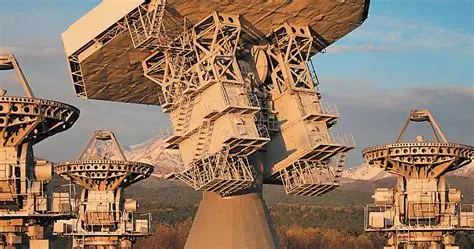
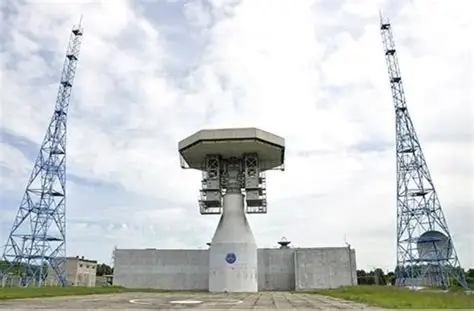
Krona (Russian: «Крона», “Crown”) is a Russian radio-optical complex for the recognition of space objects (РОКР КО). GRAU index 45Zh6. It finds, tracks, and classifies artificial satellites and debris: orbit, size, type, and, where the data allow, nationality and purpose. The product goes to the Centre for Outer Space Monitoring (ЦККП / SKKP) at Noginsk-9. It is not an early-warning radar and not a pure optical survey. It is the identification layer that sits after detection.
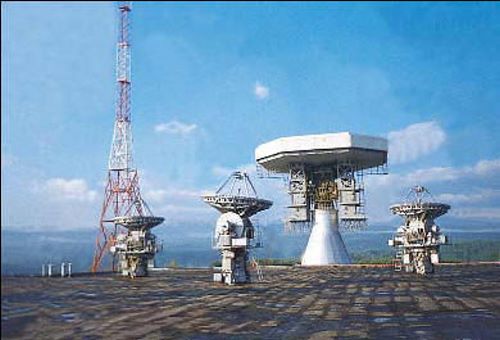
The main complex is in the North Caucasus near Zelenchukskaya, Karachay-Cherkessia. Optics and the laser locator sit on the summit of Mount Chapal (about 2,200 m). The radar sits several kilometres away and lower (about 1,300 m). A second site, Krona-N, near Nakhodka in Primorsky Krai, is radar-only. The name comes from the tree-like appearance of the large decimetre phased-array antenna.
HOW THE CHAIN WORKS
Three sensors, used in sequence.
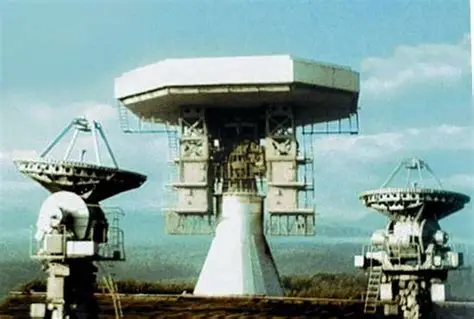
Channel A — decimetre (UHF) phased-array radar, 20 m × 20 m aperture, electronic scan. Detects the object, measures basic characteristics, and produces an initial orbit. Coverage is the upper hemisphere out to about 3,500 km slant range.
Channel N — centimetre (SHF) system of five rotating parabolic antennas working as an interferometer. Hands off from Channel A, refines angles and range, and produces a precise orbit for the optical system.
Laser-optical locator (30Zh6) — on the mountain. Passive telescopes image the object in reflected sunlight (claimed to 40,000 km under good conditions). A laser channel ranges it and can illuminate it. A passive autonomous-detection channel patrols for previously unknown objects. Night and clear weather are required for the optical work.
Radar finds and points. Optics classify. The combined track and the signature go to the SKKP catalogue. Published throughput is on the order of 30,000 objects per day; minimum detectable size is stated around 10 cm. Those are design or manufacturer figures.
THE HARDWARE
Radar portion (20Zh6, part of the 40Zh6 radio-technical complex): Channel A is a transmit-receive phased array. Channel N is the five-dish interferometer. The radar site is military unit 20776. Optical portion (30Zh6, later 30Zh6M): receiving channel with a telescope (K-95M is named in Russian sources; secondary descriptions also cite a ~1.3 m narrow-angle instrument with adaptive optics and a 0.4 m wide-angle), a transmit-receive laser channel, and the passive search channel. Optical site is unit 20096. Command-computing point has been associated with an Elbrus-class machine (13K6 in some older breakdowns).
Developers: NIIDAR (radar, chief designer V. P. Sosulnikov, previously of the Dunai radars), NPO Astrofizika (optical/laser, N. D. Ustinov), with LOMO also named on optical work. The 1974 tasking came from 45th Central Research Institute of the Ministry of Defence.
HISTORY
Ordered by a November 1974 Central Committee / Council of Ministers resolution. Sketch design 1976. Construction and integration ran through the 1980s. Funding collapse after 1991 delayed it. State trials were essentially complete by the mid-1990s; experimental operation began around November 1999. Combat duty is dated to 2005, when the laser-optical locator was also reported fully in the chain. Original plans called for three sites (Caucasus, Far East, and a Pamir location near the later Okno complex). Only the Caucasus site is the full radio-optical complex. Krona-N is the simplified Far East radar.
The complex was built in part because existing space-surveillance radars could detect objects but could not reliably say what they were — a requirement for both catalogue maintenance and any anti-satellite targeting doctrine of the period.
WHERE IT SITS
Okno (Nurek / Sanglok) is the passive optical high-orbit survey node. Voronezh and the older Daryal/Dnepr family are missile-warning and broad surveillance radars. Krona is the recognition station that takes a cue, refines the orbit with the centimetre interferometer, and attempts an optical identification. Data from all of them feed the same SKKP centre. A later upgrade path named Kalina has been discussed in open literature as a higher-power laser addition at the Chapal optical site; that is a separate claim from the 2005 recognition complex.
NOT THESE
Okno / 54Zh6 — passive optical survey in Tajikistan. No radar.
Voronezh — early-warning PESA/AESA radars. Different job.
Don-2N — Moscow ABM battle-management radar.
Krona-N — the Nakhodka radar-only sibling, not the full Caucasus complex.
CAVEATS
Range (3,500 km radar vs 40,000 km optical), throughput, and minimum size are published claims, not instrumented public trials. Exact telescope apertures and laser parameters vary between sources. Krona-N’s operational status has been thinner in open reporting than the Caucasus site. The Kalina laser-upgrade discussion is separate from the baseline recognition mission.
STATUS
Caucasus complex on duty since the mid-2000s as part of the Space Forces space-surveillance network. Krona-N exists as the Far East radar node.
IN ONE SENTENCE
Krona (45Zh6) is NIIDAR’s radio-optical satellite-recognition complex on Mount Chapal — 20 m decimetre phased array, five-dish centimetre interferometer, and a laser-optical locator — that turns a detection into a classified track for the SKKP catalogue, with a radar-only sibling at Nakhodka.