WHAT IT IS
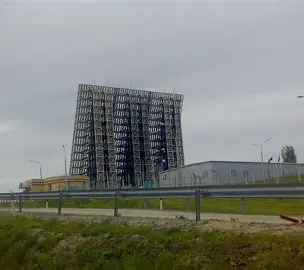
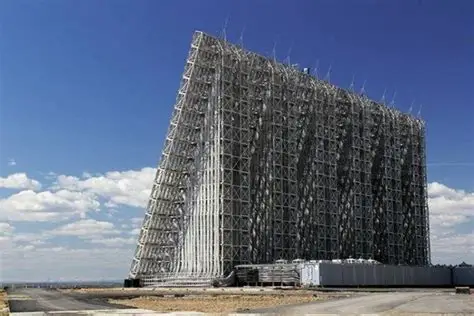
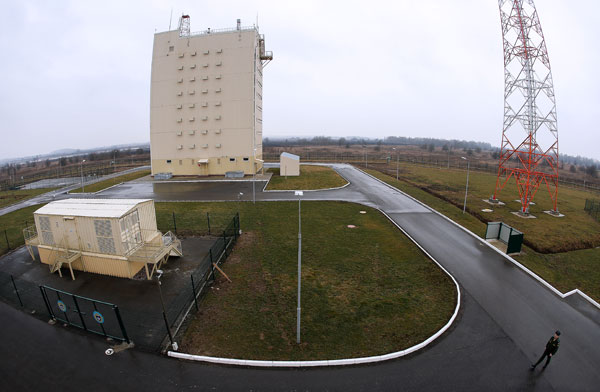
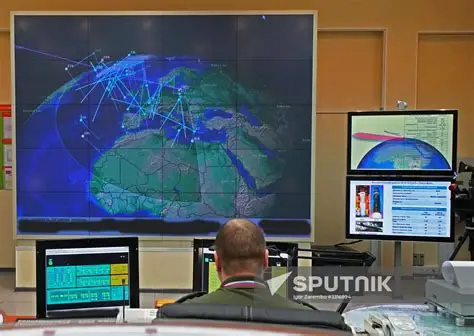
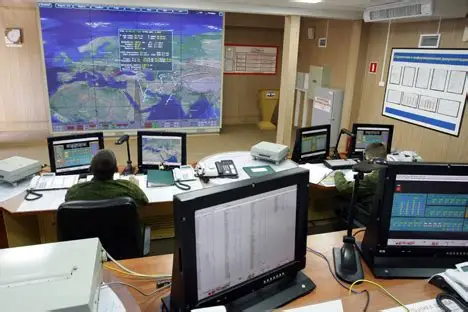
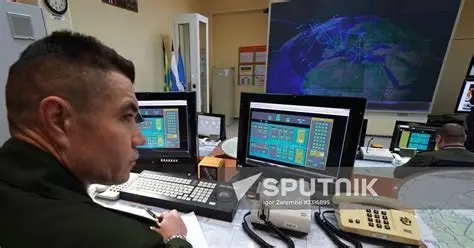
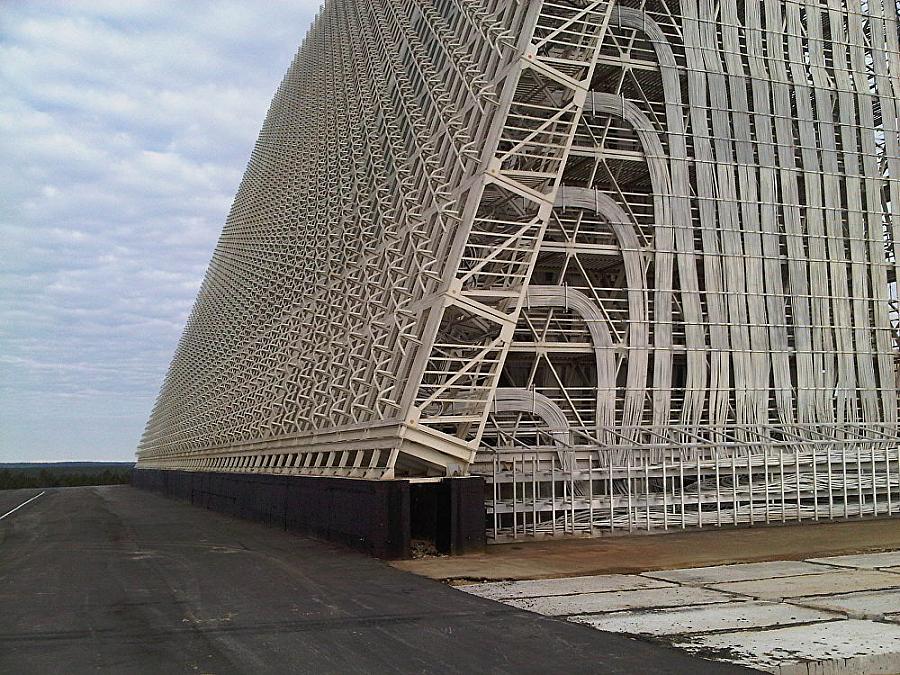
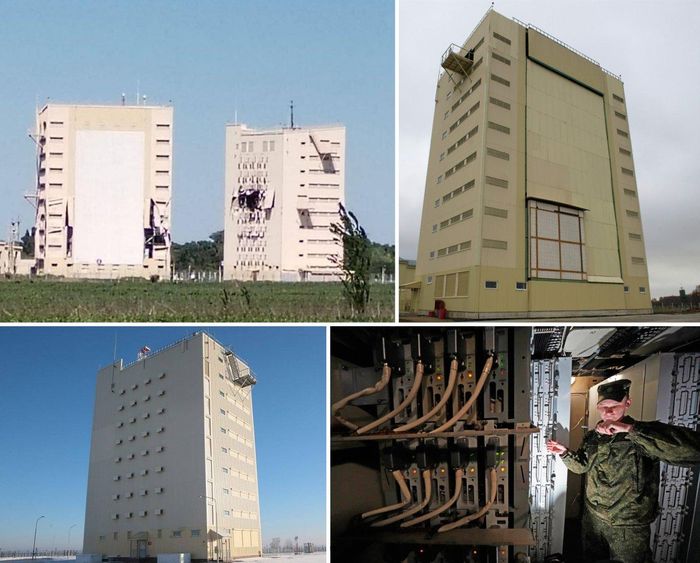
Voronezh (Russian: «Воронеж»; GRAU 77Ya6 and lettered subtypes) is the current Russian family of large phased-array early-warning radars built as modular, high-factory-readiness (высокая заводская готовность, VZG) stations. They are the ground half of the missile-attack warning system (СПРН / SPRN). Mission published by the design bureaus and MoD: detect ballistic and some aerodynamic targets in the station’s sector, track and measure coordinates, classify, and pass tracks and jamming picture automatically to the SPRN command chain. They also feed space-surveillance (SKKP) catalogues. They are not a SAM engagement radar and are not sold as a fire-control sensor.
Design split: meter-wave stations from RTI Mints (Radio-Technical Institute named for A. L. Mints, Moscow; concern RTI Sistemy); decimeter stations from NPK NIIDAR (Scientific Research Institute of Long-Range Radio Communications) with Mints participation. Chief designers named in open Russian texts: V. I. Karasyov (M / VP), S. D. Saprykin (DM). First metal: Lekhtusi Voronezh-M, construction 2005–06, experimental service late 2000s, combat duty announced 11 February 2012. The political point of the family was to put a continuous radar field on Russian soil after Skrunda, Mukachevo, Sevastopol (Ukrainian Dnepr), Gabala (Azerbaijan Daryal), and Balkhash left the Russian duty cycle.
WHY THEY EXIST
Soviet SPRN ground nodes were Dnestr / Dnepr (“Hen House”), Daryal (“Pechora”), and Volga at Baranovichi. Daryal ate ~50 MW and years of civil-engineering; Dnepr ~2 MW. After 1991 several faces sat abroad. Voronezh is the replacement architecture: 23–30 equipment units instead of Daryal’s thousands, claimed 12–18 month erect time versus 5–9 years, crew on the order of 15, claimed site draw 0.7 MW on M/DM and up to 10 MW on VP. Cost figures floated in Russian press: ~2.85 billion RUB for an Armavir-class DM, ~4.3–4.4 billion for a Pionersky-class DM. Those are program numbers, not a public contract dump.
VARIANTS
The letters are wavelength, then potential. Voronezh-M (77Ya6) — meter / VHF, typically quoted 150–200 MHz. RTI Mints. Instrumented ranges in open tables 100–4,200 km at Lekhtusi, 6,000 km at later M sites. Elevation 2–70°, example azimuth sector 245–355° at Lekhtusi. Low-potential VHF face; coarse angle, long wavelength good against some low-RCS shapes and for first detection. Voronezh-DM (77Ya6-DM) — decimeter / UHF (NIIDAR). Horizon 6,000 km and “vertical” / near-space 8,000 km in the standard MoD sentence; some reprints say 10,000 km. Simultaneous tracks: 500. Draw ~0.7 MW. Higher resolution than M for trajectory work. Voronezh-VP (77Ya6-VP) — high-potential meter, more transmit/receive blocks (Mishelevka cited as six segments versus three on early M). Draw up to 10 MW. Same band as M, more aperture/power. Voronezh-SM — centimeter. Higher frequency, finer track, space-object work. GRAU 111Zh6 appears in secondary tables for SM-M mixes. Voronezh-MSM — meter + centimeter on one node. Yakhroma / 116Zh6 — four-band (mm / cm / m / dm in war-russia and Russian wiki listings), object 2512, Cape Khersones / Sevastopol. RTI head Yuri Anoshko (2021): existing Voronezh stations to be brought toward Yakhroma standard (jamming resistance, throughput, digital twin). Crew smaller than Voronezh. Vitim is named in some lists as a DM-line development.
“Football at 8,000 km” is a television claim, not a radar equation in a manual. VHF/UHF at those instrumented ranges is line-of-sight plus altitude; it is not an HF over-the-horizon skywave radar (those are 29B6 Container / other OTH). The two get confused in English roundups.
HOW THE FACE WORKS
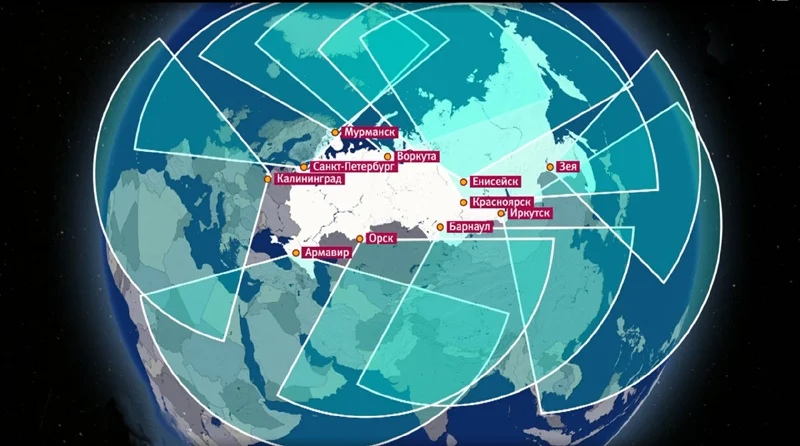
Fixed planar (or multi-segment) active/passive phased array. Beam steer is electronic — no rotating dish. A station is one or two faces aimed at a threat azimuth. Armavir is two DM segments (southwest then south/southeast after Gabala left). Sector numbers published for specific sites: Lekhtusi M azimuth 245–355°, elevation 2–70°, orbital inclinations 53–127°; Armavir DM azimuth 165–295°, elevation 2–60°, inclinations 34.5–145.5°, height window 150–4,000 km in the same tables.
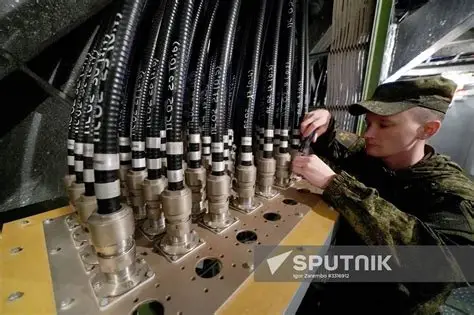
Receive path in Russian industry write-ups: digitization in the channel, onboard processors for first-look and path health, digital equalization of array channels so the central computer is not doing raw IF. Processing described as at carrier output with quadrature extraction. Antenna boxes have a closed air loop — winter recirculation of warm air mixed with outside air to hold face temperature.
Functions listed by MilitaryRussia and design-side briefings: detect ballistic targets in the volume; track and measure coordinates of targets and jammers; type the target; issue target and ECM data automatically. A Voronezh track is a warning-quality state vector, not a 9M96 engagement quality.
COMPUTING HARDWARE (OPEN CLAIMS)
The only detailed public computer paragraph in Russian military-technical reprints: primary and secondary processing on a server-class machine with open real-time architecture, unified across “promising topics.” Two processor-cell types; two buses — VME and a user bus; Eurocard / “Euromechanics” crate; half a standard Voronezh equipment cabinet; ~1.5 kW; claimed throughput up to 1011 operations per second; claimed 80,000-hour life; no on-site repair of the box, swap and upgrade. Functional/technical control sits in peripheral coprocessors in the racks, tied to a central coprocessor on a high-speed link.
That is an industry brochure, not a parts list. Chip foundry, OS, and whether later nodes left VME for something newer are unpublished. Yakhroma’s “digital twin” is the next advertised layer: a running model of the station’s health, not a new wavelength.
WHERE THE TRACK GOES
SPRN is two echelons. Space: US-KS / US-KMO (Oko / Oko-1 legacy) and EKS “Kupol” (Tundra) satellites that see launch infrared. Ground: Voronezh plus remaining Dnepr / Daryal / Volga faces until those die. Satellite control: Western post Serpukhov-15 (Kurilovo, Kaluga; unit 22251 / object 455I) and an Eastern post near Komsomolsk-on-Amur. Radar and satellite products meet at the SPRN command posts. Headquarters language in open sources puts the Main Centre for Missile Attack Warning (Главный центр предупреждения о ракетном нападении) under VKS Space Forces and names Solnechnogorsk as the army/headquarters node that receives the processed picture. A reserve SPRN command post is listed at Kolomna-1. Warning dissemination still uses the old name Krokus in historical accounts of the CP upgrade; current circuit designators are not public.
From there the picture is a strategic warning, not a local SAM cue. Moscow ABM (A-135/A-235, Don-2N at Sofrino, Pillbox) and the wider VKO / air-defense stack can be consumers. Voronezh does not replace 91N6 / 64N6 acquisition for S-400 or Pantsir. It tells the national command whether a raid is in the corridor and what the impact fan looks like. SKKP at Noginsk-9 can take space-object tracks from the same faces.
Physical comms: buried fiber and reserved military trunks are the obvious path for a fixed 0.7–10 MW node; HF backup is doctrine for Russian strategic sites and is not itemized per Voronezh in open manuals.
SITES (COMPILED)
Lekhtusi, Leningrad Oblast — Voronezh-M, object 4524, v/ch 73845. Skrunda gap. Morocco-to-Svalbard talk in Russian briefings. Combat duty 2012. Armavir, Krasnodar — two Voronezh-DM, object 1653, v/ch 41003. Gabala replacement on the second face. 2009 / 2013 segments. Ukrainian drone reports 23 May 2024 against this site; return-to-duty not officially itemized. Pionersky, Kaliningrad — Voronezh-DM. Europe / UK corridor. Duty from 2014 in most tables. Mishelevka / Usolye-Sibirskoye-7, Irkutsk — Voronezh-M / VP (36th ORTU). U.S. West Coast-to-India language. Yeniseysk (Ust-Kem) — Voronezh-DM. NE. 2017 duty. Barnaul (Konyukhi) — Voronezh-DM. SE. 2017 duty. Orsk, Orenburg — Voronezh-M, object 7357. Taklamakan-to-Mediterranean sector in Russian copy. 2017 duty. Drone-attack reports 26 May 2024; damage unconfirmed in Pavel Podvig’s 2026 net update. Zeya, Amur — Voronezh-DM in several Russian lists. Vorkuta / Vorgashor — SM or M depending on the table; construction from 2015, IOC dates slip in Western lists. Olenegorsk — VP (and/or DM in some 2026 maps) to retire Dnepr/Daugava. Construction status still “uncertain complete” on open imagery into 2026. Sevastopol / Khersones — Yakhroma 116Zh6 planned / building; object 2512.
MoD line after the 2016–17 Orsk / Barnaul / Yeniseysk trio: first time a continuous radar field on all strategic approaches from Russian territory. Older Pechora Daryal, Baranovichi Volga, and leftover Dnepr faces still appear in 2025–26 network maps until the local Voronezh is declared up.
PLACE IN THE AIR-DEFENSE STACK
Above the tactical IADS. Voronezh / SPRN sits with space-launch warning and national C2 (Kazbek / Kavkaz family, Perimeter as a last-resort layer — separate articles). It does not assign a 48N6. What it gives PVO-SV and VKS air-defense is minutes of raid geometry and a cue that something is coming on a bearing. Multi-band Voronezh + Yakhroma is the stated way to make that field harder to punch with stealth or with a single jamming tactic. OTH 29B6 and Don-2N are neighbors in the same strategic sensor picture, different physics.
CAVEATS
Ranges are manufacturer/MoD instrumented figures. Site-to-site tables disagree on 4,200 vs 6,000 km. Computer specs are one brochure. Crew “15” is a comparison number against Daryal. 2024 strike effects on Armavir and Orsk are open-source reports, not a Russian status board. Yakhroma four-band layout is a secondary GRAU mapping.
STATUS
Ground backbone of SPRN as of the mid-2020s, with Yakhroma as the advertised next standard and a political goal of retiring the last Soviet pyramids by around 2030. Space echelon (Kupol) is the other half of the same warning.
IN ONE SENTENCE
Voronezh is Russia’s modular VHF/UHF/centimeter early-warning family (77Ya6 M, DM, VP, SM) that replaced foreign-sited Dnepr/Daryal faces with 0.7–10 MW phased arrays on Russian soil, tracks on the order of 500 objects out to published 6,000 / 8,000 km, dumps those tracks into SPRN at Solnechnogorsk via the Serpukhov-15 space post — warning geometry for the national command, not a missile battery’s lock.