Venona Soviet Espionage and the American Response 1939-1957
WHAT IT IS
VENONA is the last cover name for a U.S. Army Signal Intelligence Service (later AFSA / NSA) attack on Soviet cables collected mainly in the 1940s. The traffic looked diplomatic. Inside it sat NKVD/NKGB/KGB and GRU (army and naval) residency circuits: New York, Washington, San Francisco, Mexico City, London, Canberra, and smaller posts, talking to Moscow Center. The product the public can read is not Morse from an HF circuit. It is an English translation of a recovered codebook-plus-pad message, typed on an analyst form, with holes marked “unrecovered” or “unrecoverable.”
Dates that matter: project start 1 February 1943 (Gene Grabeel assigned at Arlington Hall); first real bookbreak and readable fragments under Meredith Gardner in 1946; FBI liaison from 1947–48; exploitation peak late 1940s–early 1950s; formal shutdown 1 October 1980; first public release 11 July 1995 at CIA Headquarters. NSA later posted on the order of 2,900–3,000 translations. Earlier official briefings said “about 2,200”; the six public drops brought the posted set to about three thousand.
THE CIPHER THEY WERE SUPPOSED NOT TO READ
Soviet practice on these circuits was two-layer. Plain text went into a codebook (words, names, and phrases → numeric groups; English names often wrapped in “spell” / “end spell” indicators). Those groups were then added, group by group, to a random additive from a one-time pad — two copies of each page, sender and Moscow, page destroyed after use. A correctly used OTP is information-theoretically secure. Arlington Hall treated the system as not worth a full attack until volume and a statistical crack said otherwise.
The opening was reuse. Under wartime pad production pressure, Moscow’s cipher plant reprinted pages already issued. Duplicate additives went out to posts worldwide and were used, most heavily 1942–45, thinning into 1948. Two ciphertexts that share a key page sit “in depth”: C1 − C2 = P1 − P2. That difference is a running-key problem, not a one-time pad. Richard Hallock’s 1943 diplomatic-cipher break, work by Frank Lewis, then Cecil Phillips / Genevieve Feinstein / Lucille Campbell on the KGB additive (November 1944), and Gardner’s reconstruction of the underlying codebook after he moved onto the Russian problem in 1946, are the official sequence. A partially burned Soviet codebook recovered in Germany in May 1945 was a collateral gift, not the start of the attack. NSA’s own history insists the first breaks were sweat analysis, not a defector handing over the book.
Gardner’s bookbreak trick that unlocked English names: recover the “spell” and “end spell” code groups, then walk the spelled stretches. First message broken February 1946. July 1946: a Mexico encryption-procedure text. 31 July 1946: extract from New York–Moscow 10 August 1944 that already pointed at atomic-bomb material (cover name ENORMOZ for the Manhattan Project).
HOW MUCH THEY ACTUALLY READ
Never real-time. In 1946 Gardner was reading 1944 New York. Success followed depth (how many messages shared a pad page), codebook stability, and how much of that lane Arlington Hall had copied.
NSA / Benson figures for KGB New York → Moscow, as a fraction of messages sent (not merely copied): 1942 about 1.8%; 1943 about 15%; 1944 about 49% (the good year — on the order of 418 translations from ~860 KGB messages on that lane). Washington KGB → Moscow 1945: about 1.5% readable; no other Washington–Moscow KGB year yielded a working break. Naval GRU Washington ↔ Moscow 1943: about half of that year’s take; almost nothing in other years or other U.S. cities. Canberra is thin volume but readable, off and on, 1943–48. Hundreds of GRU New York messages stayed dark. Peter Wright’s “less than 1% of Venona” line is a global smear; it is wrong for the New York 1944 KGB lane and roughly right for many other lanes.
A printed translation is often 10–50% of a cable. The missing groups are not redaction for the public; they are groups that never came out of the additive.
WHO RAN IT
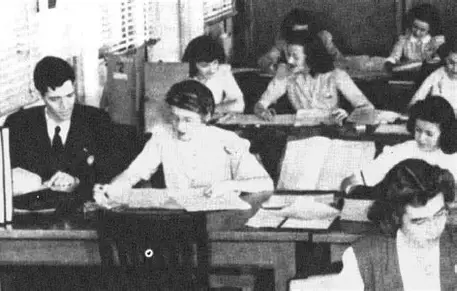
Site: Arlington Hall, a former girls’ school in Virginia taken over by SIS. Grabeel (schoolteacher weeks earlier) started the sort on 1 February 1943. Gardner — German teacher at Akron, hired 1942, Japanese in three months, then Russian — is the name on the codebook. Cecil Phillips found the reused-additive signature. FBI: S. Wesley Reynolds as first liaison; Robert Lamphere at HQ from 19–20 October 1948, sitting with Gardner. G-2’s Carter Clarke tipped the Bureau in September 1947. CIA was formally brought in in 1953. GCHQ worked the same material and later the naval-GRU slice (UK exploitation of naval GRU noted from 1960 in the official chronology). Kim Philby, as British liaison in Washington, saw the existence of the break and was in a position to warn HOMER (Donald Maclean). That is one reason VENONA stayed a source, not a courtroom exhibit.
COVER NAMES AND WHAT THE CABLES DID
Soviet texts used покрывные имена — cover names for people, places, and programs. Same name can move; ANTENNA became LIBERAL in September 1944 (NY–Moscow No. 1251, 2 September 1944). Gardner’s 30 August 1947 cover-name study is the first systematic list. A few that the translations and FBI work tied down:
ENORMOZ — Manhattan Project / atomic work.
ANTENNA / LIBERAL — Julius Rosenberg; Ethel appears as his wife in the traffic (not as a separate coded officer in the same way).
REST — Klaus Fuchs.
MLAD — Theodore Hall.
HOMER / GOMER — Donald Maclean (eleven or twelve messages; seven of the scarce 1945 Washington breaks are HOMER).
ALBERT / MER — Iskhak Akhmerov, principal illegal.
MAJ — Stepan Apresyan (NY residency).
VIKTOR — Pavel Fitin (Moscow Center).
SIMA — Judith Coplon (Justice Department), run to ground by FBI from the traffic plus surveillance.
ALES (a diplomat in a 1945 cable about a trip after Yalta and a medal) is the long public fight over Alger Hiss. The message exists. The identification is inference from career, travel, and other files, not a sentence that prints “Hiss.” Historians split; this page records the cable and the dispute.
What the readable set actually shows, when it shows anything: agent spotting and recruitment (Elitcher, Sarant in the Rosenberg circle), document photography, atomic-spec shopping, assessments of sources inside State, OSS, Treasury, the Manhattan sites, and British missions. Elizabeth Bentley’s and Whittaker Chambers’s names and networks line up with cover names once the translations exist; they did not get to see those translations while they were alive and testifying.
WHY IT NEVER WENT TO A JURY AS “VENONA”
Using a decrypt in open court would have told Moscow which pads and which codebook pages were dead. Cases that moved (Fuchs, Gold, Greenglass, Rosenberg, Coplon, the Cambridge names who ran) were built from the traffic as a pointer, then from confession, surveillance, and documents that could be shown. Coplon’s trial stumbled on FBI methods partly because the Bureau could not put the cable on the table. Philby’s warning and the 1948–51 flight of Burgess and Maclean are the operational cost of the same secrecy.
SHUTDOWN AND RELEASE
The pad reuse was a closed set. By the late 1970s the named 1942–45 agents were dead or out of the game. William Crowell (then running the NSA division that still held the group) set a two-year wind-down in 1977; NSA fixed the kill date in 1978; a CIA/FBI/Allied committee under David Blee agreed. Analysts Mildred Hayes, Angela Nanni, and Janice Cram worked matches to the last day. End of program: 1 October 1980.
Public history starts 11 July 1995: first drop, 49 messages on the bomb problem. Five more releases through 1996–97. Official line after that: the translations that exist are out. NSA still posts reissues and related memos on its Historical Releases / Venona page. Companion British public set from the same era of openness: GCHQ’s MASK (Comintern 1934–37), not VENONA itself.
WHERE TO READ THEM
NSA Venona historical releases (individual PDFs): nsa.gov → FOIA / Historical Releases / Venona.
CIA one-volume pack: Venona: Soviet Espionage and the American Response, 1939–1957 (Benson & Warner), including a ~433-page PDF.
Date-sorted scans: Black Vault mirror of the old NSA month/day index.
Searchable name/cover-name concordance: Wilson Center (Venona + Vassiliev notebooks).
NSA scans are photographs of typed translations. They do not full-text search cleanly. Use the concordance, then open the PDF.
CAVEATS
“3,000 messages” is translations issued, not cables Moscow sent. Most lanes are mostly unread. Cover names collide. Ales/Hiss is not settled by a single group. Popular counts of “349 Americans” are secondary tallies of names and suspected ties, not an NSA table. VENONA does not prove every public accusation of the early Cold War; it does pin a set of networks that the cables actually name.
STATUS
Closed as a live cryptanalytic program since 1980. Open as a document set since 1995, with NSA still refreshing files. It remains the only large Soviet-intel intercept catalog a reader can download without a pull slip at College Park.
IN ONE SENTENCE
VENONA is Arlington Hall’s 1943–1980 reading of 1940s KGB and GRU cables that should have been one-time-pad safe — reusable pad pages plus a reconstructed codebook gave partial English texts, never in real time, later posted as roughly three thousand translations that mapped atomic and government networks without ever being allowed to walk into court under that name.