WHAT IT IS
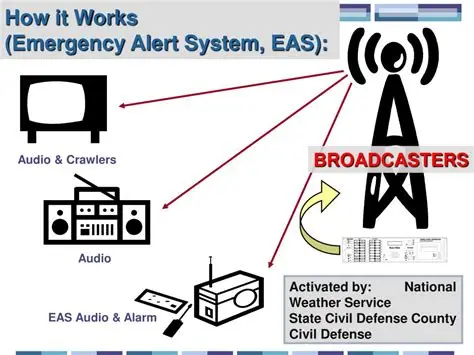
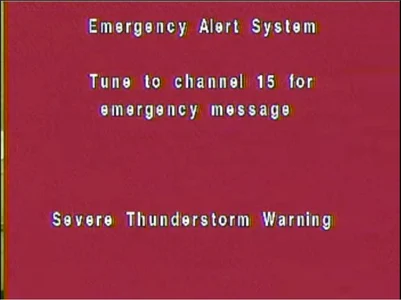
The Emergency Alert System (EAS) is the U.S. national public-warning plant that sits in every broadcast, cable, satellite-radio, satellite-TV, and wireline-video headend. FCC Part 11 makes those operators EAS Participants. They must be able to put the President on the air nationwide within ten minutes. State, local, tribal, and territorial alerts — weather, AMBER, civil emergency — ride the same boxes on a voluntary basis. FEMA owns national activation and the modern aggregator. FCC owns the technical rules and tests. NWS originates most of the traffic.
EAS is one path inside FEMA’s Integrated Public Alert and Warning System (IPAWS). IPAWS is the hub. One authenticated Common Alerting Protocol (CAP) message can leave IPAWS-OPEN and hit EAS, Wireless Emergency Alerts (WEA) on cell broadcast, NOAA Weather Radio, and other CAP consumers (highway signs, apps) at the same time. A phone buzz is WEA. A TV crawl with the two-tone is EAS. They are siblings, not the same circuit.
EAS replaced EBS (Emergency Broadcast System) in 1994–97. EBS was the two-tone and a daisy-chain of stations. EAS kept the daisy-chain and added a digital header (SAME) so a decoder can accept or reject by event and county without a human. From June 2012 every Participant must also poll IPAWS for CAP and convert it to that same on-air format.
HOW A MESSAGE IS BORN
An Alerting Authority — NWS, a state EMA, a county, FEMA, the White House through FEMA — writes a CAP 1.2 message in approved software (the IPAWS Profile is the U.S. dialect). The message goes to IPAWS-OPEN (Open Platform for Emergency Networks). OPEN checks the sender’s credentials and the XML. If it is clean, OPEN fans it:
— EAS CAP feed that every ENDEC polls (FEMA documents the endpoint as https://apps.fema.gov/ ); — WEA gateway into participating wireless carriers’ cell-broadcast cores; — NOAA / NWS for Weather Radio; — other approved CAP consumers.
National / presidential audio can still be injected the old way: FEMA operations center → hardened links and satellite → Primary Entry Point radio stations, now branded National Public Warning System (NPWS). Those stations originate the on-air EAS Protocol burst. Everybody else is supposed to hear it over the air even if the internet is dead.
Local weather often never touches a county EMA box. NWS encodes SAME at the Weather Forecast Office, puts it on NOAA Weather Radio (162.400–162.550 MHz class, 1050 Hz attention tone), and on the CAP feed. Broadcasters monitor NWR as one of their required sources.
WHAT GOES ON THE AIR — SAME
The on-air packet is Specific Area Message Encoding, AFSK 520.83 baud, mark 2083.3 Hz, space 1562.5 Hz, inherited from NOAA SAME / NAVTEX habits. Order of a full message:
1. Header, sent three times. Preamble of 0xAB sixteen times, then ZCZC, then: ORG originator — PEP (national / NPWS; older national tests still showed FEMA), CIV (civil), WXR (NWS), EAS (a Participant, usually a test). The old EAN originator code is retired. EEE event — TOR, SVR, RWT, RMT, EAN/NPT/national codes, CEM, CAE, AMBER family, etc. PSSCCC FIPS location, up to 31 counties per burst (P = subdivision, SS = state, CCC = county). +TTTT purge time. JJJHHMM Julian date + UTC. LLLLLLLL eight-character station ID. 2. Attention signal ≥8 seconds: broadcast uses simultaneous 853 Hz + 960 Hz. NWR uses 1050 Hz on a subset of events. 3. Voice or video message. 4. End-Of-Message: NNNN, three times.
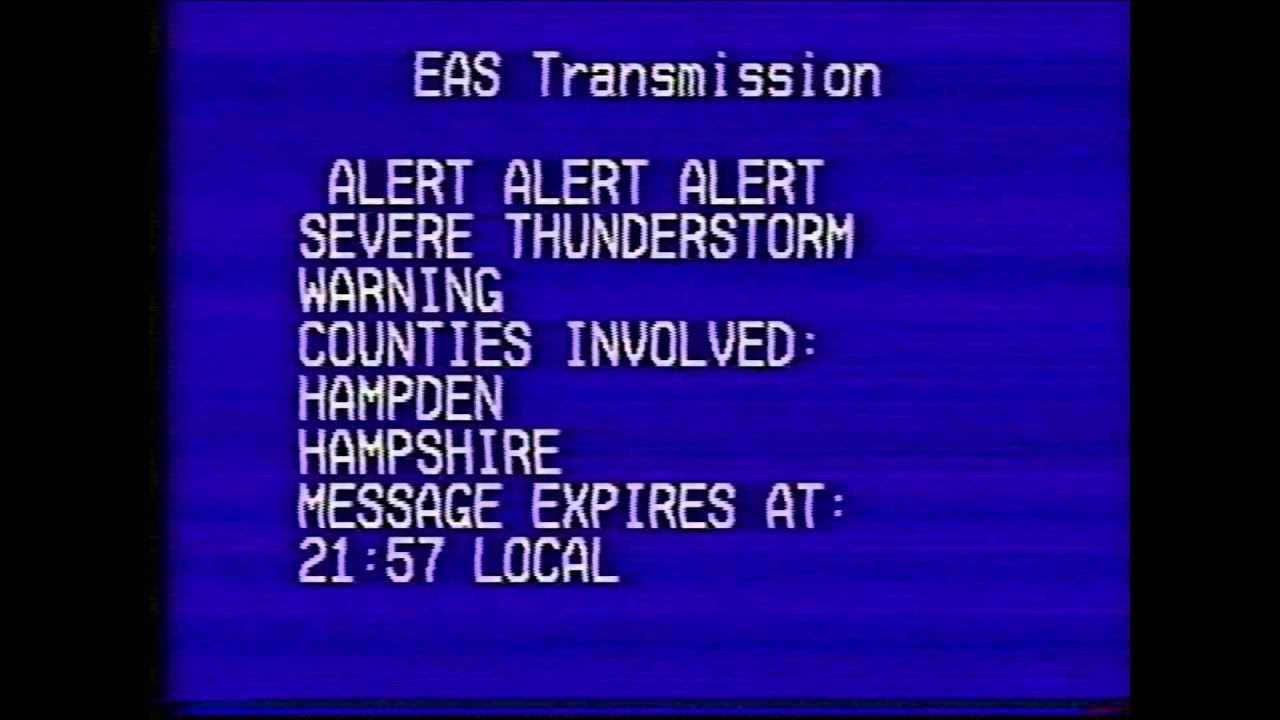
A decoder that hears two valid headers with matching location and event will seize the station audio, play the attention tones, play or render the text, then restore programming after NNNN. Presidential / national periodic test codes are configured to auto-forward. Everything else is a filter the SECC and the station set in the box.
HOW THE BOXES CONNECT
Two independent plants, required at once (47 CFR 11.52).
Over-the-air daisy-chain. Each Participant must monitor two EAS Protocol sources named in the State EAS Plan / FCC Mapbook. Typical assignment: LP-1 and LP-2 in the operational area, often plus NWR and a PEP or State Primary. The ENDEC has multiple analog (and sometimes AES) receiver inputs — tuners or studio-fed audio from a satellite receiver. Audio in → SAME decoder → if the header matches, GPIO or program-bus relay takes the air chain, encoder re-originates the header + audio out the transmitter. That is how a PEP in Denver becomes a crawl in a cable headend two states away with no internet.
Designations in Part 11.18: PEP / NPWS — FEMA-designated radio station, first on-air hop for a Presidential alert. Hardened comms and generators. FEMA list is on the order of 77 stations (KQFD Anchorage, KFI Los Angeles, KCBS San Francisco, KOA Denver, WFED Washington, WJOX Birmingham, etc.). FEMA says the NPWS radio footprint can reach more than 90% of the population directly. NP National Primary — pulls the presidential burst from a PEP and feeds a state. SP State Primary — starts non-presidential state alerts. SR State Relay. LP-1 / LP-2 / LP-3 Local Primary — the two sources most stations actually tune. PN Participating National — everybody else who forwards.
State plans are required to show primary and backup paths for the Presidential alert from PEP down to every key source, and to avoid a single point of failure (an LP may monitor another LP). Satellite extras written into plans and FEMA notes: SiriusXM carries NPWS; NPR, Premiere Networks, and some state networks (Hawaii EMA) feed Participants that cannot hear a PEP. ADSN / state satellite hops show up in older plans.
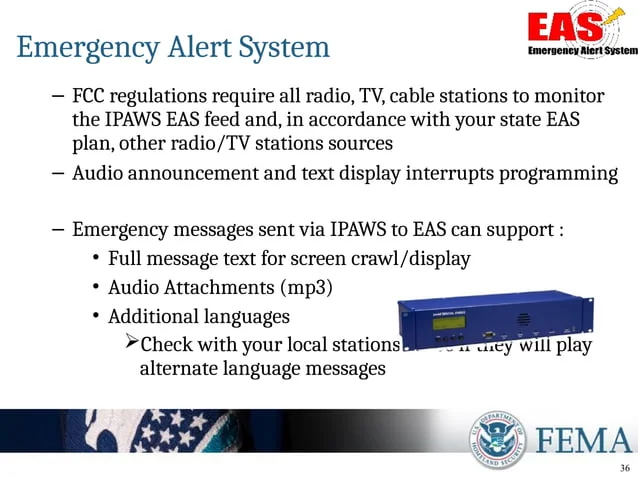
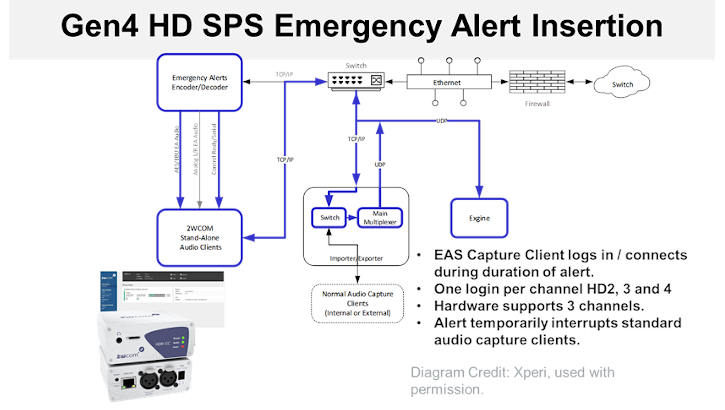
IPAWS CAP poll. The same ENDEC has an Ethernet port. It HTTPS-polls IPAWS-OPEN on a short cycle, pulls CAP XML, renders text-to-speech if there is no audio payload, builds a SAME header from the IPAWS Profile fields, and treats that as if it had arrived on a tuner. FCC required CAP-capable gear by 30 June 2012. CAP does not replace the daisy-chain; FEMA says that in so many words. If the last mile of fiber dies, the two tuners are the system.
National-level architecture in the older GAO diagram still matters for the EAN path: President → FEMA ops center → EAS phone lines and satellite → PEP → daisy-chain. IPAWS sits beside that path, not only on top of it.
HARDWARE IN THE RACK
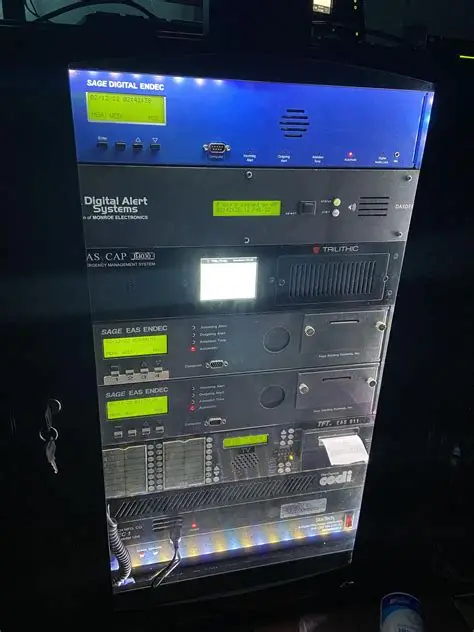
The legal object is an FCC Part 11 encoder/decoder (ENDEC), FEMA-conformant for CAP/IPAWS. It is a 1U–3U box at the studio or headend, not a transmitter.
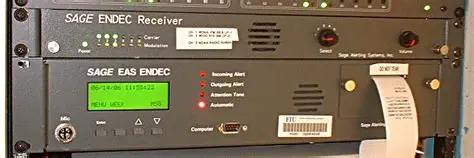
Sage Alerting Systems Digital ENDEC, model 3644. Dominant radio-station unit for a generation. CAP 1.2 + IPAWS built in, TTS, web UI, GPIO, automation serial, optional Smart Relay Panel for several stations or overlapping alerts. Drop-in successor to the 1990s Sage ENDEC (first Part 11 certified device). Sage stopped building new 3644s in December 2024 on parts; firmware and repair continue. That is the box a lot of FM chains still poll IPAWS with.
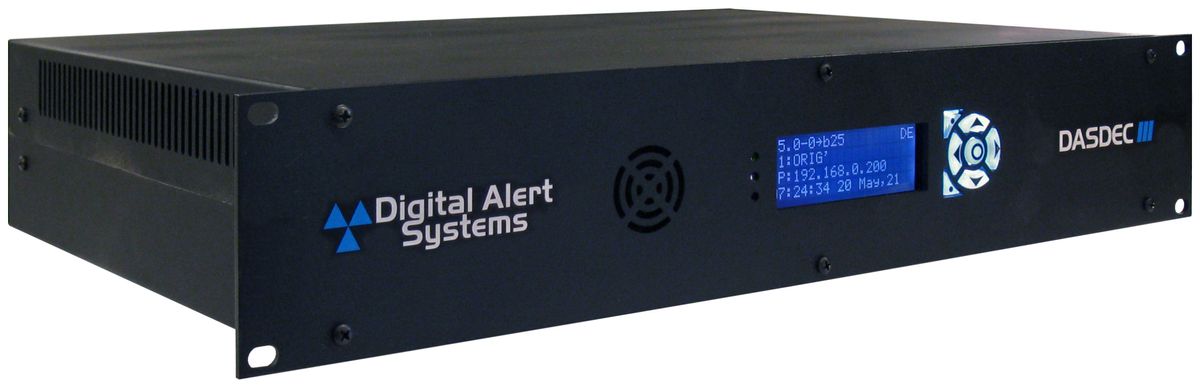
Digital Alert Systems DASDEC / DASDEC-II / DASDEC-III. Linux PC in a 2U–3U chassis, motherboard + broadcast audio I/O, up to six monitor inputs depending on cards, serial out to character generators (Vela, BetaBrite, TFT-911 protocol), GPIO relays, NTP, optional MPEG encoder dongle. CAP and SAME in software, so firmware is the upgrade path. Common in TV and cable headends that need a CG crawl.
Others in the field: Monroe Electronics (often cable), leftover TFT 911-series (the protocol DASDEC still speaks), Trilithic / Gorman-Redlich class units on older cable plants. Co-owned co-located AM+FM or a multi-system cable headend may share one decoder under 11.52(c).
Around the ENDEC: dedicated EAS receivers or studio tuners on the LP and NWR assignments; a satellite IRD if the state plan names NPR/Sirius/state bird; program-bus or AES insert so the encoder can seize air; CG / DASDEC serial for video; dual power or UPS — PEP sites add generator and FEMA backup comms (satellite / dedicated links) that a class-A FM does not have.
WEA hardware is not in the broadcast rack. That path is IPAWS → gateway → carrier CBC / cell-broadcast centre → phone baseband. Overloaded voice/SMS cells still carry WEA because it is broadcast on the control channel, not a page.
WHAT TRANSMITS THE MESSAGE TO THE PUBLIC
— AM / FM / analog and digital radio, including HD Radio program streams the Participant controls. — Broadcast TV (header + attention + audio + visual crawl / full-screen). — Cable and wireless-cable headends, onto every subscribed analog and digital tier the rules cover. — DBS / satellite TV and SDARS (SiriusXM is both a Participant and an NPWS relay). — Wireline video providers under Part 11. — NOAA Weather Radio All Hazards (separate transmitter plant, SAME compatible, NWS-originated). — WEA on participating LTE/5G phones in the geofenced area (IPAWS sibling, not EAS audio). — CAP consumers that are not Part 11: some DOT signs, vendor apps, IPAWS-connected OSA.
The President’s path is radio-first by design: NPWS AM/FM PEP with long coverage at night, then every other Participant that heard the burst or pulled the CAP copy.
REDUNDANCY
The system is a pile of overlapping weak links, on purpose.
Two monitoring assignments per station, plus CAP poll — three inputs before a box is deaf. State plans add NWR and satellite as extras. Two distribution physics: internet CAP and analog/satellite daisy-chain. FEMA’s line is that CAP networks do not replace over-the-air tone monitoring. NPWS / PEP hardening: generators, backup comms, FEMA-selected coverage. Direct PEP audio still covers most of the country if IPAWS-OPEN is unreachable. Satellite overlays: SiriusXM, NPR, Premiere, state birds so a station behind a mountain still hears a national burst. Geographic mesh: LP-1 dies, LP-2 and the next county’s SR are still on the tuner list. Plans are supposed to forbid a single-point hierarchy. Event filters: a bad local CEM does not have to lock a whole state; national codes bypass the filter. WEA + NWR + EAS as three public last miles. A silenced FM still leaves phones and weather radios. Tests: Required Weekly Test (RWT) header-only; Required Monthly Test (RMT) full message; national periodic tests (NPT) run by FEMA to exercise PEP + IPAWS together. Failed tests are how dead tuners get found.
What is not redundant: a station that left the ENDEC on one bad LP and never finished the CAP config. A PEP with a dead generator. OPEN itself — one aggregator — though the daisy-chain is the designed bypass. WEA depends on carrier participation and a powered handset. EAS does not encrypt the SAME burst; authentication is originator codes, IPAWS credentials on the CAP side, and the fact that random people are not supposed to own an ENDEC on a licensed transmitter.
AUTHORITIES AND RULES
FEMA: IPAWS-OPEN, national activation, NPWS/PEP list, CAP profile. FCC: 47 CFR Part 11, ENDEC certification, monitoring matrix via State Plans and the Mapbook, ETRS reporting. NWS: most event volume, NWR, WXR originator. SECC / LECC: who is LP-1 this year.
CAVEATS
PEP count (~77) moves as FEMA redesignates. Sage 3644 is out of production. Exact FEMA PEP backup-link types (which satellite, which FOC circuit) are not a public wiring diagram. “Ten minutes to the President” is the requirement, not a measured last-test histogram. EAN-as-originator is historic.
STATUS
Live. Dual-path (CAP + daisy-chain) is the current law. National tests continue. The rack is aging (Sage line ended 2024) but the protocol on the air is still 1990s SAME riding a 2012 CAP poll.
IN ONE SENTENCE
EAS is the Part 11 encoder/decoder in every U.S. broadcast and cable plant — SAME headers and 853/960 Hz on a two-station daisy-chain from FEMA PEP/NPWS radios, plus a CAP poll of IPAWS-OPEN — so a presidential or weather warning can seize AM, FM, TV, and cable even when the internet path is dead, with WEA and NOAA Weather Radio as the parallel last miles.