WHAT IT IS
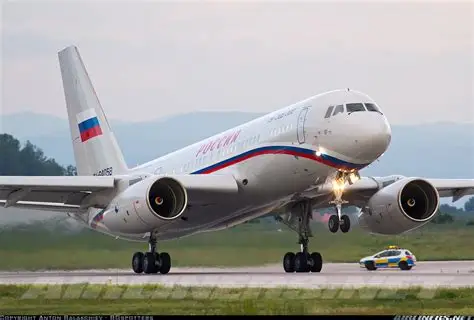
The Tu-204 is Tupolev’s answer to the 757: a twin-engine, narrow-body, medium-haul jet meant to replace the Tu-154 on Aeroflot’s trunk routes with half the engines and a 1980s airframe. Fly-by-wire, supercritical wing, FADEC, six-abreast cabin in a 3.8 × 4.1 m fuselage. First flight 2 January 1989. Airline service from 1995–96 after the USSR had already fallen, which is why a good airplane never became a thousand-ship type.
Tu-214 is not a different design bureau product. It is the heavier, longer-range 204-200 built at Kazan (KAPO / Gorbunov) instead of Ulyanovsk (Aviastar-SP). Same wing, same section, more fuel and a higher MTOW. In August 2026 Rosaviatsiya folded the old separate type certificates into one family paper so a 204 and a 214 live under one maintenance bible.
Seats 164–215 depending on mark and pitch. Cruise 810–850 km/h. Two PS-90A (or British RB211-535 on the export -120). It is one of the few airliners that has actually glided in with both engines quiet and walked away — a 2002 dead-stick onto a frozen field is the textbook case.
WHY IT EXISTS
Late-Soviet MAP wanted a 757-class twin: ETOPS thinking, Western noise rules coming, Tu-154 fuel burn no longer funny. Tupolev kept the 3.8 m cabin so airlines could keep 154-style six-abreast and ground kit. New: digital flight controls, supercritical sections, two high-bypass fans instead of three thirsty D-30s or NK-8s. The timing was lethal. Certification and first deliveries landed in the 1990s collapse. Boeing and Airbus sold on credit. Aviastar and KAPO built in ones and twos.
AIRFRAME
Span 41.8–42.0 m. Length 46.1 m on the standard fuselage, 40.0 m on the shortened -300. Height 13.9 m. Wing 184.2 m². Tricycle gear, two-crew or three-crew cockpit depending on customer and year (engineer jumpseat is back on the first batch of “import-substituted” 214s; later hulls are promised as two-crew).
Life on the old UAC card: 20 years / 25,000 cycles / 45,000 hours. Those are brochure lives from when production was a trickle.
ENGINES
Aviadvigatel PS-90A — the Russian standard. ~16,000–16,140 kgf (about 157–161 kN) each. FADEC. Chapter 3, later -100V / Stage 4 kits. PS-90A2 on the SM.
Rolls-Royce RB211-535E4 / E4B — Tu-204-120 / -220. ~19,000–19,500 kgf (186–192 kN). Western cockpit options. Cairo Aviation launched the -120 in November 1998. A handful of hulls, then sanctions and economics killed the British path.
PW2240 was drawn and not built. Average fuel burn on a loaded 204-class ship is quoted around 3,200 kg/h in older Russian tables — the whole point versus a Tu-154B’s 6,000+ kg/h.
FAMILY NUMBERS (UAC / HANDBOOK CLASS)
204-100 — MTOW 103 t, payload 21 t, fuel 32.8 t, 210 seats, range with max payload ~4,300 km, PS-90A, field ~2,250 m.
204-120 — same weights, RB211, range with max payload ~4,100 km.
214 — MTOW 110.75 t, landing 93 t, payload 25.2 t, fuel 35.7 t, 210 seats, range with max payload ~4,340 km, ferry-class range tables up to ~6,500–6,670 km.
204-300 (also called Tu-234 in early talk) — fuselage chopped to 40 m, 142–164 seats, payload 18 t, fuel 36 t, MTOW ~105–107.5 t, range with max payload ~5,600–5,800 km, long-range empty out toward 7,500–9,300 km in marketing sheets. Vladivostok Avia was the early user.
204SM — two-crew, PS-90A2, 176–215 seats, MTOW ~108 t, payload 23 t. First flight 29 December 2010. Meant to be the competitive refresh. Almost no production.
Cruise altitude ~12,100–12,600 m. TO roll 2,250–2,500 m depending on mark.
VARIANTS
Tu-204 — baseline, MTOW 94.6 t on the first card. Prototype 1989.
Tu-204-100 / -100C / -100V — serial passenger and cargo (forward main-deck door). -100V is the Stage 4 noise kit. Aviastar.
Tu-204-120 / -120C / -220 / -220C — RB211, some Western avionics, English cockpit option (E suffix). Export hope. Few built.
Tu-204-200 = Tu-214 — extra tank, 110.75 t. First flight 21 March 1996. Serial at Kazan from 2000. Combi and freighter cards exist. This is the hull Russia is trying to build again in the 2020s.
Tu-204-300 — short body, long legs. 2003 first flight of the production shape.
Tu-204SM — the 2010 two-crew / A2 attempt.
Special-mission 214s (the ones that actually kept Kazan busy when airlines did not):
Tu-214ON — Open Skies camera ship Tu-214SR — strategic relay Tu-214R — reconnaissance Tu-214PU — airborne command post Tu-214SUS — special comms node Plus Rossiya SLO / government interiors
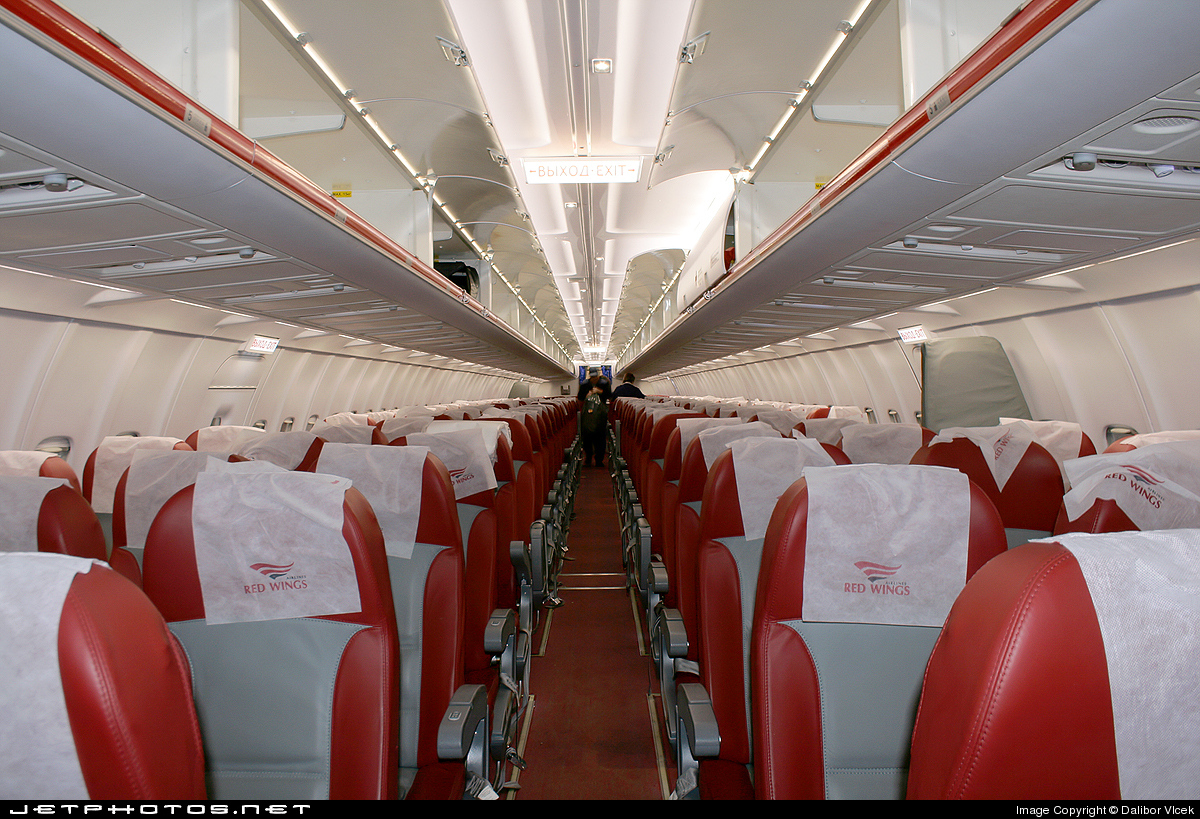
Cubana flew passenger 204s. Red Wings became the post-2022 civil shop window. UVT Aero was named for a small 204/214 batch. Aeroflot was signed for 11 of 214s via cheap NWF money; dates have slipped.
TWO FACTORIES
Aviastar-SP, Ulyanovsk — 204 family, including freighters. Kazan Aviation Plant (Gorbunov) — 214 and the specials.
Annual output after 2010 is mostly 0–3 hulls. 2019: zero. 2022–23: zero in some tables. 2024–25: one new 214 each year in the public scorekeeping (RA-64535, RA-64536), plus refurbished 204s for Red Wings. Government programs printed 10 then 4 for 2025, delivered fewer. 2026 talk: four to special customers, eight the year after, “up to 20” later. Those numbers are targets, not a 737 line.
IMPORT SUBSTITUTION
After 2022 the 214 was picked as the stopgap while MC-21 and SJ-100 fight their own Western-parts hole. December 2025: Rosaviatsiya certified a 214 with 17 foreign systems swapped — EFIS, weather radar, TAWS/GPWS, TCAS among them (Navigator in St. Petersburg named on the collision/terrain boxes). First-ten ships keep a flight-engineer seat; later ones are supposed to go two-crew. Combined 204/214 type certificate August 2026. Unit price in one 2026 Russian note: about 9 billion rubles.
This is easier than MC-21 because the 214 was already a mostly Russian jet. It is still a 1990s twin with 1990s economics. The state is buying time, not a world beater.
THE GLIDE
Tu-204 RA-64011, 14 January 2002, both engines out after fuel issues, landed dead-stick near Omsk / in the public telling a field landing with everyone alive. Russian pages use it as proof the airframe and wing can finish a flight as a glider. True and also not a business model.
COMPARED WITH THE 154 AND THE 757
Versus Tu-154: two fans not three, fly-by-wire, half the fuel flow, Chapter 3/4 path, same six-abreast idea. Versus 757: same slot, later to market, no global support net, two factories that never tooled for twenty a month. The 757 owned the world; the 204 owned a few ramps and a lot of special-mission paint.
STATUS
Alive as a political production program and as a small operating fleet (Red Wings, government, VKS specials, a few export leftovers). Not alive as a 1990s world airliner. Kazan is the bottleneck: people, suppliers, and thirty years of one-off rhythm. If the 214 line actually hits double digits a year it will be because Boeing/Airbus parts are embargoed, not because airlines prefer a PS-90 twin to an A321.
IN ONE SENTENCE
The Tu-204 is Tupolev’s fly-by-wire twin that should have replaced the Tu-154 in the 1990s; the Tu-214 is the heavier Kazan-built brother now being import-substituted and built in ones and twos to stand in until the next Russian narrow-body actually exists in numbers.