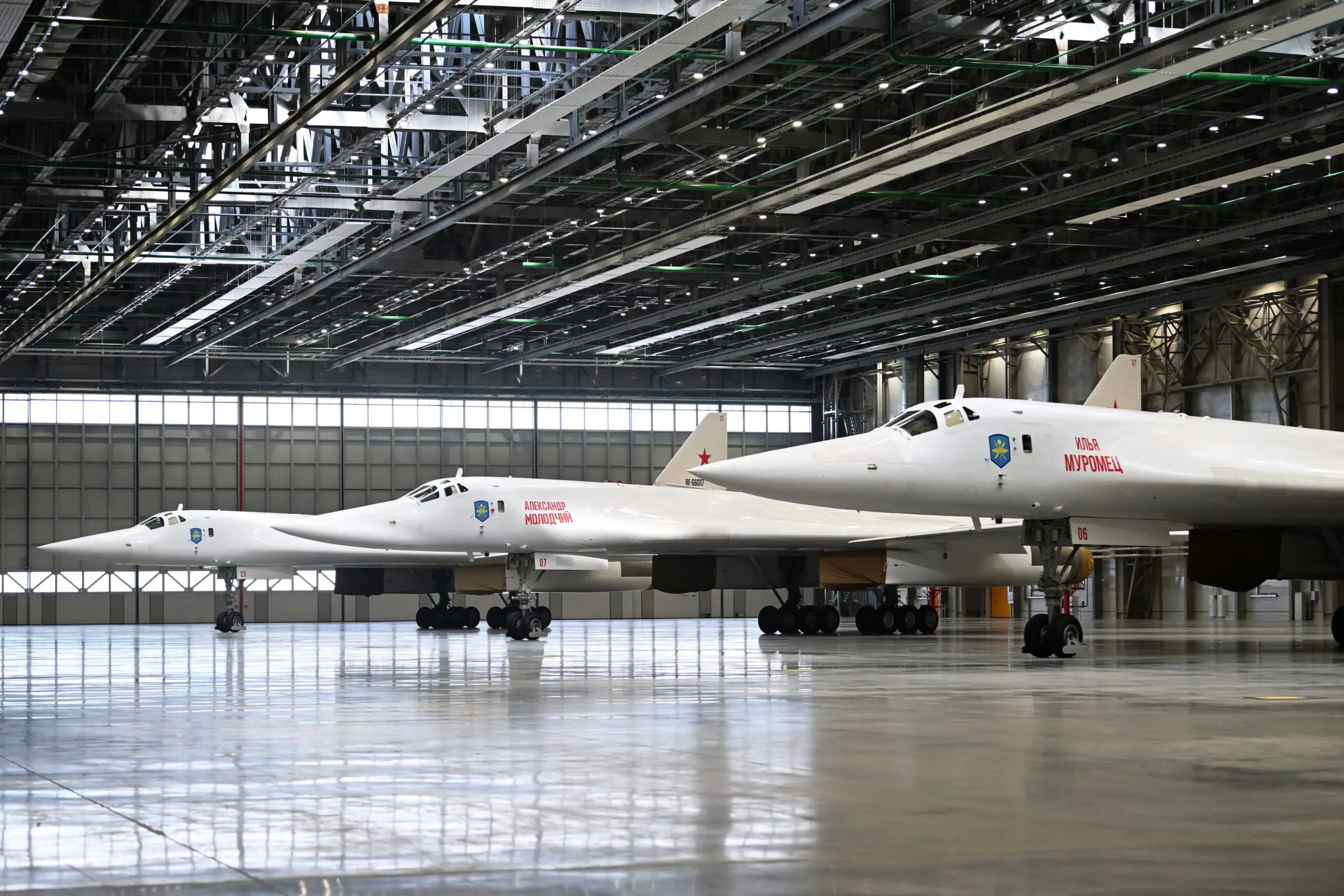
WHAT IT IS
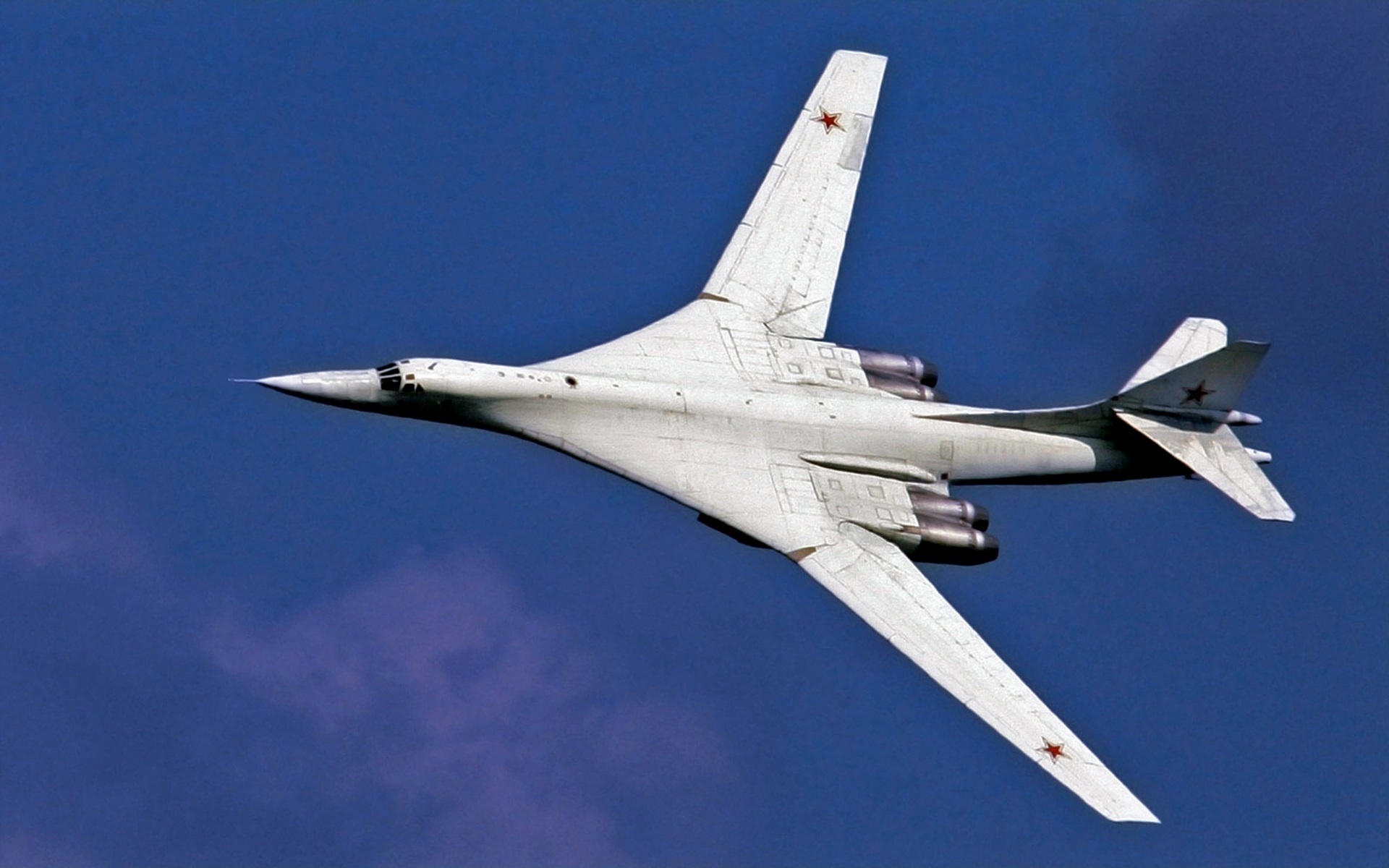
The Tupolev Tu-160 (Ту-160, popular Russian name «Белый лебедь» — White Swan; NATO reporting name Blackjack; Tupolev product designation «изделие 70», with the design-study name "Aircraft 160M" in some accounts) is a four-engine, variable-sweep-wing, supersonic strategic bomber and cruise-missile carrier. It was designed by the Tupolev design bureau (ОКБ Туполева, OKB-156) in the 1970s as the Soviet answer to the American B-1 programme, first flew on 18 December 1981, and entered service in April 1987. It is built at the Kazan Aviation Production Association (КАПО, KAPO, named after S. P. Gorbunov, today part of Tupolev / United Aircraft Corporation / Rostec).
Its published headline figures are a maximum take-off weight of 275 tonnes, a maximum speed of about Mach 2.05 and an internal weapon load of up to 45 tonnes in two bays. Guinness World Records lists it as the largest and heaviest operational combat aircraft by weight (as cited by English Wikipedia). It is longer than a Boeing B-52 (54.1 m) and larger and faster than the B-1B. It is not a stealth aircraft, it has no defensive gun, and it is not the same aircraft as the B-1.
In Russian service the Tu-160 is used as a stand-off launch platform. Its daily weapon is the Kh-101 conventional long-range cruise missile (Х-101), launched from inside Russian-controlled airspace. Its nuclear weapon is the Kh-102 (Х-102) and, earlier, the Kh-55 (Х-55). The type took part in its first combat use on 17 November 2015 over Syria and has been used against Ukraine since 2022. Russia is now the only operator. Production restarted in a limited form at Kazan in the late 2010s as the Tu-160M2, and existing aircraft are being rebuilt as the Tu-160M.
This article gives figures from several sources and says where they disagree. Wherever a figure is a claim by one government, by Ukrainian sources, or by open-source (OSINT) trackers, it is labelled as such. No complete official fleet figure is published.
DEVELOPMENT
Soviet requirement and competition. The Soviet strategic bomber requirement of the late 1960s came from the need to supplement the Tu-95 turboprop (see the Tu-95 article in this database), which was slow and increasingly vulnerable to modern air defences, with a supersonic, multi-mode strategic aircraft. English Wikipedia describes a first competition for a supersonic strategic heavy bomber in 1967, followed in 1972 by a new multi-mission bomber competition for a variable-geometry aircraft with a maximum speed of about Mach 2.3, launched in response to the American B-1 (AMSA) project. The competitors were the Myasishchev M-18 (a variable-sweep design from the Myasishchev bureau, ОКБ Мясищева), the Sukhoi T-4MS (also called the «изделие 100», a development of the earlier delta-wing T-4 «Сотка» / "Sotka", which had been designed as a Mach 3 titanium bomber-missile carrier), and the Tupolev design. Dates vary between sources: the Tupolev project is commonly said to have been selected in 1972–1973; the exact day and the exact stages of the competition are not given consistently in open sources and are not stated here.
Heritage and design. Tupolev's design, named Aircraft 160M in the accounts quoted by English Wikipedia, used a lengthened blended wing-body layout and carried over some elements from the Tu-144 supersonic airliner. The Tu-144 contributed experience with supersonic aerodynamics and titanium structure, and the Tu-22M «Backfire» contributed experience with a swing-wing bomber. Work on the Soviet bomber continued after the American B-1A was cancelled in 1977, and the Kh-55 cruise missile was developed as its principal weapon. The chief designer most often credited in Russian accounts is Valentin Bliznyuk (Валентин Близнюк), after whom a Tu-160 was later named.
Prototype. The first prototype, 70-01, made its first flight on 18 December 1981 at Zhukovsky (Ramenskoye, the Gromov Flight Research Institute airfield near Moscow). The prototype was photographed by an airline passenger at Zhukovsky in November 1981, about a month before its flight, and so became known to Western analysts as "Ram-P" before it received its NATO name Blackjack. Test pilot Boris Veremey is credited in Russian accounts with the first flight; this is not confirmed in the English-language sources quoted here.
Series production. Production was authorised in 1984 at KAPO in Kazan. The first series aircraft flew in 1984 (Russian sources give October 1984). Operational service began in April 1987 with the 184th Guards Heavy Bomber Aviation Regiment (184-й гвардейский тяжёлый бомбардировочный авиационный полк, 184 ГвТБАП) at Pryluky (Прилуки), in the Ukrainian SSR. The regiment had previously operated Tu-16 and Tu-22M3 bombers. The aircraft's first public appearance was in 1989.
End of Soviet production. In January 1992 Boris Yeltsin decided to end serial production. English Wikipedia says that 35 aircraft were complete by then, and its infobox gives a total of 41 built (9 test and 32 serial), marked "citation needed". Other sources give other totals. Soviet-era counts depend on whether prototypes, static-test airframes and unfinished airframes are included, and no single official total is available.
AIRFRAME
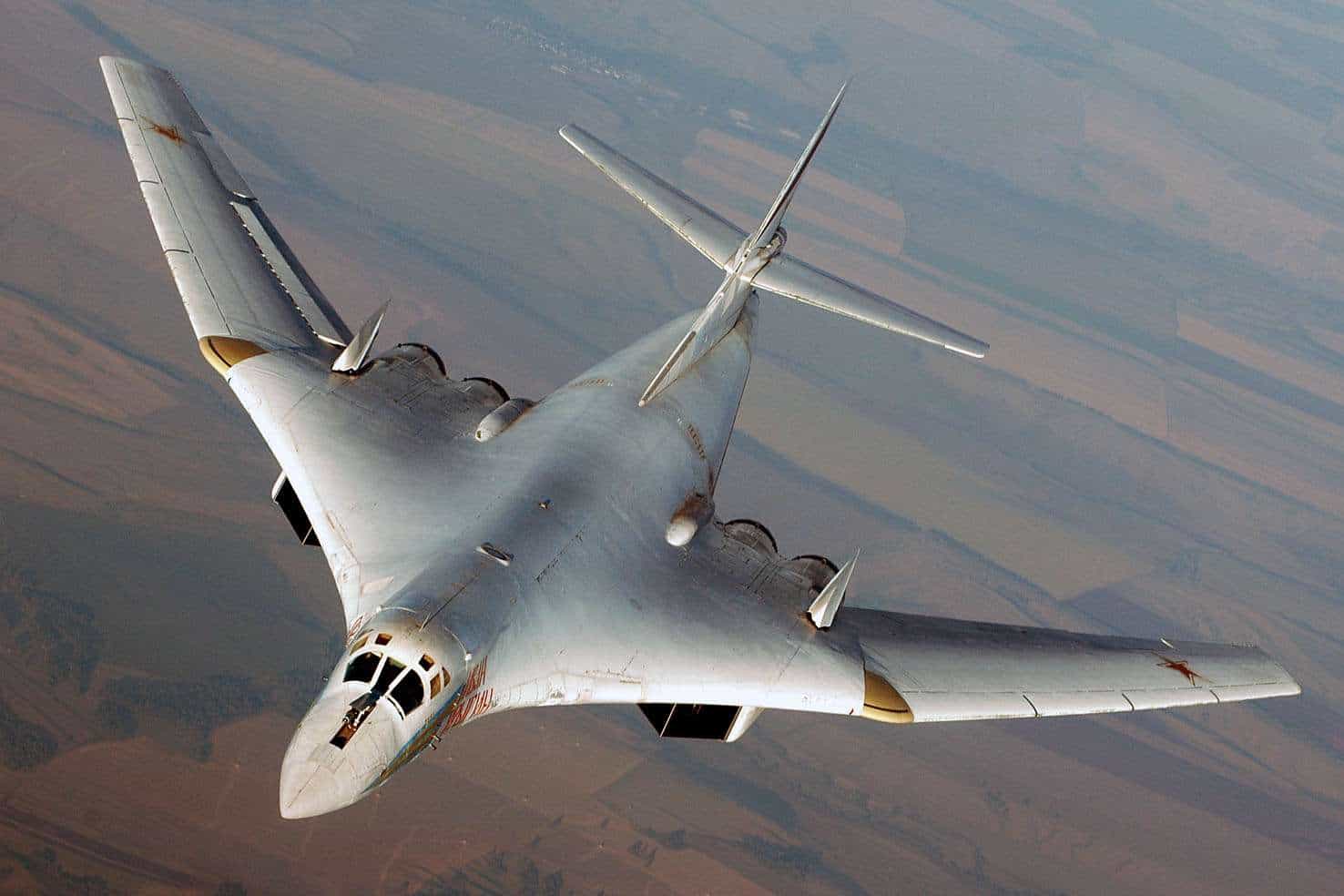
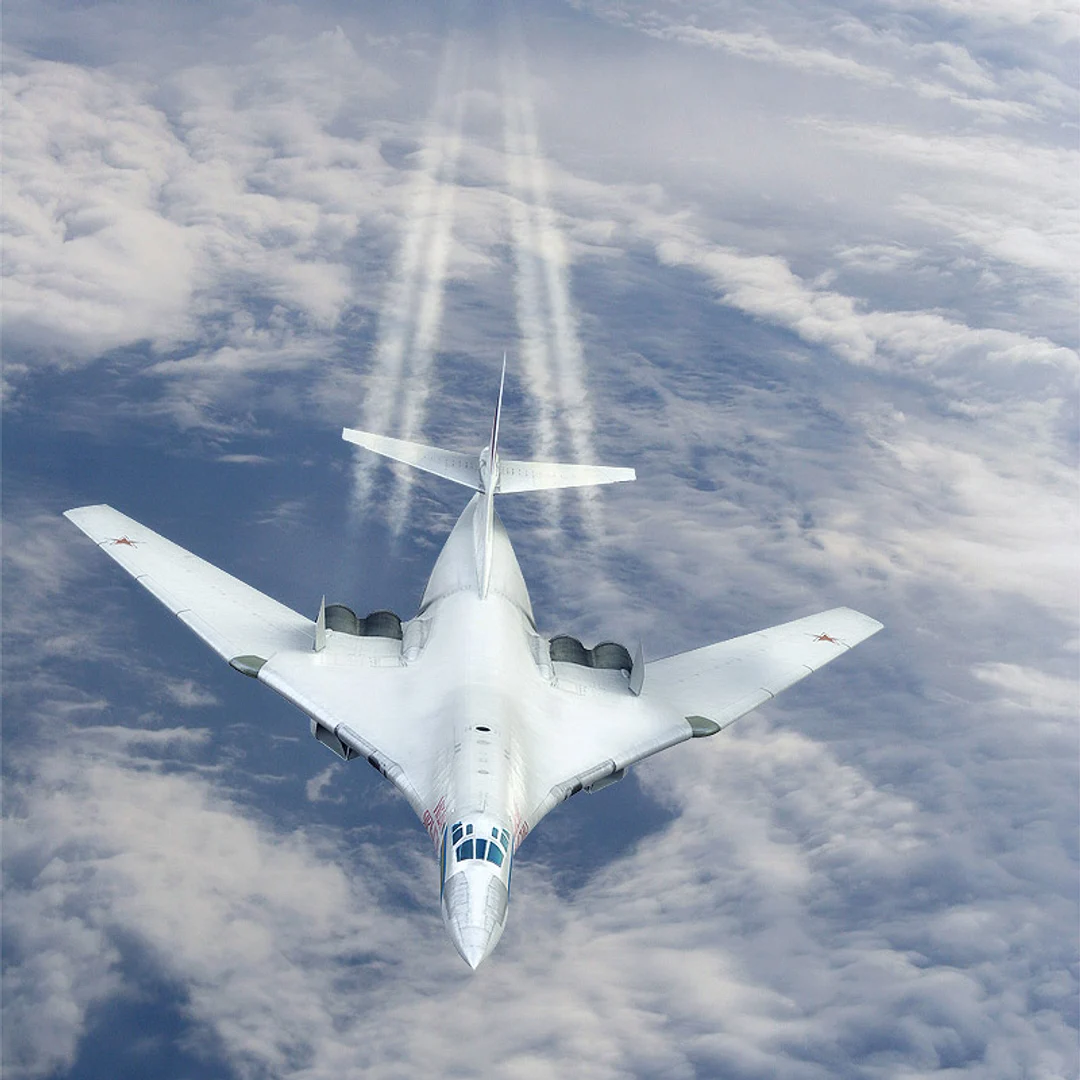
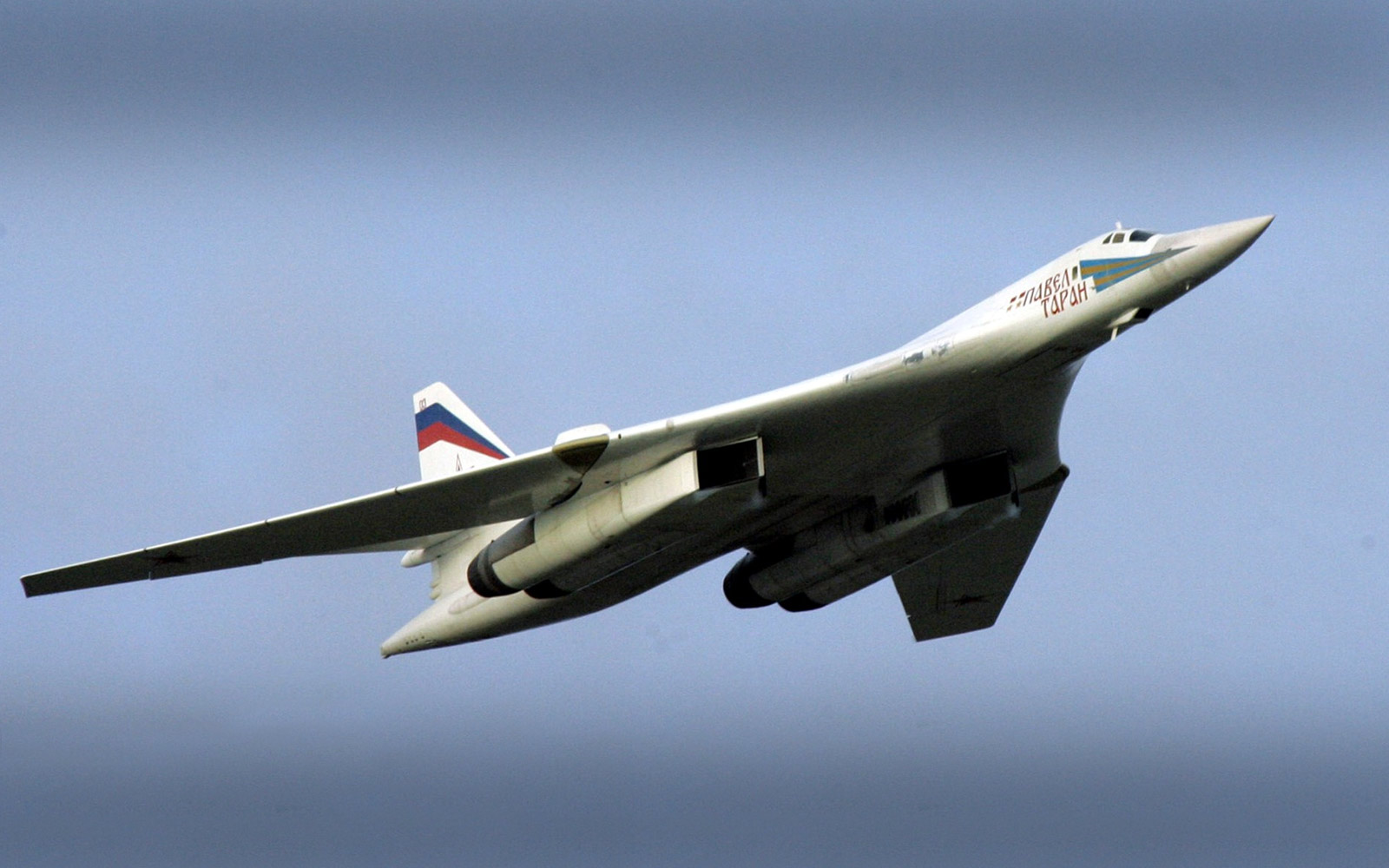
Layout. The Tu-160 is a low-wing, variable-geometry (swing-wing) aircraft with a blended wing-body fuselage. The wing is hinged on a large titanium centre section, and the largest component, the swing-wing hinge, weighs about 6 tonnes (English Wikipedia). Titanium makes up about 30 percent of the empty weight according to the same source. The wing has full-span leading-edge slats and double-slotted trailing-edge flaps. English Wikipedia describes a fly-by-wire control system. The electron-beam welding and titanium work that Kazan had to restore in the 2010s is described below under PRODUCTION.
Wing sweep. The wing sweeps from 20° (spread, for take-off, landing and slow flight) to 65° (fully swept, for high-speed flight). The intermediate settings are used for cruise, and 35° is commonly quoted as the middle position; no source consulted here specifies the full set of settings.
Dimensions. Length 54.1 m. Height 13.1 m (13.2 m in some tables). Wingspan 55.7 m at 20° sweep and 35.6 m at 65° sweep. Wing area is quoted as 400 m² spread and 360 m² swept (Jane's All the World's Aircraft 2003–2004 as used by English Wikipedia); some older Russian rows print 232 m², which looks like a reference-area or partial-area figure and is not used here.
Weights. Empty weight 110,000 kg is the commonly printed figure (Jane's and English Wikipedia). Western tables occasionally print 117–118 t. Normal take-off weight is about 267,600 kg and maximum take-off weight 275,000 kg. Wing loading is 742 kg/m² with the wings fully swept.
Fuel. The figure for internal fuel is not consistent between sources: English Wikipedia (citing Aerospaceweb) gives 130 tonnes, other sources including a Russian-language handbook cluster give about 148 t, and some give higher figures. No official figure is published. There are no external tanks in the production configuration. The aircraft has a retractable in-flight refuelling probe in the nose for probe-and-drogue refuelling from the Il-78 tanker. English Wikipedia says that the probe is rarely used in practice, and long flights have nevertheless been flown with tanker support (see OPERATIONAL HISTORY).
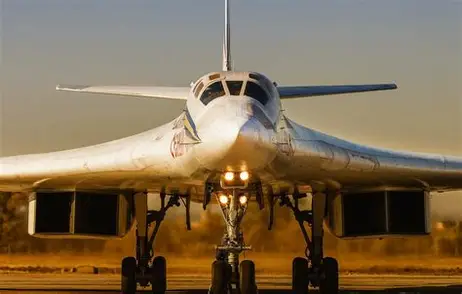
Intakes and nozzles. Four engines sit in two pairs in nacelles under the wing glove, with two-dimensional variable-geometry intakes. English Wikipedia contrasts this with the B-1B, whose designers dropped the variable-ramp intakes of the B-1A to reduce radar cross section and speed, while the Tu-160 retained them and kept its Mach 2+ capability. The nozzles are variable-area afterburning nozzles at the rear of the nacelles.
Landing gear. Tricycle landing gear. The crew enters through a ladder from the nose-gear bay, from underneath the forward fuselage.
Colour. The overall gloss white is an anti-flash paint intended to reduce the thermal effect of a nearby nuclear burst, and it gives the aircraft its nickname «Белый лебедь» among Russian crews.
ENGINES
The Tu-160 is powered by four Kuznetsov NK-32 (НК-32) afterburning three-spool low-bypass turbofans, designed by the Kuznetsov design bureau (ОКБ Кузнецова, Kuybyshev / Samara). English Wikipedia names the version as NK-321 and says they are the most powerful engines ever fitted to a combat aircraft. Quoted thrust per engine is 137.3 kN (about 14,000 kgf) dry and 245 kN (about 25,000 kgf) with afterburner, so the installed total is about 549 kN dry and 980 kN with afterburner. For the core architecture and the history of this engine see the NK-32 Jet Engine article and the Three-Spool Jet Engines Explained article in this database.
Original production. Series production of the NK-32 ended in the early 1990s with the end of Tu-160 production. The engines have been maintained, overhauled and, in a limited number, rebuilt since. English Wikipedia reports that the manufacturer in Samara had not produced new engines for a decade when it was given a contract in 2011 to overhaul 26 existing engines, and that two years later only four had been completed. The manufacturer said in the 2010s that a minimum order rate of 20 engines a year was needed, and the government was reported to be prepared to pay for four to six a year. These are figures from news reports quoted by English Wikipedia and are not official data.
NK-32 series 02 (NK-32-02). The Tu-160M and Tu-160M2 use a modernised engine, NK-32-02, built by UEC-Kuznetsov in Samara. It has been described in Russian reports as having improved reliability, a digital engine control system (FADEC type), and lower fuel consumption. The widely repeated claims of about 10 percent lower specific fuel consumption and roughly 1,000 km extra range are claims, not independently measured, and are not confirmed by an official data sheet. English Wikipedia says that five aircraft had been equipped with new-standard engines by August 2022 (citing a Russian trade press report of UEC / ODK deliveries). English Wikipedia also says that Kuznetsov designed an NK-32M with improved reliability, but that the successor company struggled to deliver working units.
Operating notes. The engine uses a lot of fuel in afterburner. It is the engine that lets the aircraft reach Mach 2.05 at about 12,200 m, and an engine-supply and engine-life problem is repeatedly identified in Russian and Western commentary as one of the limiting factors on fleet size and availability. One Tu-160 ("Михаил Громов", Mikhail Gromov) was lost on 18 September 2003 in a crash during a flight test of a replacement engine (English Wikipedia).
RADAR AND AVIONICS
Navigation and attack radar. English Wikipedia lists the TsNPO Leninets Obzor-K (Обзор-К) radar, with the NATO name "Clam Pipe" as given there, for tracking ground and air targets, and a separate Sopka (Сопка) terrain-following radar. The radar sits in the nose. Detailed performance figures are not published and none are given here.
Navigation and attack system. Soviet-era sources describe a navigation and attack complex combining inertial and star-tracking (astro-inertial) navigation with the radar. The names of these subsystems vary between sources and are not independently confirmed here; the designation "Strelec" given in some older Russian lists should be treated as unverified.
Self-defence. The aircraft has no cannon or tail turret. According to English Wikipedia the Tu-160 is the first post-Second World War Soviet bomber to lack defensive guns. Defence relies on an electronic-warfare suite (named «Байкал», Baikal, in some sources), chaff and flare dispensers, and the standoff launch tactic. Protection against "all missiles" has been claimed by Russian officials for the Tu-160M2 (reported by The Drive, 2017), but no performance data have been published.
Tu-160M upgrade. The modernisation introduces new radar and avionics, a new navigation system, GLONASS capability, new communications and electronic-warfare equipment, digital engine control and a modern cockpit (glass displays). The first aircraft flown with new radar and avionics performed its first flight in November 2014 (IHS Jane's, quoted by English Wikipedia). The Rostec chief has said that most of the bomber's systems and equipment are new. A full list of box names has not been released. The honest public description is "new radio-electronic equipment".
Stealth. English Wikipedia says the Tu-160 was designed for reduced radar and infrared detectability but is not a stealth aircraft. There is discussion in press commentary about whether radar-absorbent materials have been applied to the Tu-160M2; English Wikipedia says that most sources confine the upgrades to electronic warfare and enhanced range and avionics. No official statement of a reduced radar cross section is available.
CREW AND COCKPIT
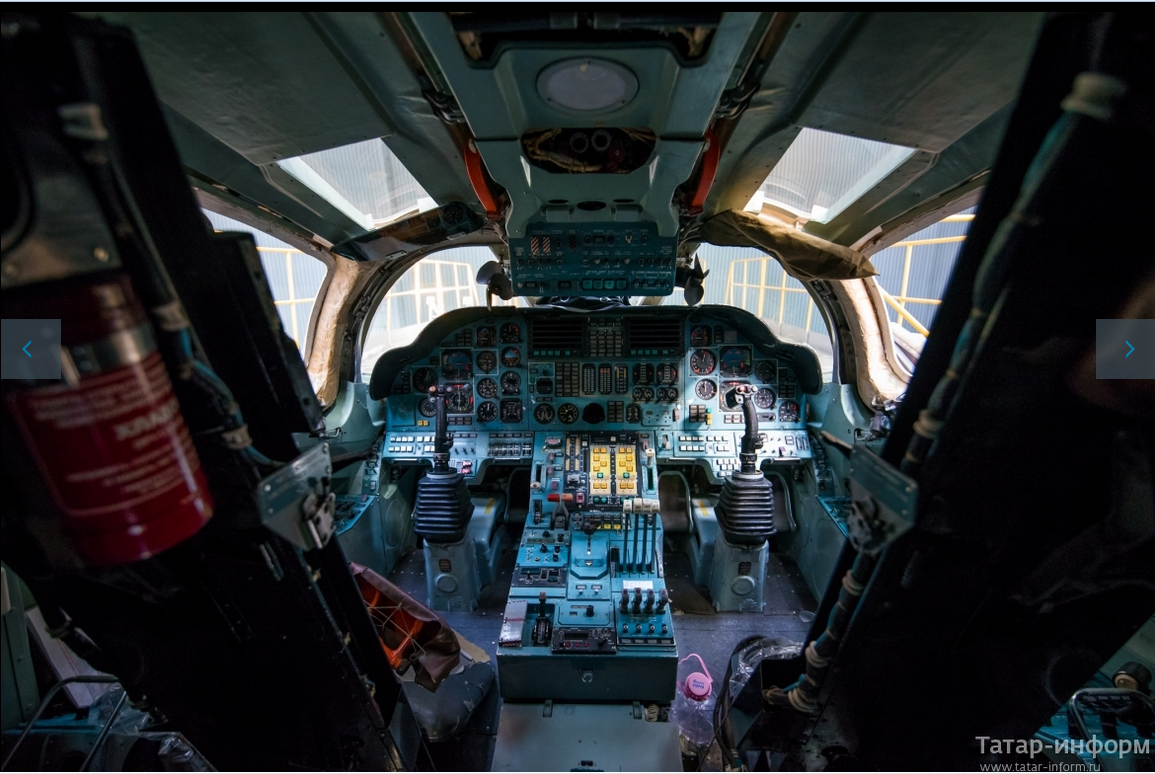
Crew of four: pilot, co-pilot, navigator-bombardier (штурман-оператор) and defensive-systems operator. The crew sit in two pairs side by side in a pressurised cabin and each has an ejection seat. English Wikipedia names the seats K-36LM; older handbook entries give K-36DM; both are NPP Zvezda (НПП «Звезда») designs of the K-36 family and the difference may be a designation issue. Entry is through a hatch and ladder in the nose-landing-gear bay.
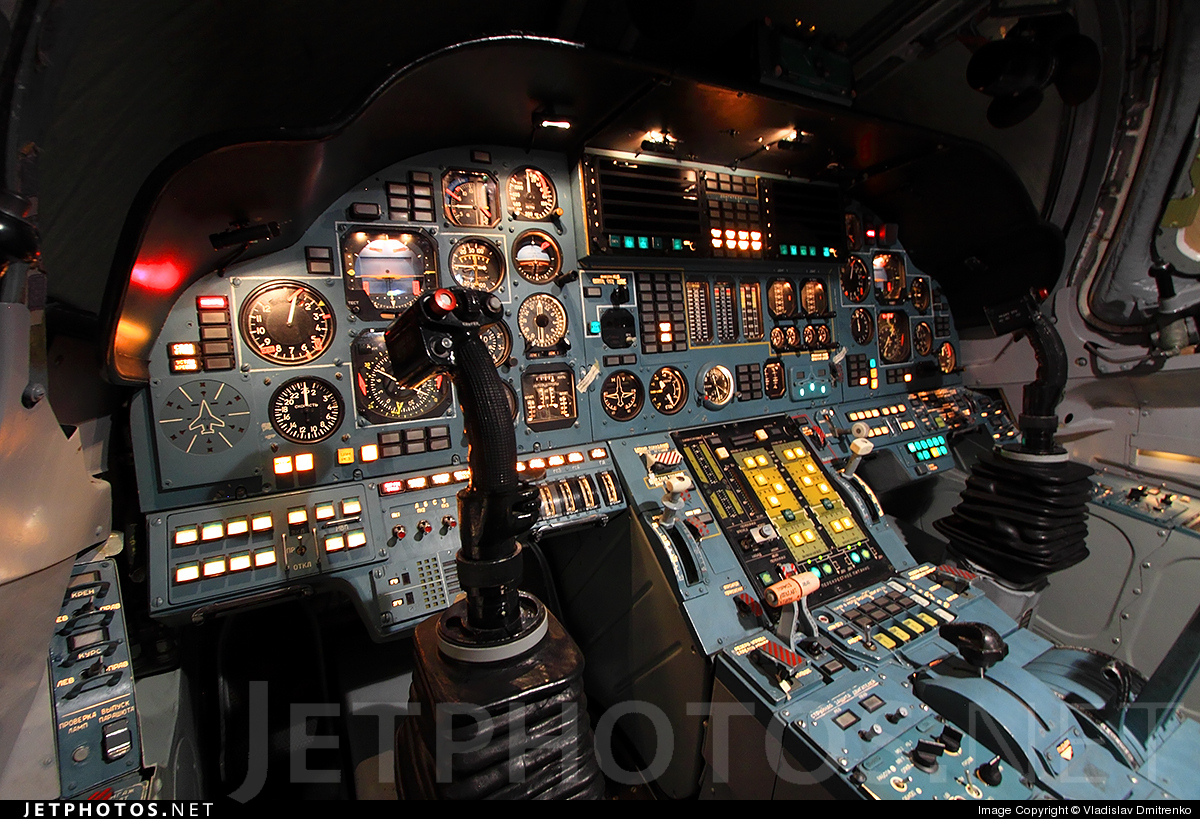
Cockpit. The original cockpit has conventional analogue instruments, and photographs show control sticks rather than yokes. The Tu-160M cockpit is reported to have multi-function glass displays. Neither is described fully in open official sources.
Endurance and comfort. The crew cabin is reported in the Russian press to have a toilet, a galley and a place to rest, which matters for flights of well over ten hours; this is a press claim and not a part of the official specification. A 15-hour unrefuelled endurance figure is quoted in some Russian tables. Record-length flights of over 20 hours have been flown with tanker support (a 23-hour patrol in June 2010, see below).
Training. The Tupolev Tu-134UBL, a modified Tu-134 airliner, has been used for Tu-160 pilot training (English Wikipedia list of related aircraft).
ARMAMENT
Weapon bays. The aircraft has two tandem internal weapon bays. English Wikipedia says each bay can hold 22,500 kg of free-fall weapons or a rotary launcher for missiles. Total weapons load is given as 45,000 kg. Older Soviet tables give a 40 t maximum and about 9 t "normal" load; neither is a combat load for the aircraft as used today.
Cruise missiles (primary load). Each rotary launcher holds six missiles, so the standard load is twelve missiles. The families that can be carried, as listed by English Wikipedia and in Russian accounts, are:
Kh-55 / Kh-55SM (Х-55, NATO AS-15 Kent): nuclear-armed subsonic air-launched cruise missile of the 1980s with a range of about 2,500 km in published figures; the Tu-160 was designed around it.
Kh-555 (Х-555): a conventional (non-nuclear) conversion of the Kh-55 family. Quoted range about 2,000–2,500 km depending on source.
Kh-101 (Х-101, NATO AS-23A Kodiak): conventional long-range cruise missile with a quoted range of 2,500 to 4,500 km depending on the source; some Russian-source figures reach 5,500 km. This is the weapon used in Syria and Ukraine.
Kh-102 (Х-102, AS-23B): the nuclear-armed version of the Kh-101 family. The warhead yield is not official; 250 kt is commonly cited in open sources and should be read as an estimate.
Kh-BD (Х-БД). English Wikipedia quotes a statement by the Long Range Aviation commander, Lt. Gen. Sergei Kobylash, to TASS on 16 September 2023 that Tu-160s were outfitted with "the newest Kh-BD" cruise missile with a range of 6,500 km, twelve per bomber. This is a Russian official claim only. The name "Kh-BD" has not been confirmed by independent sources, no photograph of the missile is known to be published, and the range is not independently verified. It should be regarded as a claim.
Short-range missiles. Kh-15 (Х-15, NATO AS-16 Kickback): short-range nuclear missile (quasi-ballistic). The original design could carry up to 24 on two 12-round launchers, a Cold War anti-carrier and defence-suppression load. It is not the current daily load.
Bombs and mines. The Tu-160 is cleared in published sources for free-fall bombs, naval mines and guided bombs up to the bay limit. It is not known to have dropped gravity bombs in any publicised conflict. Russian state media said in September 2007 that a Tu-160 had dropped the "Father of All Bombs" (the ATBIP thermobaric bomb) in a test; English Wikipedia notes that some US analysts were sceptical that the bomb was delivered by a Tu-160.
Kinzhal. In 2020 Russian officials were quoted as saying that the Tu-160 would be armed with Kh-47M2 «Кинжал» (Kinzhal) air-launched ballistic missiles. No photograph or confirmation of such a fit has been verified here, and the Kinzhal is operationally carried by the MiG-31K and Tu-22M3 (see the MiG-31 article).
Kh-22. Some Russian popular lists name the Kh-22 missile; that is a Tu-22M missile, and it is not a confirmed Tu-160 fit.
Range of weapons. The aircraft does not need to approach a defended border to use the Kh-101 and Kh-102. Ranges are political as much as ballistic: the official figures are not independently verified and depend on the flight profile and the missile version.
SPECIFICATIONS
Figures are for the original Tu-160 from Jane's All the World's Aircraft 2003–2004, as printed in English Wikipedia, unless stated. Where other figures are in circulation, both are shown.
Crew: 4. Length: 54.1 m. Wingspan: 55.7 m spread (20°), 35.6 m swept (65°). Height: 13.1 m (13.2 m in some tables). Wing area: 400 m² spread, 360 m² swept.
Empty weight: 110,000 kg (117–118 t in some Western tables). Normal take-off weight: about 267,600 kg. Maximum take-off weight: 275,000 kg.
Powerplant: four NK-32 (NK-321) three-spool afterburning turbofans, 137.3 kN each dry, 245 kN each with afterburner. Thrust-to-weight about 0.37 (English Wikipedia).
Maximum speed: 2,220 km/h (Mach 2.05) at 12,200 m. Russian tables print 2,000–2,220 km/h. Near the ground the maximum is about 1,030 km/h. Cruise speed: 850–960 km/h (Mach 0.77–0.9).
Range: 12,300 km practical range without in-flight refuelling at Mach 0.77 with six Kh-55SM released mid-route and 5 percent fuel reserve (Taylor 1996, quoted by English Wikipedia). Other tables print 13,950–14,600 km, or 14,000 km with 9 t of payload and about 10,500 km with 40 t. Combat radius: about 2,000 km at Mach 1.5 or about 7,300 km at subsonic speed (GlobalSecurity, quoted by English Wikipedia). Every range depends on profile.
Service ceiling: 16,000 m (15,000 m in some tables; some popular rows print 12,000 m as a practical working altitude). Rate of climb: about 70 m/s. Lift-to-drag ratio: 18.5–19 subsonic and above 6 supersonic (airforce.ru, quoted by English Wikipedia). Load factor: a structural limit of about +2 g is commonly printed (not independently confirmed here).
Armament: up to 45,000 kg in two internal bays, normally twelve cruise missiles on two rotary launchers.
VARIANTS
Tu-160 (Ту-160, also called Tu-160S in some sources to separate serial aircraft from prototypes and experimental aircraft): production missile carrier of 1984–1992.
Tu-160V: proposed liquid-hydrogen version (linked with the Tu-155 hydrogen-fuel research aircraft). Not a fleet type.
Tu-160 NK-74: proposed longer-range version with NK-74 engines. Not built.
Tu-160P (Tu-161): proposed very long-range escort fighter or interceptor version; not built (English Wikipedia, "citation needed").
Tu-160PP: proposed electronic-warfare / stand-off jammer version (ПП — постановщик помех). Not built.
Tu-160R: proposed strategic reconnaissance version. Not built.
Tu-160SK / Burlak (Бурлак): commercial air-launch study, shown at Asian Aerospace in Singapore in 1994 with a model of a small launch vehicle. A civil supersonic transport based on the Tu-160 was floated by Vladimir Putin in January 2018; experts quoted in the news were sceptical about the commercial and technical feasibility.
Tu-160M: deep modernisation of existing airframes: new avionics, new weapon wiring for Kh-101/102, NK-32-02 engines as they become available. The first flight with new radar and avionics is dated November 2014 and the first delivery December 2014 (English Wikipedia). The Tu-160M with NK-32-02 engines first flew on 2 February 2020 at Kazan.
Tu-160M2: new-build at the modernised standard, from restored Kazan production. Externally nearly the same aircraft. Officials describe it as having new avionics, electronics, glass cockpit, communications and control systems, new weapons, new defensive systems and NK-32-02 engines. The differences between M and M2 are not published as a list. Russian designations in press reporting are inconsistent: the "Tu-160M2" is sometimes used for both rebuilt and new-build aircraft.
Named individual aircraft are the same type with a name and a regiment history, not separate marks. Names reported in the sources used here include Илья Муромец (Ilya Muromets), Иван Ярыгин (Ivan Yarygin), Пётр Дейнекин (Pyotr Deynekin, the first new-build Tu-160M2 from the Soviet-era airframe stock, rolled out 16 November 2017), Игорь Сикорский (Igor Sikorsky), Александр Новиков (Alexander Novikov), Александр Голованов (Alexander Golovanov), Валерий Чкалов (Valery Chkalov), Василий Решетников (Vasily Reshetnikov), Василий Сенько (Vasily Senko), Александр Молодчий (Aleksandr Molodchiy), Виталий Копылов (Vitaly Kopylov), Валентин Близнюк (Valentin Bliznyuk) and Михаил Громов (Mikhail Gromov, destroyed in 2003). The complete list is not given in any single source consulted.
PRODUCTION
Soviet-era production. The type was built only at Kazan. English Wikipedia lists the manufacturing years as 1984–1992, 2002, 2008, 2017 and 2021–present: that is, Soviet series production, then isolated completions of unfinished airframes (2002 and 2008) and the 2017 roll-out, then the new-build programme. The count of finished Soviet-era aircraft is quoted as 35 in service by early 1992 (English Wikipedia), and the total built is given as 41 in the infobox (9 test and 32 serial, citation needed). A common split in Russian handbooks is two or more prototypes, a number of pre-series aircraft and about 32–36 series aircraft, not all of which were completed. No official total is available.
Unfinished airframes. After production stopped, some unfinished airframes remained at Kazan. One was completed as Aleksandr Molodchiy (second aircraft in the eighth production batch), which arrived at Engels in September 1999 and was commissioned on 5 May 2000, and Vitaly Kopylov joined the Air Force on 29 April 2008 as a new aircraft in English Wikipedia's account. The Tu-160 named Valentin Bliznyuk, built in 1986 and formerly a Tupolev test aircraft, entered service after overhaul in July 2006.
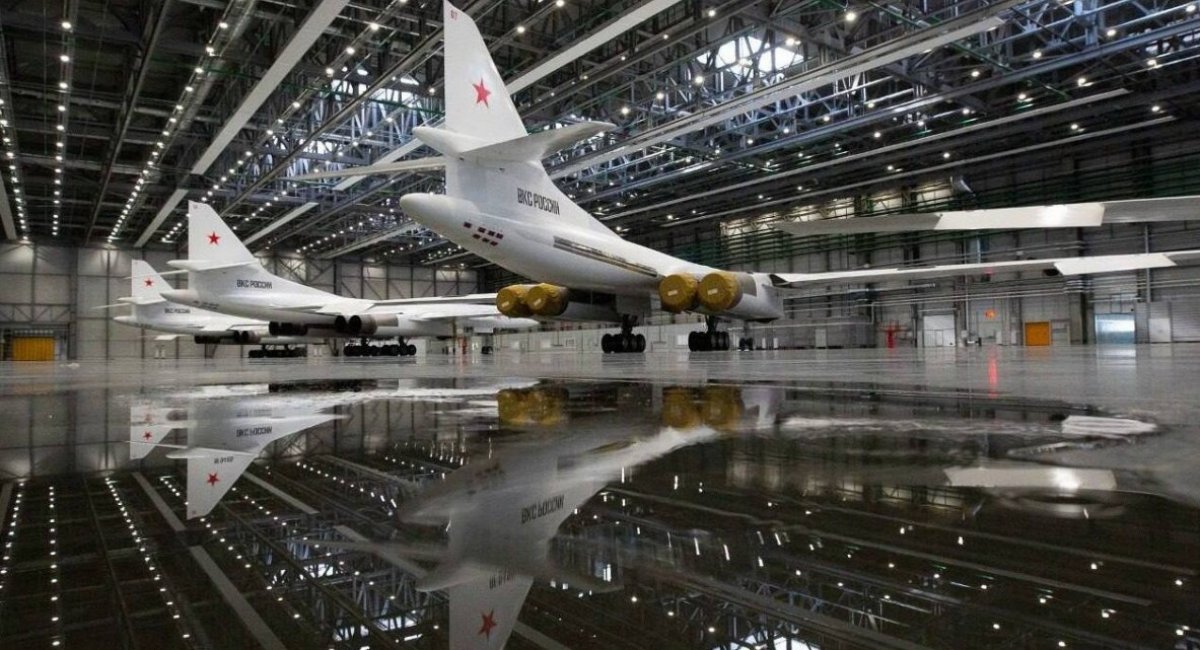
Production restart. In 2008 Russia revealed plans for one new Tu-160 to be delivered every one to two years. On 29 April 2015 the then Defence Minister Sergei Shoigu said Tu-160 production would resume on the order of the President. In May 2015 TASS reported that the air force would buy at least 50 KAPO-built aircraft (English Wikipedia); that number has not been reached and no schedule for it is public. On 16 November 2017 a newly assembled Tu-160M2, built from an unfinished Soviet-era airframe, was shown at a roll-out ceremony at Kazan (named Pyotr Deynekin). The ceremony marked the restoration of some production techniques (electron-beam welding and titanium work) that had fallen out of use. It first flew in public on 25 January 2018 during President Putin's visit to the plant, and a contract for ten upgraded aircraft was signed at that time (reported by Vedomosti at a cost of 160 billion roubles for ten aircraft). The first fully new-built Tu-160M had its first flight on 12 January 2022. English Wikipedia says the second new-build and fourth modernised aircraft began flight tests in December 2022.
Kazan industrial base. Construction of a new production hall at Kazan began in 2020 and, according to satellite-based reporting (AviVector and The New Voice of Ukraine, 2026), appears to have become operational only in early 2026. These are Ukrainian-media and OSINT reports and are not official statements. The production rate is not published.
Deliveries and rates. Four aircraft were said to be delivered in 2023 by Vladimir Putin (as reported by English Wikipedia citing a December 2023 Defence Ministry board meeting) and four were delivered on 21 February 2024 according to the Bulgarian Military Industry Review report quoted by English Wikipedia. It is not clear whether these are the same four aircraft; the dates conflict and both are shown. Delivery figures from 2024–2026 are given in counts of one or two aircraft a year in the open reporting below, not dozens.
OPERATORS
Soviet Union (Long Range Aviation, Soviet Air Forces). The 201st Heavy Bomber Aviation Division at Pryluky, in the Ukrainian SSR, with the 184th Guards Heavy Bomber Aviation Regiment (184 ГвТБАП), received the first aircraft in April 1987. The Engels-2 airbase (Энгельс), in the Saratov oblast, became the second main base: the 121st Guards Heavy Bomber Aviation Regiment (121 ГвТБАП) there was formed in early 1992 and received six aircraft by 1994 (English Wikipedia).
Ukraine. On the breakup of the USSR Ukraine inherited 19 Tu-160 at Pryluky. The Ukrainian Air Force could not operate them for lack of technical support and spares, regarded them as of limited military value and as a bargaining chip. Russian experts who examined the aircraft in 1993 and 1996 assessed the technical condition as good, but the price proposed by Ukraine (about 3 billion US dollars) was considered unacceptable by Russia. In April 1998 Ukraine began scrapping aircraft under the Nunn–Lugar Cooperative Threat Reduction programme; the first Tu-160 was cut up at Pryluky in November 1998. In April 1999 Russia proposed to purchase eight Tu-160 and three Tu-95MS bombers (the best examples, built in 1991) and 575 Kh-55SM cruise missiles. The deal was worth 285 million US dollars, deducted from Ukraine's natural-gas debt. The first Tu-160 left Pryluky on 5 November 1999, and the rest were flown to Engels-2 in the following months. English Wikipedia says the remaining 11 aircraft were scrapped under Nunn–Lugar; one Tu-160 survives as a museum aircraft at the Museum of Long-Range and Strategic Aviation in Poltava (Музей дальней авиации, Полтава). The exact count of scrapped aircraft and the status of other surviving airframes differ between sources, and reports that individual transferred airframes are still flying are not verified here.
Russia. Russian Aerospace Forces (ВКС России), Long Range Aviation (Дальняя авиация). Main base: Engels-2 (Saratov Oblast), 6950th Guards Air Base, with the 121st Guards Heavy Bomber Aviation Regiment. Other airfields used since 2022 are listed under OPERATIONAL HISTORY. Russia is the only current operator.
Foreign interest. In 2022 an Indian retired air chief marshal said that India was interested in purchasing Tu-160 bombers and Indian media reported talks over six aircraft (English Wikipedia: "needs update"). No sale has occurred and no contract has been confirmed.
OPERATIONAL HISTORY
Cold War service and records. During 1989 and 1990 a total of 44 world speed and payload flight records in its weight class were set with the Tu-160 (English Wikipedia). Some individual record entries are claimed in Russian sources for the aircraft class; the individual records are not listed here because they could not be checked against FAI listings.
Post-Soviet Russia. After the breakup the Russian fleet at Engels flew very little. Russia unilaterally suspended flights of strategic aviation over remote regions after 1992 and on 17 August 2007 President Putin announced the resumption of long-range strategic aviation patrols. After the purchase of eight Ukrainian aircraft and the completion of one new aircraft, the Russian fleet stood at 15 by February 2001 (English Wikipedia), fell to 14 after the Mikhail Gromov crash of 18 September 2003, and returned to 15 on 5 July 2006 with the overhauled Valentin Bliznyuk. A further aircraft joined in April 2008 (Vitaly Kopylov), making 16.
Patrols and exercises. In April 2006 the commander of Long Range Aviation, Lt. Gen. Igor Khvorov, said a pair of Tu-160 flew undetected through a US-controlled sector during an Arctic exercise (Russian claim). On 14 September 2007 two Tu-160 were intercepted by British and Norwegian fighters over the North Atlantic. On 10 September 2008 two aircraft (Vasily Senko and Aleksandr Molodchiy) deployed to Venezuela. On 12 October 2008 a total of 12 bombers, Tu-160 and Tu-95, took part in the largest Russian strategic bomber exercise since 1984, and it was the first time a Tu-160 fired a full complement of missiles. On 10 June 2010 two Tu-160 carried out a 23-hour patrol with a planned range of 18,000 km (citation needed). On 1 November 2013 two aircraft entered Colombian airspace flying from Venezuela to Nicaragua, and Colombia protested. In August 2018 two Tu-160 flew 7,000 km non-stop from Engels to Chukotka and landed at Anadyr for the first time. In November 2018 a Tu-160M fired twelve Kh-101 at the Pemboy range in the Komi Republic (TASS), a full-load launch. On 10 December 2018 two Tu-160 landed at Maiquetía airport in Venezuela. On 23 October 2019 two Tu-160 flew a 13-hour, 11,000 km non-stop flight with air refuelling from Engels to Waterkloof airbase in South Africa. In November 2021 two aircraft flew a training mission over Belarus with Belarusian Su-30 aircraft.
Combat use in Syria. On 17 November 2015 several Tu-160 and Tu-95MS bombers fired Kh-101 cruise missiles from the Mediterranean Sea against targets in Idlib and Aleppo provinces, together with Tu-22M3 bombers dropping unguided bombs. This was the combat debut of both types, 28 years after the Tu-160 entered service. The Russian Ministry of Defence reported 34 cruise missiles, and a Norwegian Defence Research Establishment report (FFI, 2016) gives a range of 34 to 83 missiles in total for the strike, so the count of missiles is disputed. Russian reports of further bomber strikes from Russia in 2016–2017 involved mostly Tu-95MS and Tu-22M3 and are not attributed to the Tu-160 here.
Use against Ukraine. The Tu-160 has taken part in the Russian invasion of Ukraine since 2022. The usual pattern in Ukrainian and open-source reporting is take-off from Engels-2 (and from Olenya or, since 2025, Ukrainka and other Far Eastern fields), missile launches from well inside Russian airspace (the Caspian Sea, the Black Sea or the Volga region), and recovery. The aircraft is not reported to have entered Ukrainian air-defence range. Examples: on 6 March 2022, according to Ukrainian sources, a Tu-160 with a Tu-95MS launched eight cruise missiles, presumably Kh-101, at Vinnytsia from the Black Sea area; on 26 June 2022 the Ukrainian Air Force spokesman Yuriy Ihnat reported four to six Kh-101 launched at Kyiv from the Caspian area by Tu-160 and Tu-95MS. The share of Kh-101 missiles that are intercepted is claimed by Ukrainian sources and is not independently verified here. The Russian Ministry of Defence usually describes the strikes as "massed strikes with high-precision long-range weapons" and does not give per-aircraft detail.
Attacks on bomber bases. On 20 January 2025 Ukraine launched drones at the Gorbunov Kazan Aviation Plant, about 1,000 km from the border; Russian sources said damage was minimal and the drones were neutralised (English Wikipedia).
Operation Spiderweb (1 June 2025). The Security Service of Ukraine (SBU) carried out coordinated first-person-view (FPV) drone strikes launched from trucks near five airbases: Olenya (Olenegorsk), Belaya, Ukrainka, Ryazan-Dyagilevo and Ivanovo-Severny (Janes; the strike on Ukrainka failed). President Zelensky said that 41 aircraft had been damaged and that about half could not be repaired (Reuters), and English Wikipedia says that Ukraine claimed four Tu-160 had been hit. Independent assessments differ: Janes assessed 12 aircraft destroyed (seven Tu-95MS, four Tu-22M3 and one An-12), two damaged and possibly eight more damaged (two A-50, five Tu-22M3 and one Tu-95MS); The Insider reports that "there is no confirmed evidence from available footage that Tu-160s were hit". No independent source consulted confirms the loss of any Tu-160 in the raid, and the SBU claim is treated as unverified. The Russian Ministry of Defence conceded fires at Murmansk (Olenya) and Irkutsk (Belaya) bases in its statement. Basing after the raid: The Insider reports that after June 2025 many Tu-95MS and Tu-160 were moved to the Far East, mainly Ukrainka in the Amur Region about 8,000 km from the front, that Tu-160 from Belaya were dispersed to Anadyr and Yelizovo, and that aircraft are still prepared and armed at Engels-2 and Olenya before returning. This basing description is from one press source and satellite imagery cited by OSINT trackers, and is not an official statement. Claims of any Tu-160 destroyed on the ground should be read as unverified claims.
Press and OSINT reports of technical faults. Some Russian-language and Ukrainian channels (for example the "Dossier Shpiona" channel quoted by The Insider) claimed that during a raid on 3 September 2025 one Tu-160 could not launch its missiles because of a firing-mechanism fault and another could not take off from Engels-2. These are claims from unofficial channels and are not confirmed.
RUSSIAN AIR FORCE FLEET AND MODERNIZATION
Fleet size. There is no official published fleet total. English Wikipedia reports 17 Tu-160 in service as of 2022 and, in its operator section, 18 Tu-160 / Tu-160M operational, of which 5 in repair and modernisation, with 2 more Tu-160M under construction, and a Newsweek report (July 2025) that 2 Tu-160M and 2 Tu-160M2 had been commissioned. In April 2026 the Ukrainian OSINT analysts of AviVector, reported by Militarnyi, The New Voice of Ukraine, Defence Blog and UNIAN, counted 18 Tu-160M in Russian registry data, of which only seven regularly flew combat missions (from Ukrainka and occasionally Engels-2), and 7 to 9 Tu-160M / M2 aircraft in the Kazan workshops at any time. They also give "at least five" new-build Tu-160M2 with unclear status (Militarnyi, UNIAN, an item from the Vietnam press repeated by a Russian-language outlet), while Defence Blog quotes AviVector as confirming six rebuilt Tu-160M and three new Tu-160M2 so far; these two counts conflict and both are shown. On 16 April 2026 AviVector listed 2 aircraft at Engels-2, 6 at Ukrainka, 1 at Yelizovo, 3 at Ramenskoye and 2 at Borisoglebsk in satellite imagery (14 in total). An earlier Russian-language estimate for 2025 was about 20 aircraft (reported by the same Russian outlet). The Military Balance (IISS) estimates are not quoted here because the current edition's number could not be checked. The ratio of about seven aircraft used operationally from about 18 on the books is, according to UNIAN's reading of AviVector, an operational readiness of about 40 percent; this is an analyst estimate and not an official figure.
Modernisation history. In 2002 the Defence Ministry and KAPO agreed to modernise 15 Tu-160. In July 2006 the first overhauled and partly modernised aircraft entered service, reportedly with conventional-weapon capability but without the new avionics. The first aircraft able to carry the conventional Kh-555 was delivered in April 2008 and a follow-up contract for three more aircraft was reported at 3.4 billion roubles. In 2013 Jane's reported further delays. The upgraded Tu-160 with new radar and avionics flew in November 2014 and the Defence Ministry received the aircraft as Tu-160M in December 2014. The 2015 plan, as reported, was to buy 50 new-built aircraft and upgrade 16 existing ones. The Tu-160M with NK-32-02 engines first flew on 2 February 2020. Russian news reports said that five aircraft had the new engines by August 2022. The first fully new-built aircraft flew in January 2022 and Putin said in December 2023 that four Tu-160M had been delivered in 2023. On 21 February 2024 four aircraft were reported delivered (the reports may overlap).
Planned numbers. A contract for ten Tu-160M2 was reported in January 2018 (Vedomosti, 160 billion roubles). A figure of about 50 new aircraft has been circulated since 2015 and "all fleet modernised by 2030" has been reported (The Diplomat, 2018). None of these is a completed inventory. Actual output is one or two aircraft at a time.
Pace. Defence Blog (citing a Telegram channel) reported the first photo of Tu-160 "8-04" Pyotr Deynekin after its Tu-160M upgrade, after about five years in the programme. The name Pyotr Deynekin was also given to the 2017 new-build aircraft, and the sources used here do not clarify how the two relate. The item is single-sourced and is shown only as an example of the slow pace of the programme.
Successor. The PAK DA (ПАК ДА) stealth subsonic flying-wing bomber is the planned successor, and General Viktor Bondarev said in 2015 that its development would proceed alongside Tu-160 production. It has not been shown flying in any source consulted here, and the Tu-160M2 is the aircraft that is in production in the 2020s.
COMPARISON
Rockwell B-1B Lancer (USA). Similar in layout and role but a different design. The B-1B is smaller (maximum take-off weight about 216 t against 275 t) and was optimised for low-level penetration at high subsonic speed, with reduced radar signature and fixed intakes (the B-1B has lost the variable-ramp intakes of the B-1A and with them the Mach 2+ speed). The Tu-160 is larger, faster (Mach 2.05 against about Mach 1.25 for the B-1B), and has slightly greater range, and the B-1B can carry a larger load if external hardpoints are counted, according to The Directory of the World's Weapons (1996) as quoted by English Wikipedia. The B-1B was converted to a conventional-only role; the Tu-160 is a dual-role (nuclear and conventional) missile carrier.
Tu-95MS «Bear» (Russia). The turboprop Tu-95MS is much slower, but it is cheaper to keep flying and is able to loiter; see the Tu-95 article in this database. Both launch Kh-101 and Kh-102 missiles. The Tu-160 adds speed and a heavier missile load per sortie in the same launch tactic.
Tu-22M3 «Backfire» (Russia). Smaller swing-wing medium bomber with shorter range; used for Kh-22 / Kh-32 missiles and Kinzhal. It shares some design lineage with the Tu-160.
Sukhoi T-4 (the 1960s Mach 3 prototype) and the Myasishchev M-18. Competitors in the 1970s, not produced.
Xi'an H-6K (China) and the Northrop Grumman B-2 Spirit and B-21 Raider (USA). The H-6K is a modernised Tu-16 derivative with cruise-missile pylons. The B-2 and B-21 are stealth flying-wing bombers; the Tu-160 is not comparable in signature.
PAK DA (Russia). Future subsonic stealth bomber, not in service.
WHAT IT IS NOT
It is not a B-1 copy. It is not a stealth aircraft; the white paint is anti-flash paint and not a radar-absorbing coating. It is not a Tu-95 and it is not a fighter. It does not carry a useful external load. It has not been verified to drop gravity bombs in any publicised war. Its stated performance figures are an official or handbook value and not measured data; its production restart is limited; and its Kh-BD, Kinzhal and "hypersonic" fits mentioned in Russian statements are claims, not fielded weapons confirmed by independent sources.
CAVEATS ON THE NUMBERS
Empty weight (110 t or 117–118 t), fuel (130 t to 148 t), wing area (232, 360, 400 m²), ceiling (12, 15 and 16 km), range (10,500 to 14,600 km) and payload (9, 40 or 45 t) all exist as two or three official-looking values. Fleet numbers depend on whether rebuilt aircraft, aircraft in workshops and new-build aircraft are counted. M versus M2 differences are not published as a delta list. Kh-101 range figures and the Kh-BD figure are statements by the Russian Ministry of Defence or officials and are not independently verified. Combat figures for launches and interceptions come from the Russian Ministry of Defence and Ukrainian Air Force statements, and Spiderweb loss counts come from the SBU, Janes, IISS and the press.
STATUS
In service with the Russian Aerospace Forces (Long Range Aviation) as the Tu-160, Tu-160M and Tu-160M2. Russia is the only operator. Ukraine no longer flies the type, and one Tu-160 is preserved in Poltava. Kazan both rebuilds old airframes to the M standard and builds new M2 aircraft, with a new production hall reported operational in 2026, and Samara supplies NK-32-02 engines. Reported fleet size is about 18 aircraft in mid-2026 (open-source estimates, no official figure), of which about seven fly the regular missile strikes against Ukraine. The planned successor PAK DA has not flown. Reports of Tu-160 losses in the June 2025 Spiderweb raid are not confirmed by independent assessments seen here.
IN ONE SENTENCE
The Tu-160 «Белый лебедь» is Tupolev's 275-tonne, Mach 2.05, four-NK-32 swing-wing missile carrier of 1981–1987, built at Kazan, used to launch Kh-101 and Kh-102 cruise missiles from two rotary bays, which the Russian Aerospace Forces still operate as a fleet of roughly 18 aircraft (open-source estimate) while Kazan slowly rebuilds old airframes and builds a few new ones as Tu-160M and Tu-160M2.