WHAT IT IS
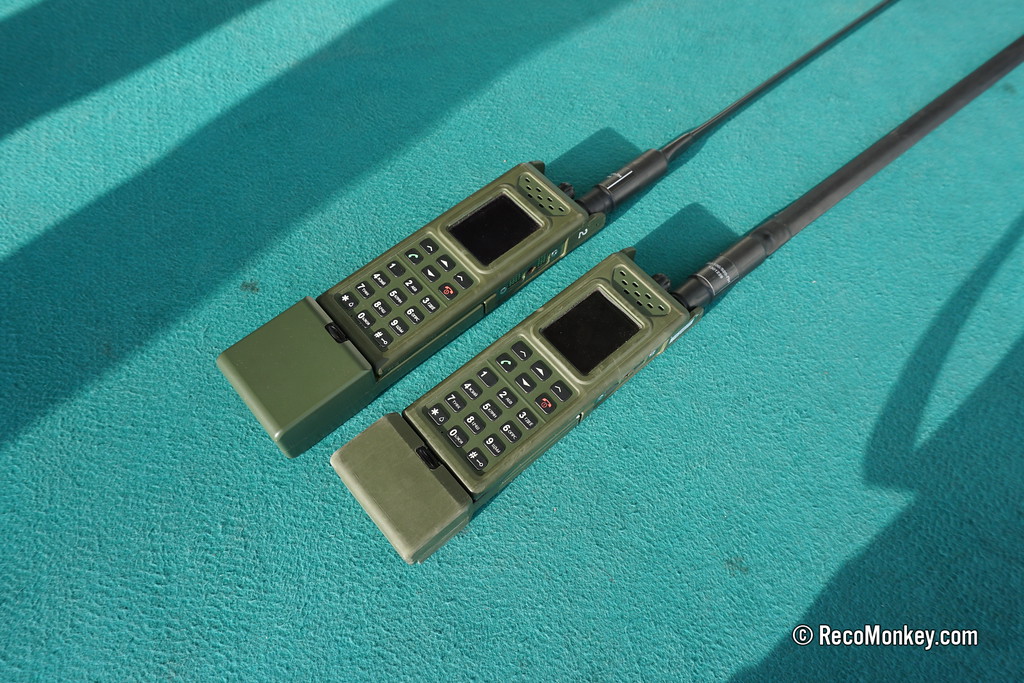
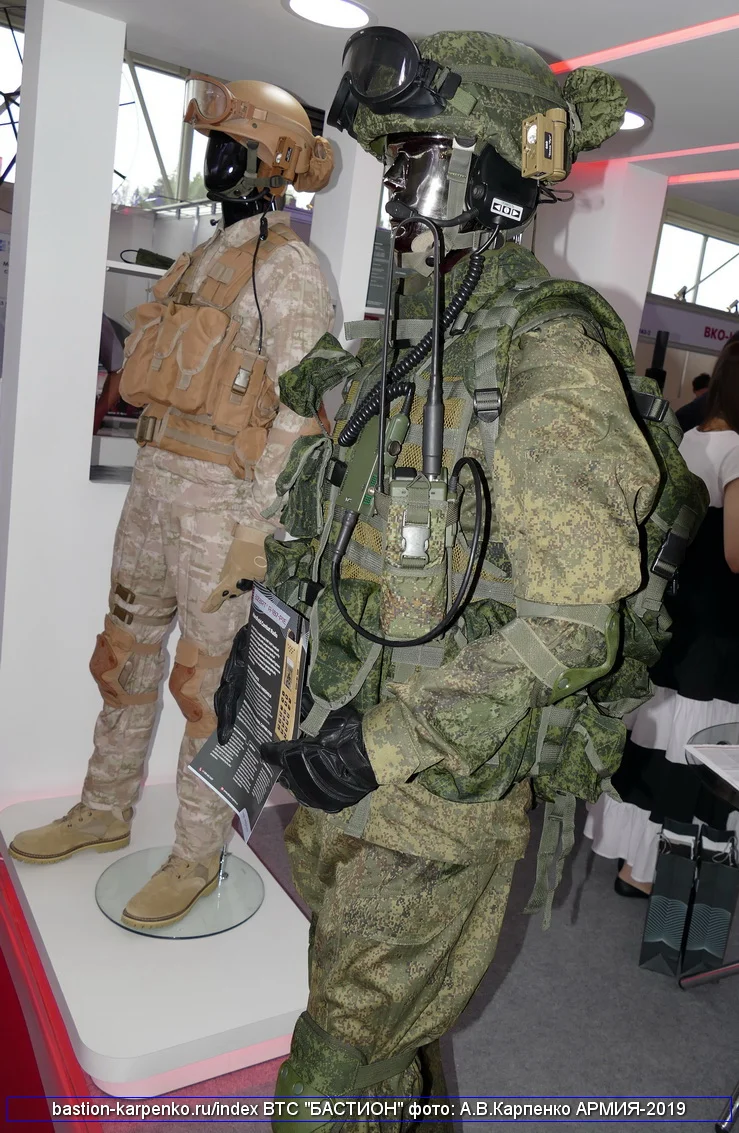
R-187-P1 Azart (Р-187-П1 «Азарт», product PAKD.464113.006, export R-187-P1E) is the handheld member of Russia’s sixth-generation software-defined tactical radio family. Developer and named manufacturer: NPO Angstrem. The family also includes the vehicle set R-187VE (R-187-VE / Azart-V). The radios entered service from about 2014–2015, were shown at Sochi 2014 security duty, and have been used in Syria and in the war in Ukraine. They are meant to be the squad-to-battalion voice and short-data brick in a mesh that can still talk to the older analog fleet.
Azart is not a Harris AN/PRC-163 and not a Motorola DMR brick. It is an SDR that speaks analog FM/AM, a fast Russian hop waveform, a slow hop that matches Akveduk, TETRA, and a GSM-900/1800 mode without a civilian SIM. Rosoboronexport sells it as a jam-resistant net for ground that has no fixed comms infrastructure.
THE SET
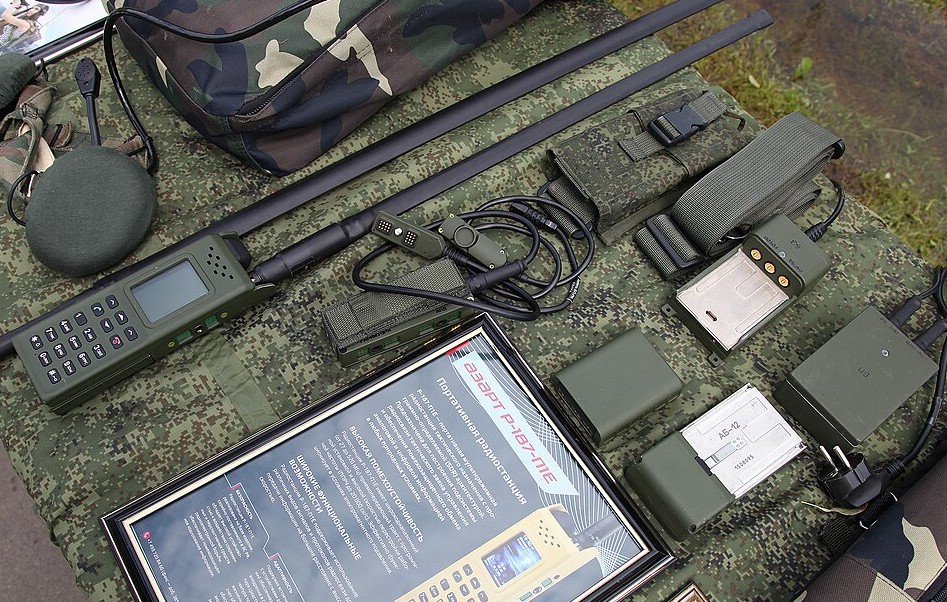
R-187-P1 / P1E — handheld. 27–520 MHz (some export cards start at 30 MHz). Power 1 W in TETRA, up to about 4 W in other modes on VHF; UHF cards often quote ~1 W. Weight 466 g without battery and antenna. Size about 195 × 70 × 40 mm. TNC antenna. Three sticks in the kit: long 27–520, mid 100–520, short 136–520 MHz. Battery 6 hours on the standard pack, 12 hours on BA-12, duty cycle 1:1:9. Temperature −30 to +50 °C (some sheets +55). USB, RS-485, infrared, Bluetooth, 24-pin accessory block. 512 MB fill store. GLONASS/GPS, C/A-code accuracy quoted 25 m lat/long, 40 m height.
R-187VE — vehicle / command-post set, modular. Published bands are wider: HF 1.5–30 MHz at up to 100 W; VHF 30–180 MHz at 40 W; UHF-1 220–470 MHz at 40 W; UHF-2 slices 550–1250 and 1850–2500 MHz at 10 W. Data rates in the brochure climb from 9.6 kb/s on HF to 256 kb/s VHF, 2 Mb/s and 32 Mb/s on the upper UHF cards. Line-of-sight ranges in that table: 500 km HF, 20 / 15 / 5 km on the V/UHF faces. Combined-arms army posts in one Western document are drawn with a P-187BV-class V/UHF mast set at about 40 km and 2–8 Mb/s.
Field power on captured P1 sets is not a flat 4 W. Ukrainian bench notes: one sample 1 / 2 / 4 W across 27–200 / 200–400 / 400–512 MHz; another 3.4 / 2 / 2.2 W. Sensitivity still good (about −116 dBm class).
HOW THE RADIO WORKS
It is an SDR. Angstrem publicity named a 1 GHz domestic CPU on 65 nm. Teardowns also show FPGA fabric (Spartan-class parts have been photographed). Waveforms are loaded, not soldered as a single analog strip.
Analog. FM channel widths 12.5 / 25 / 50 kHz; AM; USB/LSB. 27–50 MHz AM/FM is the bridge to tank and APC sets (R-123, R-173). 118–134 MHz AM is airband. Channel steps: 1, 6.25, 8.33, 12.5, 25 kHz on VHF; 25, 250, 500, 1000 kHz on UHF-1. Open analog range against an identical handheld at 4 W is specified not less than 4 km, 99 % of the day, mid-rough terrain.
Azart hop (PPRCh / PRCH). Pseudo-random frequency hopping at up to 20,000 hops per second. That is the anti-jam and low-probability-of-intercept waveform the family is named for. Digital voice at 1.2 / 2.4 / 4.8 kb/s; data typically 7.2 kb/s on a single hop channel, brochure peak 256 kb/s. Hop band in one spectrum check: 50–500 MHz available.
Akveduk hop. 100 hops per second. That rate is the handshake with R-168 Akveduk, not the 20,000-hop native mode.
TETRA. Trunked and conventional. Duplex voice when a TETRA infrastructure exists. Without repeaters the cellular-style half of TETRA is wasted — a point made in field notes from captured sets. Not DMR, not P25; no clean join to Motorola/Hytera DMR nets.
GSM 900/1800. Private-network mode, no SIM in the usual civilian sense. A fallback into a built cellular slice if one is standing.
Mesh and relay. Direct nets, radio-access nets, and mesh. Multi-hop relay (MPR) up to fifteen intervals is in Angstrem/FSVTS language. Each handheld can receive, talk, and forward at 2.4–7.2 kb/s. Paper ranges for a hopped mesh: hundreds of kilometres for the handheld class, up to about 1,000 km for the vehicle set in one Armada reading of Russian army documents. Those numbers assume a populated mesh and quiet spectrum, not a 4 W brick talking to another 4 W brick across a ridgeline.
Fill: USB radio-data load, 512 MB. Crypto is built in; some captured boards have used foreign (Taiwan-packaged, US-designed) crypto silicon. Official text still says a domestic element base. Both statements exist in the open record.
LEGACY INTEROP
Technical conditions require reverse working, on overlapping frequencies, in fixed-frequency (FChS / ФЧС) analog with:
R-163 — late-Soviet / early-Russian VHF family. R-168 Akveduk — multiband digital set still common in VDV and other arms; Azart speaks the 100 hop/s Akveduk waveform and analog on shared bands. R-168 itself spans HF 3–30 MHz and V/UHF into the GHz in vehicle form. R-169 — next analog/digital generation in the same interop list. Duet (Дуэт) — named in the same FChS clause. R-123 / R-173 — tank and BMP/BTR radios; 27–50 MHz AM/FM on Azart is the explicit reason that slice exists.
Aircrew on 118–134 MHz AM can hear an Azart in analog. Old NATO SATCOM downlink listening is claimed in teardown notes; that is a receive/open-voice curiosity, not a Russian satellite C2 path. Civilian CB at 27.130 MHz is the same analog accident as the R-123 overlap.
Azart does not replace R-330Zh Zhitel or other EW sets. It is the thing those sets are built to find when the hop is slow or the analog gate is left open.
THE BATTLESPACE STACK
Russian tactical radio is layered, not one waveform from rifle to army.
Squad / platoon. Handheld P1 (and in some drawings a slimmer P-187N). Voice, short data, positions. Mesh among themselves. Analog fallback to the BMP’s R-173 if the digital net dies.
Company / battalion. More P1s plus vehicle Azart-V or Akveduk sets in BTVT, command-staff vehicles (KShM) and KAS. Relays stretch the hop net. Data 16–32 kb/s class in one Western reconstruction of Russian echelon tables.
Brigade / division / combined-arms army. Static V/UHF at the command post, P-187BV-class or equivalent, tens of kilometres, megabit-class bearers when the mast is up. Above that sit Sozvezdie-M / ESU TZ automated-control systems — the digital furniture that is supposed to ride these radios. Those C2 programs were specified in the 2010s onto Astra Linux boxes, not onto MSVS. Azart is the last mile into the soldier; ESU TZ is the map and order wire that wants that last mile to carry a track, not only a shout.
On paper the force gets a single sixth-generation family from squad mesh to army mast, with TETRA in garrison and cities, GSM as a civilian-adjacent fallback, and analog gates into every T-72 still wearing an R-173. In the field the mesh needs density, TETRA needs towers, 20,000 hop/s needs a filled key and a quiet enough band, and a lot of units still live on Akveduk and analog because the Azart buy never covered every pocket. Ukraine reporting is the public proof that both the new brick and the old tank radio are still on the same net when someone opens the analog gate.
STATUS
In production and in service. Quantity in one Crypto Museum note: under 60,000. Unit price was briefed high and later associated with cheaper offshore assembly in open commentary. The waveform and the interop list have not been withdrawn. Newer Russian tactical radios exist beside it; Azart remains the named sixth-generation handheld in the export catalogue and in captured-kit write-ups.
IN ONE SENTENCE
R-187-P1 Azart is Angstrem’s 27–520 MHz sixth-generation SDR handheld — 20,000-hop Azart waveform, 100-hop Akveduk handshake, TETRA and GSM on the side, analog FM/AM back to R-163/168/169 and tank R-123/173 — the squad brick of a mesh that is supposed to climb into ESU TZ command posts and still talk to the analog fleet when the hop net is empty.