WHAT IT IS
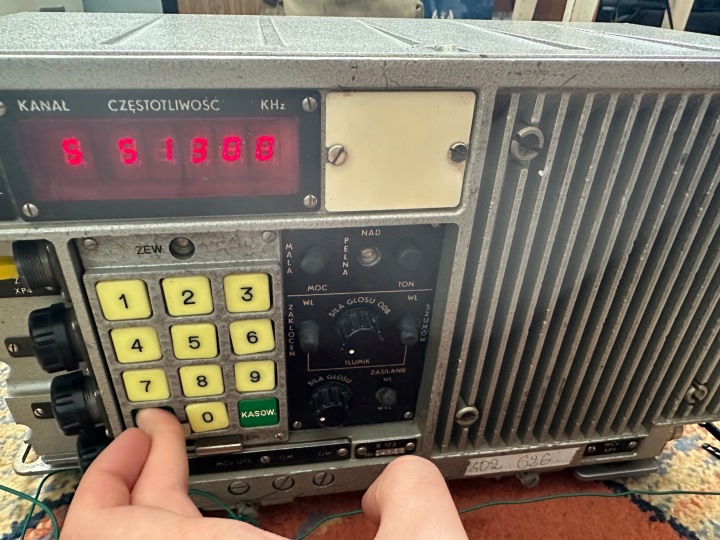
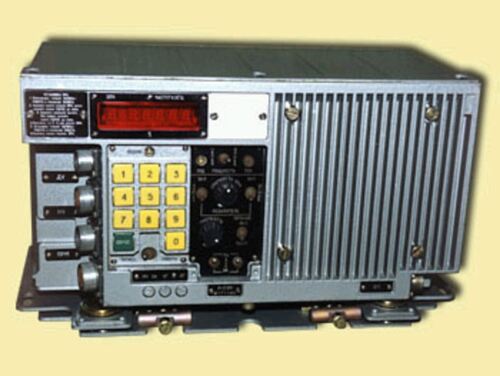
R-173 Abzats (Р-173 «Абзац») is a Soviet third-generation vehicle VHF FM set. It replaced R-123 Magnolia as the standard radio in tanks and other armoured vehicles. R-173M Abzats-M is the later solid-state mark that added a 16 kb/s digital path and is still the basic set on a large part of the Russian and export AFV fleet — T-72 family, BMP-3, and the rest of the 27-volt armour that never received Azart-V or Akveduk as the hull radio.
It is a simplex FM transceiver for two-way telephone (and, on M, digital) traffic between moving objects, without hunting for the correspondent on each of ten memorized channels. It is not an SDR, not a hopper, and not a handheld. It is the 43 kg box bolted behind the driver that Azart’s 27–50 MHz analog gate was written to hear.
HISTORY
R-123 (20–51.5 MHz, tube/hybrid, four motorized presets, ~20 W) was the Warsaw Pact tank radio of the 1960s–70s. R-173 was the 1980s replacement: synthesized, keyboard and digital display, ten presets, 30–76 MHz to sit in the same NATO-overlapping low-VHF slice used by Western VRC-12 / PRC-77 nets. NVA issue is dated from 1987. Ryazan Radio Plant and, in later notes, Sarapul built the line. By the early 2000s the analog-only R-173 was called obsolete in Russian encyclopedic text; R-173M kept the hull slot because the digital 16 kb/s channel and the existing antenna, intercom and 27 V wiring were already paid for.
THE SET
R-173 / R-173M transceiver — 30.000–75.999 MHz in most Russian cards (some export sheets print 30–79.999). 1 kHz channel step. Ten prepared frequencies (ZPCh); changeover not more than 3 s. Frequency error ±1.5 kHz. PLL synthesizer. FM deviation about ±5 kHz analog, ±5.6 kHz digital on M. Transmitter not less than 30 W full power on a 27 V board net; low power about 1–2 W in training cards. Receive 1.5 A, transmit 9 A (one sheet lists 6.9 A transmit). Sensitivity 1.5 µV analog with squelch off, 3 µV with squelch on, about 2 µV digital at 10⁻² error. Image / IF selectivity 100 dB. Double-conversion receiver, IFs 11.5 and 1.5 MHz. Split front-end filters in 10 MHz slices (30–40 through 70–76). Tone call 1 kHz. Impulse-noise blanker and AF squelch. MTBF quoted ≥6,000 hours. Size with shock mount 428 × 222 × 239 mm. Weight of the main set ≤43 kg. Temperature −50 to +50 °C. Supply 27 V DC, negative ground (+2 / −5 V). Optional 220 V pack for garrison.
R-173P / R-173PM — matching receiver for a second net on the same vehicle. Two R-173s, or one transceiver plus the P receiver, can share one antenna through a filter block or run separate whips.
R-174 — tank intercom / AVSK that sits between the helmets (TSH-4 / TSH-4L) and the radio. Throat-mic path is the normal talk path; a chest key rides the helmet set.
Antennas: 2 m service whip in the range tables (~20 km mid-rough terrain, moving or stopped); 3 m rod in other sheets for the same 20 km planning figure; 1 m and an emergency wire are allowed. Whip length in museum notes ~2.4 m at 30 MHz, ~0.9 m at 76 MHz.
HOW IT WORKS
The commander or gunner keys through R-174. The box is already sitting on one of ten stored channels. Servo/synthesizer retune is the three-second wait when the net changes. There is no hop. Anyone with a receiver in 30–76 MHz FM hears the voice unless a separate analog encryptor (the old T-219-class role on R-123) is patched in. R-173M’s 16 kb/s digital pipe is for data and protected voice when the matching modem and keying kit are fitted — not Azart’s 20,000-hop waveform.
Two radios on one hull let the tank stay on the company net and listen to battalion at the same time. Dual-frequency simplex or duplex is in the M feature list. Remote control of a second set, automatic antenna tune, and a radio-modem jack are M options.
LEGACY AND FORWARD INTEROP
Backward. Overlap with R-123 is only 30–51.5 MHz. A T-55 still on Magnolia and a T-72 on Abzats can talk in that slice if both are on FM and the same kilohertz. Below 30 MHz the old radio is alone; above 51.5 MHz the new radio is alone.
Sideways. R-163, R-168 Akveduk and R-169 will work Azart’s fixed-frequency analog gate; Akveduk also covers this VHF block in vehicle form. Western low-VHF FM (PRC-77, VRC-12) sits in the same neighbourhood — a Cold War planning fact, not a current allied net.
Forward. R-187-P1 Azart was specified to run analog AM/FM on 27–50 MHz expressly so a dismount with a sixth-generation handheld can shout into a tank that still has R-173 in the rack. That is the interop that matters in 2022–26 reporting: the new brick opens the analog door; the hull radio never learned to hop at 20,000 s⁻¹.
THE BATTLESPACE STACK
R-173 is the company / battalion armour voice net. Platoon tanks on one of the ten presets; company commander on another; battalion in the second radio or the P receiver. Planning range 20 km on the service whip — enough for a tank company in open ground, short for a spread-out battalion unless a mast or a higher-power vehicle set is in the middle.
Above it: R-168 / Azart-V at battalion and brigade, then the mast V/UHF and ESU TZ / Sozvezdie furniture described in the Azart article. Beside it: R-174 inside the turret so the crew is not yelling across the breech. Below it: the rifleman on Azart or an older handheld who only joins this net when someone on the tank leaves analog FM up.
EW finds R-173 easily. It sits on a fixed channel at 30 W with a 2–3 m whip on a steel hull. That is why Azart’s hop exists and why the analog gate is also a liability. The box remains because thousands of hulls were cut for it, the 27 V and R-174 plant is already there, and a 16 kb/s M-mark data path was cheaper than rewiring the fleet.
STATUS
Still the default AFV radio on vehicles that have not been rebuilt with a later multiband set. Produced for decades after the analog-only mark was called obsolete. Export and captured kits remain common. It is the living floor under Azart’s analog clause.
IN ONE SENTENCE
R-173 Abzats is the 30–76 MHz, 30 W, ten-channel FM tank radio that replaced R-123 Magnolia, still sits behind the driver of a T-72 as R-173M with a 16 kb/s digital pipe, and is the analog net R-187-P1 Azart was wired to enter when the hop waveform is off.