The Strait of Hormuz has been closed tight since early March 26. Oil prices already volatile. What if they make it to 150 to 200 dollars a barrel? Petro dollar on life support, global economy headed straight for lights-out territory, supply chains break, inflation through the roof, everything grinds to a halt.
Air power and standoff munitions can hit the big launchers and radar sites, but they cannot fully root out the small tactical weapons hugging the coast in the strait: mobile anti-ship missiles, fast attack craft swarms, drone boats, mines. All that close-in mobile kit stays hidden and deadly. Destroyers by themselves get torn apart by saturation attacks: thin hulls, limited armor, low interceptor stocks. One good leaker and they are mission-killed or sunk fast. Allies have limited useful naval combat potential in this situation. Talk of a grand coalition without Russia and China changes nothing.
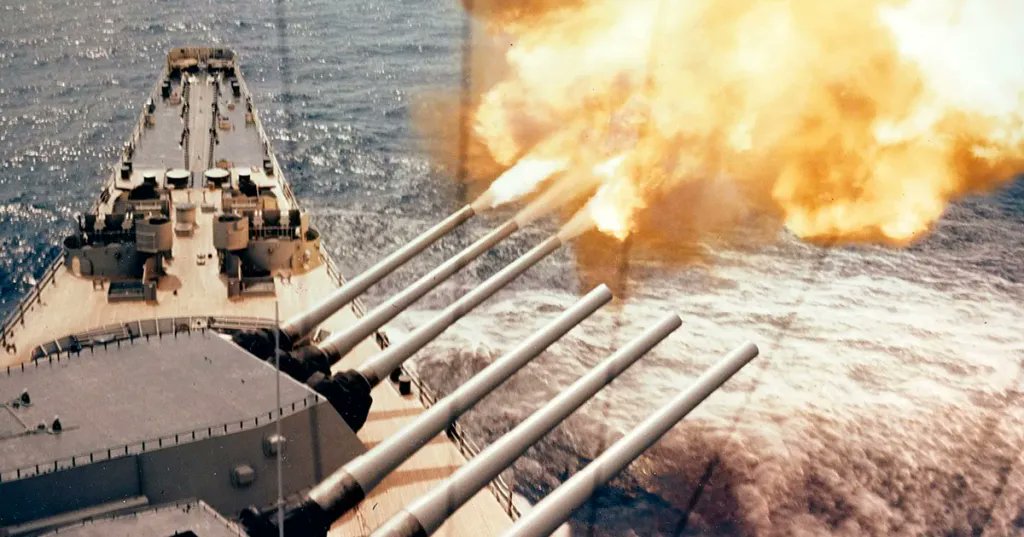
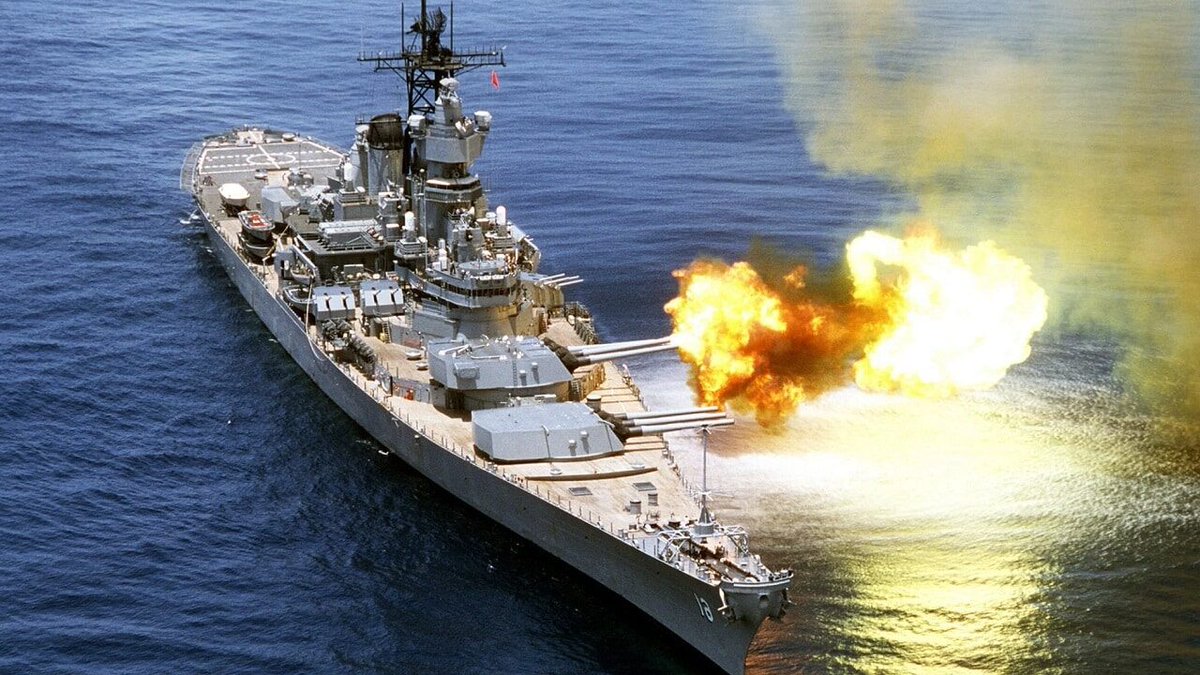
Desperate times call for desperate measures. Hypothetical last-ditch play: reactivate one or both Iowa-class battleships, Wisconsin in Norfolk and Missouri in Pearl Harbor, in pure YOLO mode. No full refit. No fancy upgrades. Just enough to get them underway. Fly yard engineers to the berths, cut out the hull blanks, fire up half the boilers if all of them cannot pass a basic inspection. Partial power, maybe 10 to 15 knots limp speed. Skeleton crew of 500 to 800. Call any 80s vets who can train fast. Pull in anyone who knows these old beasts, even enthusiasts. Minimal setup: basic nav, comms, manual local fire control depending on what still has not been gutted for museum use. Load whatever 16-inch ammunition stockpiles still exist. Get them steaming into the Strait as bullet magnets. That ammunition is probably in bad shape if any still exists.
Why battleships? Heavy belt armor, heavy turret faces, armored compartmentalization designed to take punishment and keep fighting. Smaller anti-ship missiles with modest warheads might wreck superstructure but are unlikely to punch the citadel or flood the vitals with one hit. Cluster warheads can pepper the deck without doing real damage. Close-in guns fitted in the 80s might be brought online to help some. A mission-kill against that level of protection should be hard. Some modern high-speed weapons are built more around static land targets than a reliable moving-ship solution. Larger ballistic shots can have terminal homing, but accuracy suffers in a jammed, contested environment. The battleship soaks up multiple smaller leakers that would gut a destroyer. Their role is to draw fire like a magnet and force hidden launchers and fast craft to reveal themselves by emitting or launching. Destroyer escorts handle the outer air and missile defense and cue stand-off strikes on whatever shows itself. The 16-inch guns, even with crude local control, could still throw area barrages at coastal sites, suppress batteries, and help clear a path for follow-on forces and convoys.
Might lose one or both. High risk. Brutal. An insane attrition idea. But if it lights up the smaller emplacements, exposes positions, and buys time to reopen the strait and keep the world economy alive, is it worth it?
To be clear, this is insane, and the ships might not even make it to the theater. It would make wild headlines. I am not sure who would volunteer for something like this. It could be a one-way trip. I think this entire Iranian operation has been flawed and questionable from the start. But since we are here, and people might starve, we might as well talk about insane ideas.
Note, 16 March 2026: Iowa-class battleships operated in the Strait in the late 1980s during Operation Earnest Will, a somewhat similar situation, though far less out of control than today.
Archive note: public commentary and speculation only. Not an operational plan.