WHAT IT IS
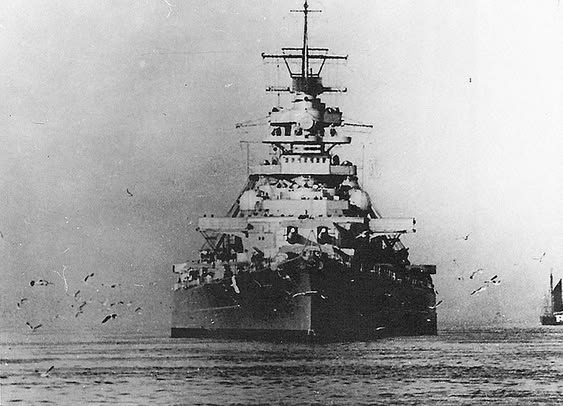
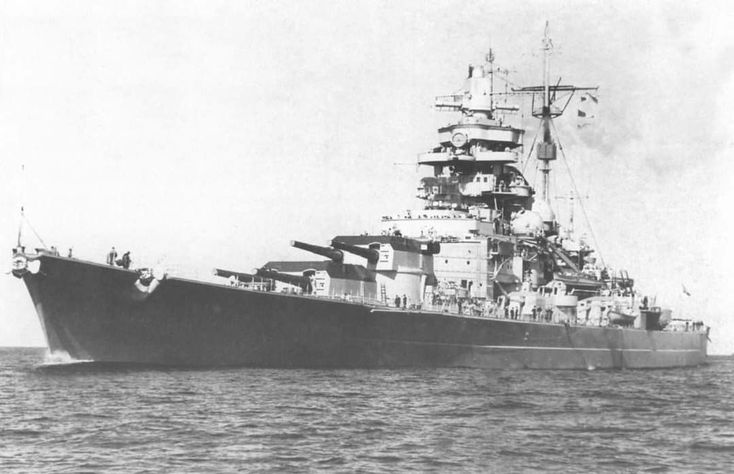
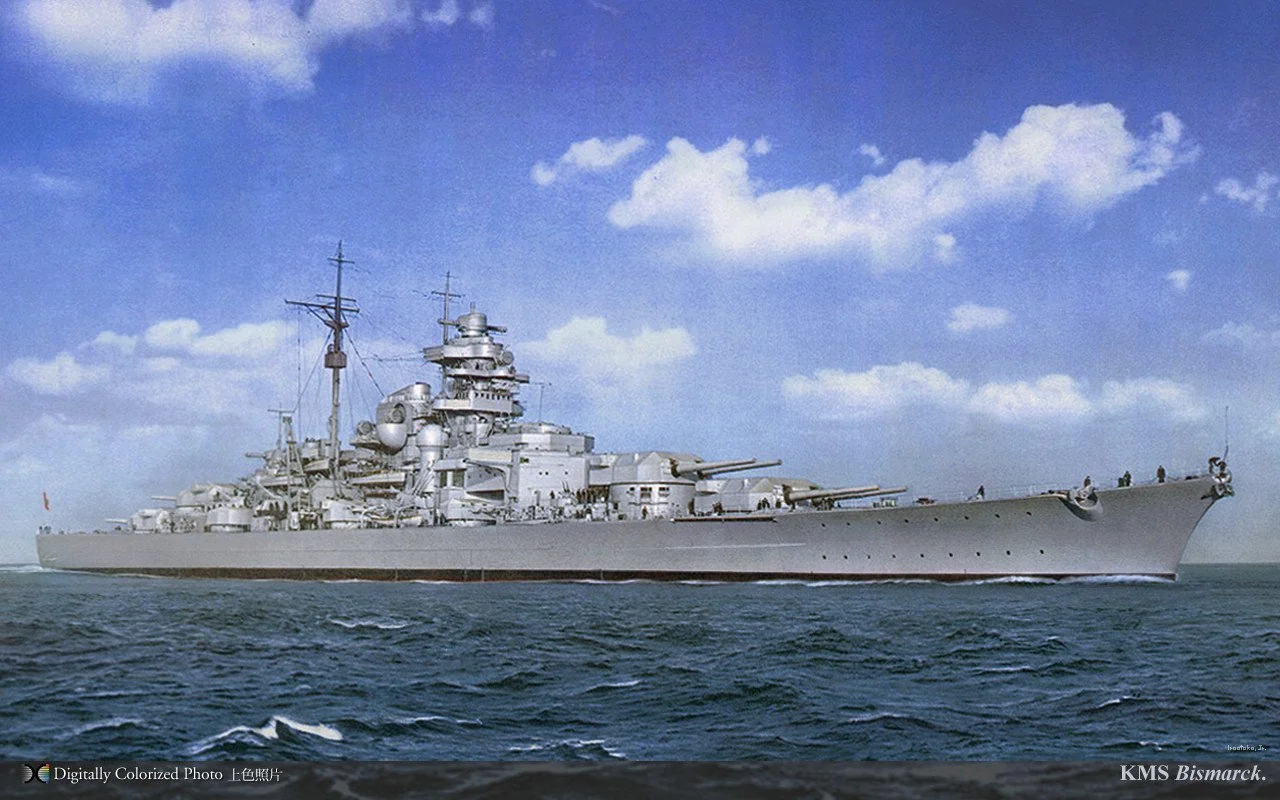
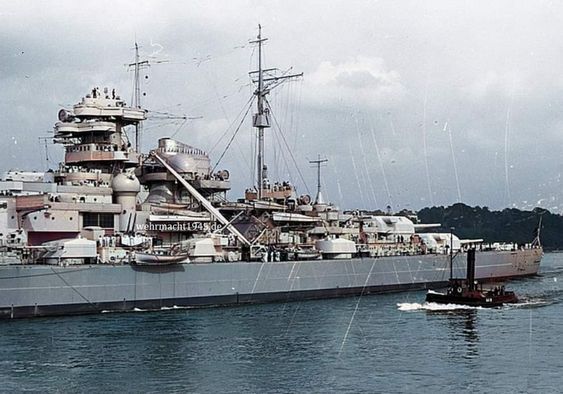
The Bismarck class is two German fast battleships ordered under the 1935–36 fleet program after the Anglo-German Naval Agreement: Bismarck (Blohm & Voss, Hamburg) and Tirpitz (Kriegsmarinewerft, Wilhelmshaven). They were the largest warships Germany completed. Design displacement sat near 41,700 t standard; full load ran past 50,000 t. Length overall 251 m, beam 36 m, draft about 9.3 m standard. Three shafts, twelve Wagner high-pressure boilers, three geared turbines, trial power in the 138,000–150,000 shp class, speed 30 kn. Designed endurance on the order of 8,500–9,500 nmi at 19 kn depending on the sheet and the ship.
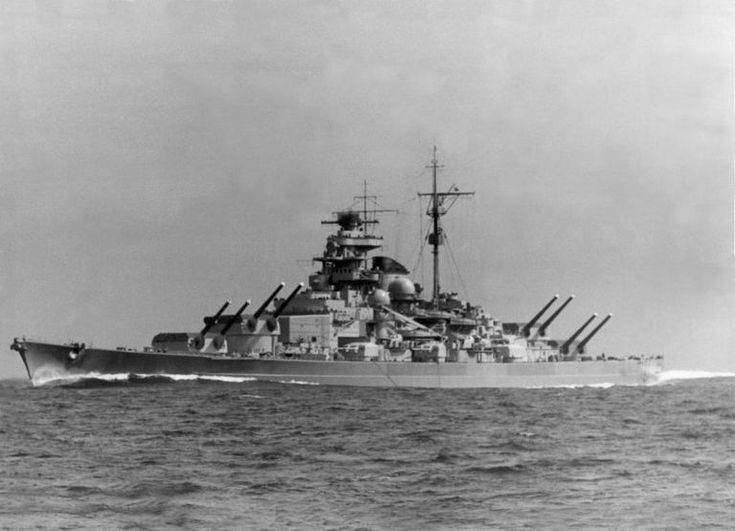
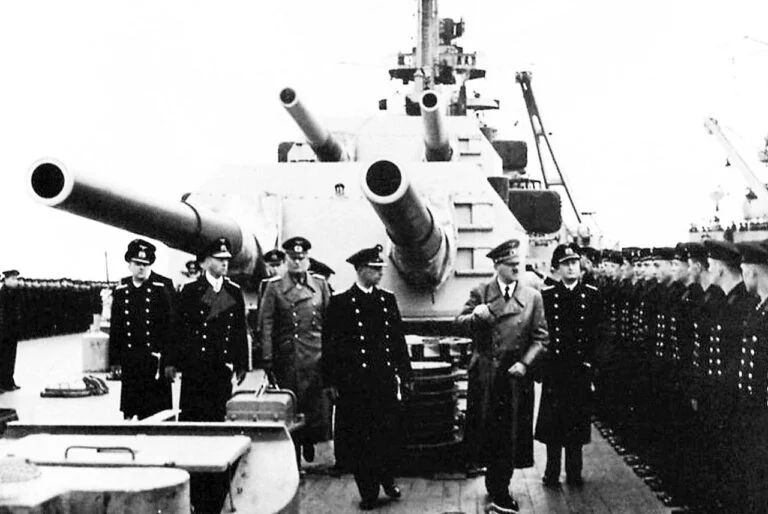
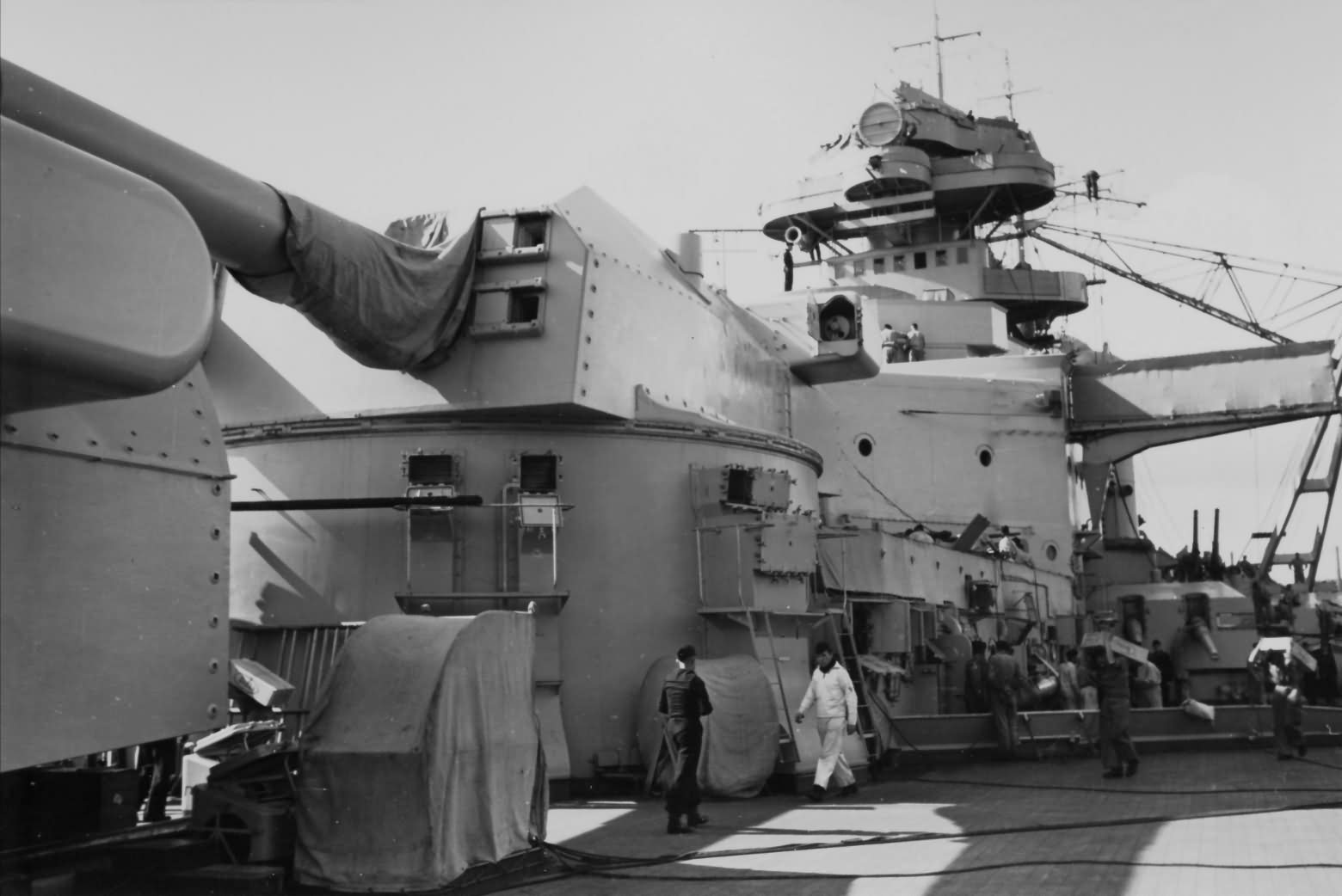
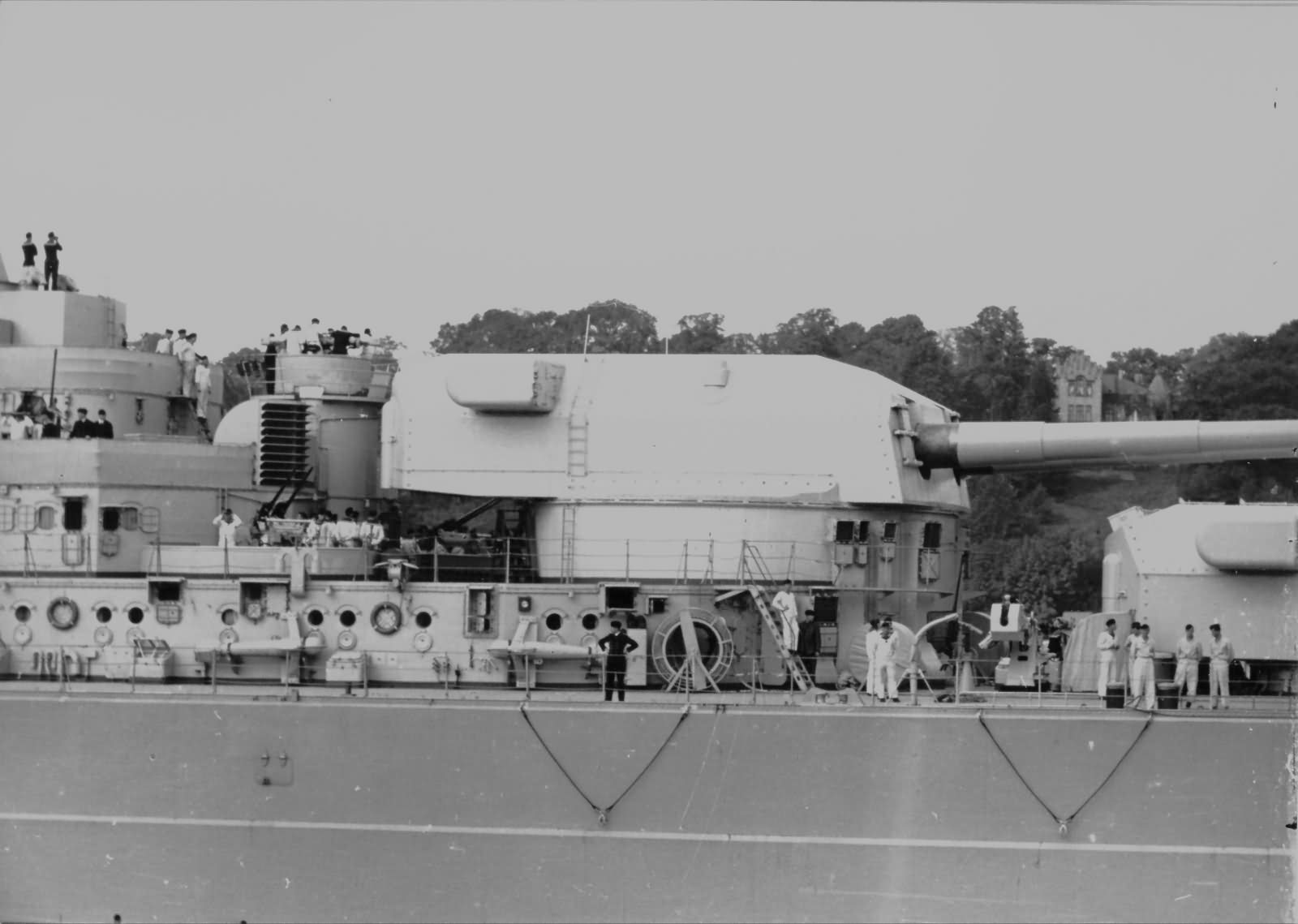
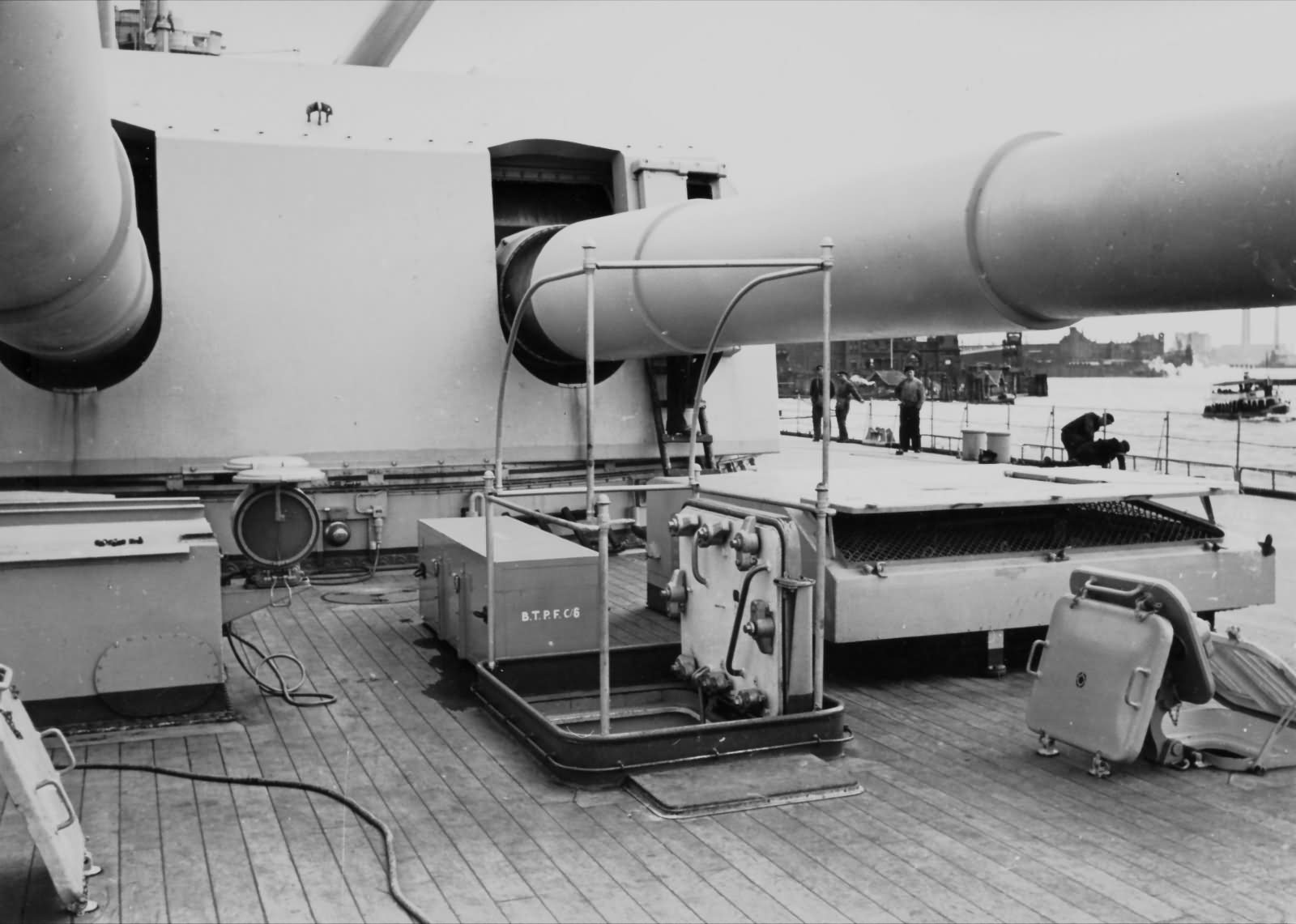
Main battery: eight 38 cm (15 in) SK C/34 in four twin Drh. L. C/34 turrets, Anton and Bruno forward, Caesar and Dora aft. Secondary: twelve 15 cm SK C/28 in six twins. Heavy AA: sixteen 10.5 cm SK C/33 in eight twins. Light AA grew through the war on Tirpitz (3.7 cm, 2 cm). The class is a close-range, belt-and-turtleback ship with excellent optical fire control and early Seetakt radar — not an Iowa, not a Yamato, not a treaty KGV.
CONSTRUCTION
Bismarck laid down 1 July 1936, launched 14 February 1939, commissioned 24 August 1940. Tirpitz laid down 2 November 1936, launched 1 April 1939, commissioned 25 February 1941. Both yards built to the same drawings with local differences in fittings, AA growth, and later radar. Contractors included Krupp (guns, KC n/A plate), Germaniawerft and others for turbines, Zeiss for rangefinders, Telefunken / GEMA line for FuMO.
Building them required the first German battleship-scale armor and gun plants since the Baden class. The 38 cm C/34 was a new gun, not a bored-out 35 cm. High-pressure Wagner boilers were compact and thirsty and spent the war earning a reputation for care. Three-shaft layout (centreline plus wings) left a single rudder pair aft of the centre screw — the geometry that killed Bismarck.
SHIP LAYOUT
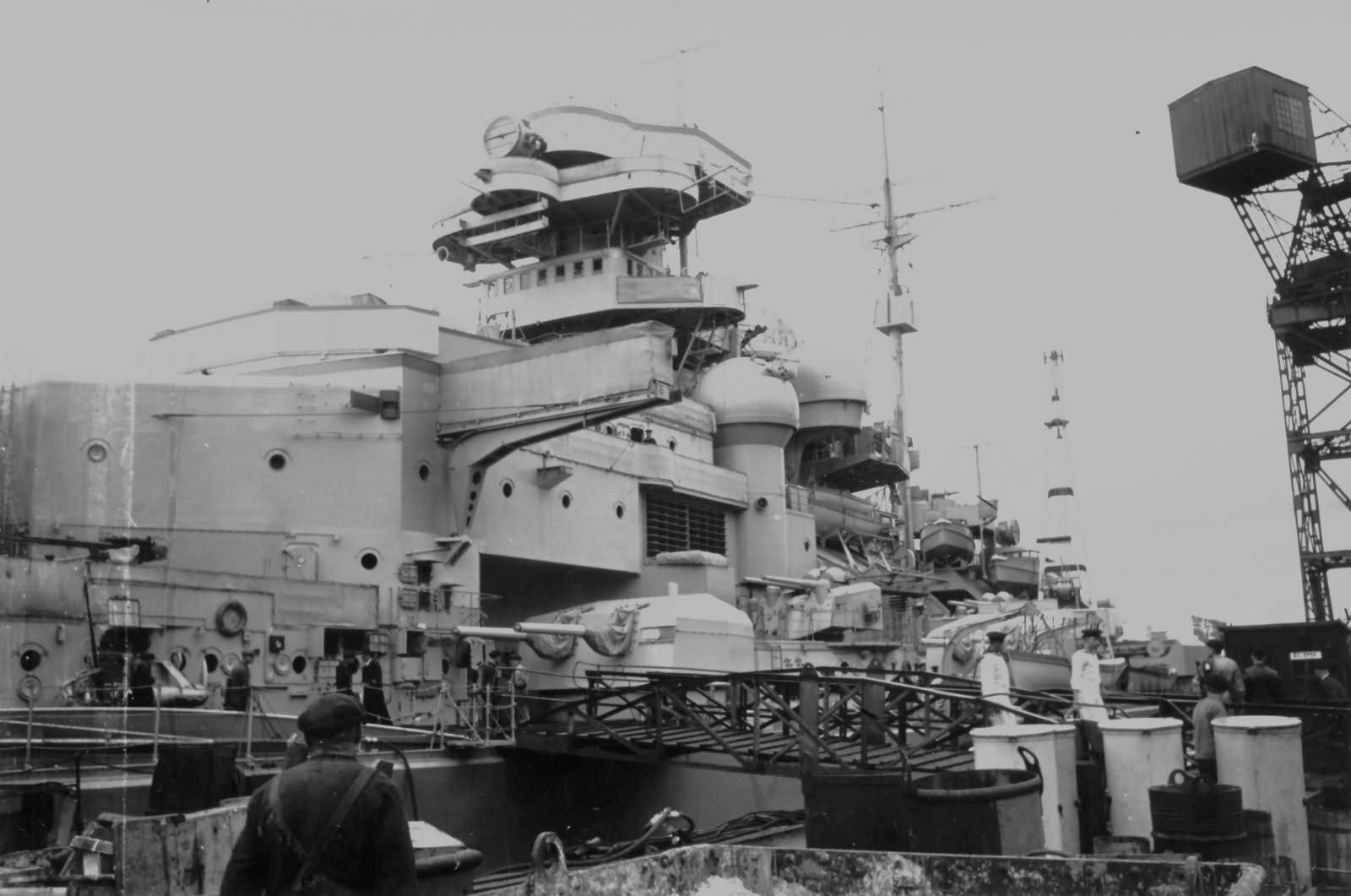
Long citadel, frames ~32 to 202.7, covering about 70% of the waterline — longer than most contemporaries. Magazines under the four 38 cm houses. Boiler rooms and engine rooms amidships, three engine rooms for three shafts. Armored deck (Panzerdeck) just above the waterline with sloped outboard sections meeting the bottom of the main belt — the “turtleback.” Above that: battery deck, then a 50 mm weather / upper deck. Forward conning tower is a separate armored tower; admiral’s bridge and open command positions sit outside it. Foretop director ~31 m above the water. After director on the aft superstructure. Secondary 15 cm turrets in two groups of three per side. 10.5 cm twins on the superstructure with spherical SL-8 / similar AA directors.
Below: platform decks, torpedo bulkhead ~5.5 m inboard, oil and void layers. Steering gear in the stern under a 110 mm turtle. Crew country in the upper hull outboard of the citadel — the “sacrificial” volume the scheme accepts will be wrecked.
ARMOR SCHEME
Steels: KC n/A (Krupp Cemented, neue Art) for face-hardened vertical plate; Wh (Wotan hart) and Ww (Wotan weich) homogeneous for decks, slopes, torpedo bulkheads; St 52 construction steel for the rest.
Main belt: 320 mm KC n/A over the citadel, ~4.8 m tall, tapering to 170 mm at the lower edge; a short 270 mm step appears in some breakdowns near the upper edge. Upper citadel / “ Splinter” belt: 145 mm KC from the top of the main belt to the upper deck. Transverse bulkheads at the citadel ends: 220 mm class. Upper deck: 50 mm Wh (thicker locally over magazines on some tables). Main armor deck: 80 mm over machinery, 95–120 mm over magazines depending on the source sheet (kbismarck tables run 80–110 mm machinery slopes/centre and 100–120 mm magazine). Outboard slopes ~110 mm Wh at a steep angle behind the belt. Bow and stern thinner; steering turtle 110 mm.
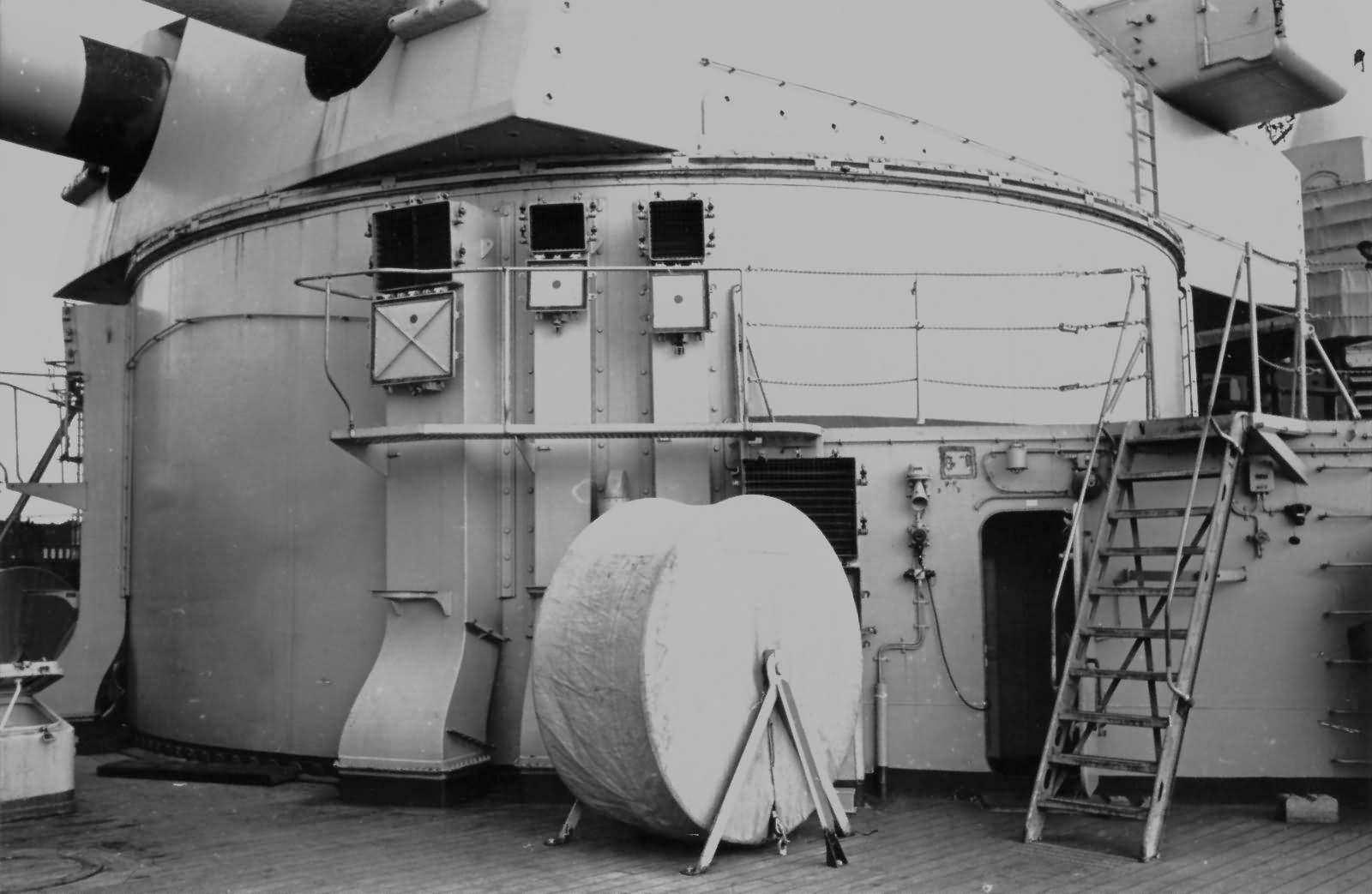
Turrets: face 360 mm KC, rear ~320 mm, sides 150–220 mm, roof 130–180 mm. Barbettes 340 mm KC above the upper deck, 220 mm behind the upper belt down to the armor deck. Forward conning tower ~350 mm sides, 200–220 mm roof. 15 cm houses 100 mm face, 40 mm sides/roof. Underwater system rated in German papers against a ~250 kg TNT charge; longitudinal bulkhead ~45–53 mm Ww.
The idea is World War I German: keep shells out of the machinery and magazines at North Sea ranges by making them hit belt then slope, and accept that everything above the armor deck will be a wreck. Horizontal protection is thinner than Iowa or Yamato. Against long-range plunging fire the flat 80–95 mm deck is the weak door. Against short-range flat fire the belt-plus-slope combination is the strong one. Nathan Okun’s later plate math is often cited: a shell that has already spent itself on 320 mm KC does not then defeat the 110 mm slope into the vitals under “normal” conditions. That is a calculation, not a guarantee at 3,000 m with 16-inch AP.
FIRE CONTROL
Three surface directors: foretop (I.A.O. — first gunnery officer), forward (bridge), after. Each carries a Zeiss stereoscopic rangefinder in a rotating cupola — 7 m forward, 10.5 m on foretop and aft on the usual fit — and a FuMO 23 mattress on the cupola face. Directors feed two armored computation rooms (Rechenstellen / Schaltstellen), forward in section XV and aft in section VII, under the armor deck. Gyro rooms supply a stable vertical. Redundant train, elevation, and hoist paths were specified at 100% technical reserve.
FuMO 23 (Seetakt family): ~368 MHz, ~81.5 cm, ~8–9 kW, PRF ~500 Hz, mattress on the order of 2×4 m (some notes 6×3 dipole arrays). Useful range about 25 km. A-scope, not PPI. Bearing accuracy of the early set is a few degrees; later lobe-switching kits tighten that. German radar in 1941 ranges and spots; it does not run a U.S. Mk 13 blind-fire plot. Optics remain the precision sensor. AA: stabilized spherical directors for the 10.5 cm; Tirpitz later added Würzburg-derived FuMO 212/213 dishes on an AA director.
Denmark Strait showed the plant working: Bismarck straddled Hood and Prince of Wales at battleship range and sank Hood with a magazine hit. 27 May showed the plant dying: a 16-inch salvo from Rodney at ~09:02 wrecked the forward director and bridge. Local turret control and the after director could not replace a murdered command loop at 3–8 km against two battleships and two heavy cruisers. By ~09:31 all four 38 cm houses were silent.
COMMUNICATIONS AND SENSORS
Radio: standard Kriegsmarine battleship suite — multiple HF/MF rooms for fleet broadcast, ship-to-ship, and flag traffic. Bismarck sailed as Lütjens’ flagship with extra staff circuits. Exact Telefunken rack lists for the class are thinner in open print than U-boat Funkraum lists; the rooms sat inside the citadel with remote positions in the tower. Visual: large signal bridges, searchlights, infrared / night signaling of the period.
Radar: three FuMO 23 at commissioning. Bismarck may have carried extra dipoles on the conning tower under canvas; the photos do not settle it. Tirpitz in Norway grew FuMO 27, then a larger FuMO 26 mattress, FuMB 7 Timor ESM, Sumatra arrays, and late AA radar — the most complete German surface radar fit of the war.
Underwater: two GHG (Gruppenhorchgerät) hydrophone belts, ~60 capsules per side, passive listening. Useful in the Atlantic against escorts; not a substitute for radar in a destroyer night melee.
After the 24 May hit from Prince of Wales and the Victorious torpedo, Bismarck’s forward radar and some fire-control circuits were already degraded. By the night of 26/27 May the surviving radar picture was poor; British destroyers harassed in the dark more by luck and persistence than by a working German plot.
CREW AND FACILITIES
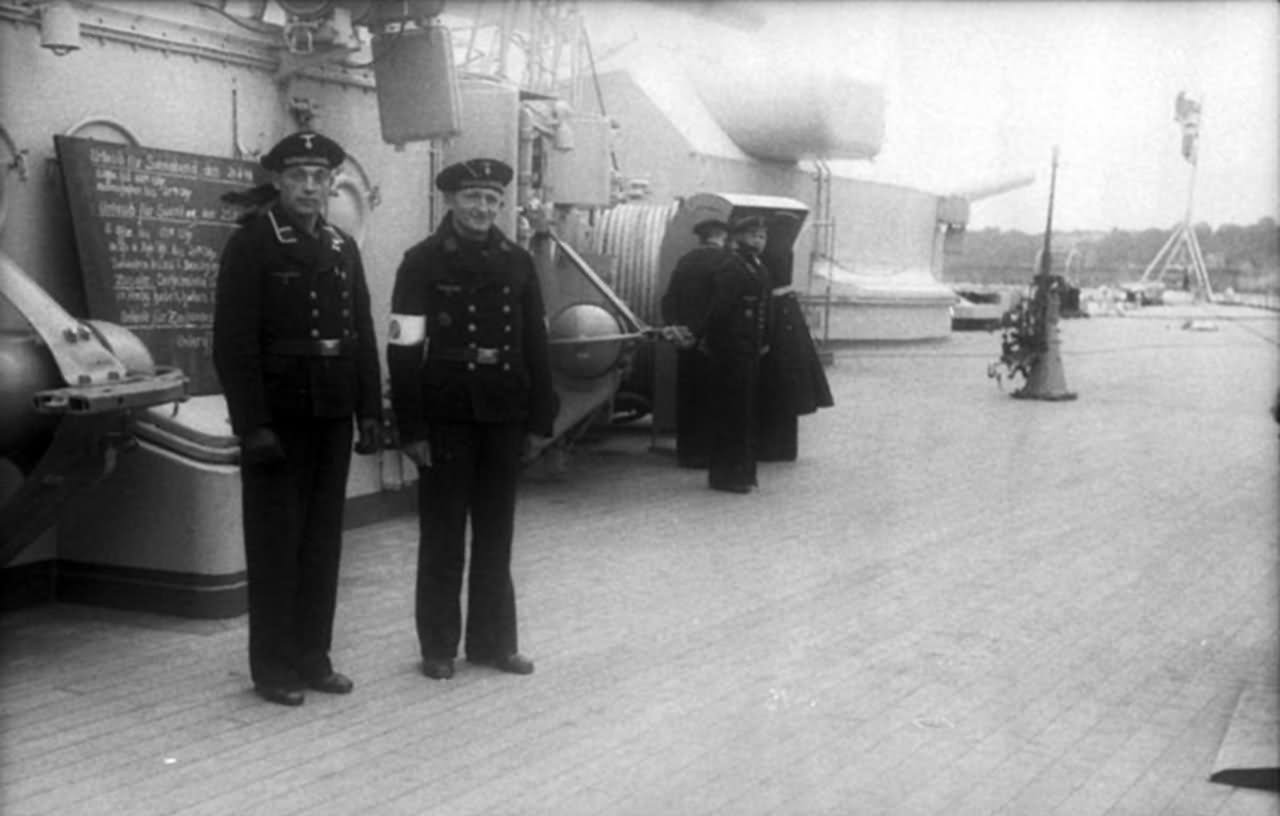
Book crew: 103 officers + 1,962 enlisted. Rheinübung lift: ~2,221 on Bismarck including Lütjens’ staff (~65) and prize crews (~80). Tirpitz by 1943: 108 officers + ~2,500 as AA and staff grew. Twelve divisions: 1–4 main and secondary guns, 5–6 AA, 7 specialists (cooks, carpenters), 8 ammunition, 9 signals/radio/quartermaster, 10–12 machinery.
Facilities were those of a 1940 European battleship: hammocks and bunks in the upper hull, warrant and officer country aft and in the superstructure, sickbay, bakery, laundry, workshops, a chapel space, cinema on some accounts, extensive damage-control lockers. Food and freshwater plants sized for a two-week Atlantic sprint, not a year in a fjord — Tirpitz’s Norway life was a different logistics problem. Habitability was better than a Type VII and worse than an Iowa. Roughly 600 of Bismarck’s first crew came off the sunk light cruiser Karlsruhe.
HOW THE ARMOR ACTUALLY BEHAVED
24 May, Denmark Strait. Prince of Wales 14-inch hits: one through the bow (fuel contamination, list), one that wrecked a ship’s boat and damaged a steam line / dynamo complex without opening the citadel. Victorious Swordfish torpedo on the belt: little effect. The scheme did its close-range job.
26 May, Ark Royal. One torpedo on or just below the belt amidships: manageable flooding, torn welds on the torpedo bulkhead in one compartment, shaft-alley water. One torpedo aft, outside the citadel, jammed both rudders and wrecked the steering rooms. That hit is not an armor-scheme failure. There is no 320 mm belt around a rudder.
27 May, 08:47–10:40. King George V (14 in), Rodney (16 in), Norfolk and Dorsetshire (8 in) closed to 3–8 km and, at the end, to ~3,000 m. Combined heavy and cruiser fire is usually tallied around 2,800 rounds with on the order of 400 hits of all calibres; the two battleships alone fired about 700 heavy shells. Exact 14- and 16-inch perforations are not a complete autopsy. Ballard / Cameron wreck video plus survivor Josef Statz plus the Jurens–Garzke INRO reconstruction are the open record.
What that record shows:
— Forward director and bridge smashed early (Rodney 16 in, ~09:02). Command killed before the belt is the issue. — Conning tower 350 mm sides holed repeatedly; Statz: port side “swiss cheese”; the armored door blown off its hinges. At 3 km a 14- or 16-inch AP can do that. — Bruno barbette: a piece of 340 mm torn away ~700 mm along the circumference; turret pitched, rear wall gone, internal explosion. Anton also reported wrecked internally. — 50 mm upper deck: at least two Rodney 16-inch penetrations noted in the INRO paper (pitch and roll cutting obliquity). — 145 mm upper belt: multiple holes around the forward port 15 cm (turret 64); a 14-inch from KGV through the upper citadel into the after canteen killed Hans Oels and ~100 men ~10:00. — Main 320 mm belt: wreck imagery of the belt itself is poor. INRO judges some heavy-caliber perforations of belt and upper belt as persuasive, and still concludes few shells reached machinery or main magazines. Engineering spaces kept steam until scuttling charges and capsize. That is the turtleback doing the job it was drawn for. — Torpedoes on the 27th (Dorsetshire, maybe Rodney) hit a listing hulk; the last port fish detonated on already-submerged superstructure.
Read that straight: the citadel armor was not a myth. The ship was not a magazine fire. She was a rudder-jammed, director-killed, upper-works-flayed battery that could no longer aim, then a scuttled wreck. More belt thickness would not have unkinked the rudder or replaced the I.A.O. after 09:02. Okun’s line is the same: even +50% armor would not have rewritten 27 May once fire control was gone and the range was point-blank.
HISTORY AND BATTLES
Bismarck. Work-up in the Baltic, 1940–41. Operation Rheinübung, 18–27 May 1941, with Prinz Eugen. Breakout through the Denmark Strait 24 May: Hood destroyed, Prince of Wales damaged and retired; Bismarck wounded in the bow and leaking oil. Shadowed, hit by Victorious aircraft 24 May, then by Ark Royal aircraft 26 May (rudder). Night destroyer attacks. Dawn 27 May: Tovey’s battleships. Sunk ~10:40, 47°21′N 16°12′W. Of ~2,200 men, 114 survived the water (British ships plus later U-74 / Sachsenwald pickups). Debate on scuttling versus shell-and-torpedo flooding is real and secondary: both happened; she was already finished as a fighting ship.
Tirpitz. Never a fleet action. Norway from early 1942 as a fleet-in-being against PQ convoys. Attacks: midget submarines (X-craft, Sept 1943), carrier strikes, and finally Tallboys from 617 / 9 Squadrons. Capsized at Tromsø 12 November 1944 after two 12,000 lb bombs. Casualties in the hundreds. Radar and AA suite at the end were a generation past Bismarck’s 1941 fit. The hull was the same argument: hard to kill with gunfire, killable from above and from under the stern.
CAVEATS
Armor-deck numbers disagree slightly across Gröner, Whitley, kbismarck tables, and Wikipedia composites (80/95 vs 100–120 mm). Treat belts 320 / 145 and turret face 360 as solid. Hit counts on 27 May are estimates from ammunition expenditure, not a tagged wreck survey of every hole. FuMO power and antenna size drift between NavWeaps and kbismarck. Crew on Rheinübung is “over 2,200,” not a single muster sheet.
STATUS
Bismarck wreck found by Ballard 1989, surveyed again by Cameron 2002, upright slump on a slope ~4,800 m down. Tirpitz wreck largely salvaged after the war; remnants at Håkøya / Tromsø. No third ship.
IN ONE SENTENCE
The Bismarck class is two 30-knot, eight-gun 38 cm battleships whose 320 mm belt and sloped armor deck kept the machinery alive under hundreds of 14- and 16-inch hits on 27 May 1941 — after a rudder torpedo and the loss of fire control had already decided the fight.